Iran's efforts to assassinate Trump highlighted in IRGC-linked terror trial started this week
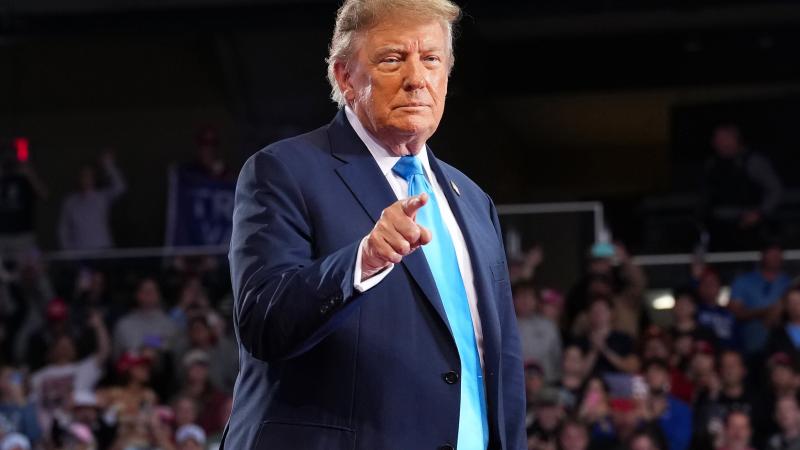
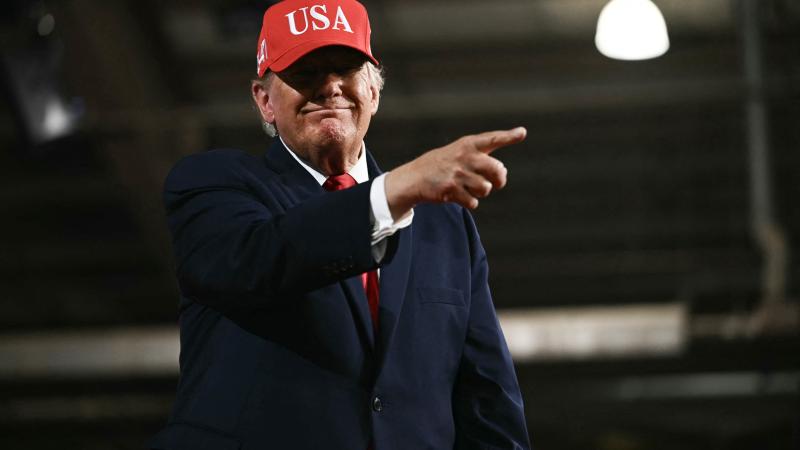
Federal prosecutors and U.S. intelligence both allege the Iranian regime sought to assassinate Donald Trump to stop him from returning to the Oval Office. One of the defendants linked to an Iranian intelligence agency is now on trial.
Federal prosecutors have alleged that two Iranian-linked plots to assassinate then-candidate Donald Trump — both allegedly linked to Iranian intelligence services — were launched in 2024 as Iran sought to meddle in the election to stop Trump’s return to the White House, with one of the trials kicking off this week.
The Justice Department filed charges against Pakistani national Asif Merchant and against Afghan national Farhad Shakeri for their alleged roles in Iranian-backed assassination plots. The former defendant’s somewhat murky plot seemingly targeted Trump, while the latter defendant’s apparently more sophisticated plot was also aimed at the president.
Shakeri remains at large in Iran. Merchant has pleaded not guilty, and the trial against him began this week as the U.S. appears to be moving toward a possible war against the Iranian regime.
Multitude of threats against Trump’s life
The Iranian assassination plots are detailed in press releases and court filings by the Justice Department and the FBI and, while prosecutors have not linked the Iranian efforts to the other assassination efforts against Trump at a Pennsylvania campaign rally in July 2024 and at his Florida golf course in September 2024, the Iran-origin murder-for-hire allegations show the multitude of threats against Trump’s life during the 2024 presidential campaign. The cases also highlight the lengths to which the Iranian government was seemingly willing to go to attempt to keep Trump out of the Oval Office for a second term.
The Office of the Director of National Intelligence (ODNI) has categorized both Iranian-backed assassination plots against Trump from 2024 as examples of “Notable Attack Planning” by the Iranian regime’s Islamic Revolutionary Guard Corps (IRGC).
The Iranian government repeatedly sought to meddle in the 2020 election as they attempted to stop Trump’s reelection, and in 2024 they carried out hack-and-leak operations against his campaign and, according to prosecutors, assassination attempts against him personally.
Identity of jurors kept anonymous due to potential Iran-linked threats
The jury in the case against Merchant was selected on Wednesday, and the prosecution and defense also gave opening statements that day.
After he was arrested, the DOJ had successfully sought to keep Merchant detained pending a trial. Merchant pleaded not guilty in mid-September 2024, and has been detained ahead of trial.
Then-U.S. Attorney Breon Peace of the Eastern District of New York (EDNY) had revealed in October 2024 that the DOJ intended to offer into evidence “information obtained or derived from electronic surveillance conducted pursuant to the Foreign Intelligence Surveillance Act.”
The Justice Department began handing over the evidence it had on Merchant to his defense team last year, including data from his cell phones and laptop, data from a pen register trap and trace device, information from search warrants served upon Google, FBI reports, and records from the Transportation Security Administration and the Texas Secretary of State.
U.S. Attorney Joseph Nocella Jr. in January 2026 asked the judge to allow the jury that would be selected this week to remain fully anonymous. “The government respectfully submits this memorandum of law in support of its motion for an anonymous trial jury in this case. Because this case involves terrorism and murder-for-hire charges, and because the defendant admitted to the government [REDACTED], a fair trial requires empaneling an anonymous jury,” Nocella wrote.
The U.S. attorney said in court filings that “many jurors are aware of the political violence and assassination attempts throughout the world and could fear involving themselves in a case that involves those issues by serving as a juror” and “moreover, there is a legitimate concern that jurors in this trial will fear that an associate of the defendant will target them.”
“And public report [sic] has detailed measures taken by [REDACTED] to retaliate against enemies of the Iranian government, even when they were located in the Eastern District of New York,” the prosecutor added, including a footnote which was redacted.
Nocella also argued that “an anonymous jury is also warranted because of the media attention this case has already generated and the publicity likely to result from trial” and that “major media sources have reported regarding this case.” The footnote the DOJ included there pointed to a Wall Street Journal article titled, “U.S. Charges Man with Ties to Iran With Plot to Assassinate Trump and Other Politicians.”
Merchant’s attorneys — Avraham Moskowitz, Christopher Neff, and Joshua Lax — responded last month that the jury should not be granted the full shield of anonymity.
“The government’s argument that the potential jurors will face or fear harm is speculative and lacks factual substantiation,” the defense lawyers told the court. “The government has not alleged that Mr. Merchant has ever obstructed justice, and it makes no assertions that there is a specific concern of any danger related to Mr. Merchant’s case, relying instead on generalized allegations about the dangers posed by the Iranian government and the IRGC. Those allegations are insufficient.”
The defense team claimed that “if accepted, the government’s argument would warrant anonymous juries in every terrorism prosecution and in every case in which the government alleges that a defendant is in some way connected to a large-scale criminal organization.”
Judge Eric Komitee, who is presiding over the case, ruled in late January that the DOJ’s motion to keep the names, addresses, and workplaces of the jury anonymous — including not being shared with the prosecution or defense — would be granted.
“Several attributes of this case favor anonymity. First, this case arises against a relatively fraught background,” Komitee ruled. “In announcing the charges, the government alleged that Merchant had ‘close ties to Iran’ and that the murder-for-hire scheme was ‘straight out of the Iranian regime’s playbook.’ […] Given the nature of the charges, and the current tensions with Iran, anonymity will serve to protect the judicial process.”
The judge also noted: “This case arises at a time when the United States and Iran are deploying increasingly threatening rhetoric towards one another. … Thus, potential jurors may understandably feel significant fear of violence or retaliation as a result of their participation in the proceedings.”
Voir dire questions released, focused on potential anti-Trump sentiment
The questions for potential jurors ahead of jury selection were finalized and released early in February. “If President Trump was the government official targeted, do you have any opinions or views concerning President Trump that would impact your ability to be fair and impartial?” one of the questions read.
“Do you have any opinions or views concerning the Islamic Revolutionary Guard Corps, also known as the IRGC?” read another.
The jury questionnaire also noted that the judge and the prosecution and defense teams “estimate that after a jury is selected, this case may last about four weeks” — until the end of March.
Asif Merchant and the “murder-for-hire” plot targeting Trump
Pakistani national Asif Merchant was charged in July 2024 in a “murder-for-hire as part of a scheme to assassinate” Trump. The Justice Department has internally linked the plot to the IRGC, and the ODNI went even further by publicly linking it to Iranian intelligence.
The September 2024 indictment brought by the U.S. Attorney’s Office for EDNY charged Merchant with murder for hire and for attempting to commit an act of terrorism transcending national boundaries connected to the alleged plot against Trump. Trump’s name did not appear in the criminal court filings against Merchant, but multiple law enforcement officials told news outlets that Trump was a target of Merchant’s murder plot.
Then-FBI Director Christopher Wray said in August 2024 that “this dangerous murder-for-hire plot exposed in today’s charges allegedly was orchestrated by a Pakistani national with close ties to Iran and is straight out of the Iranian playbook.”
“For years, the Justice Department has been working aggressively to counter Iran’s brazen and unrelenting efforts to retaliate against American public officials for the killing of Iranian General Soleimani,” then-Attorney General Merrick Garland said.
Prosecutors said Merchant allegedly traveled from Pakistan to Turkey and then to Texas to enlist Americans to help him carry out his assassination scheme. Prosecutors said that Merchant was born in the Pakistani city of Karachi and that “in his travel records to enter the United States, Merchant indicated frequent travel to Iran, Syria, and Iraq.”
Merchant was arrested on July 12, 2024, when he was ready to board a flight out of the United States and was charged on July 14, 2024. The day in between — July 13, 2024 — was the same day that Thomas Crooks attempted to assassinate Trump at a rally in Butler, Pennsylvania. Crooks shot Trump in the ear and shot and killed Trump rally-goer Corey Comperatore before Crooks was killed by Secret Service snipers.
Would-be assassin tried to hire undercover agents posing as hitmen
The DOJ said that, since at least April 2024, Merchant “orchestrated a plot to assassinate U.S. government officials on U.S. soil.” Prosecutors said that Merchant spent time in Iran and then flew from Pakistan to the U.S. “to recruit individuals in the U.S. to carry out his scheme.”
When Merchant contacted a person to assist him with the criminal scheme, the DOJ said that person “reported Merchant’s conduct to law enforcement and became a confidential source” — a CS — working with law enforcement.
“Merchant asked the CS to assist him in contracting hitmen. The CS introduced Merchant to two purported hitmen, who were in fact undercover U.S. law enforcement officers (the ‘UCs’),” the DOJ said. “Merchant subsequently paid the UCs $5,000 in cash in New York as an advance payment for the plot to murder U.S. government officials.”
Prosecutors said that Merchant told the CS that he had “traveled to Iran two weeks before traveling to the U.S. in April 2024” and that Merchant “offered multiple times to pay for the CS to travel to Iran.”
The DOJ said Merchant flew from Texas to LaGuardia airport in New York on June 3, 2024.
“The CS picked up Merchant from the airport and drove him to a hotel in Nassau County, New York. While at the hotel, Merchant told the CS that the opportunity he had for the CS was not a one-time opportunity and would be ongoing. Merchant then made a ‘finger gun’ motion with his hand, indicating that the opportunity was related to a killing,” the DOJ said. “Merchant subsequently took the CS’s cellphone and put it in a drawer for security reasons, so they could discuss the plan. Merchant stated that he would give the CS more details about the plan the next day, but that he needed the CS to arrange a meeting for Merchant to meet hitmen in New York.”
Merchant then held a June 4, 2024 meeting with the CS at a hotel, which was recorded by the FBI. The CS asked whether Merchant had spoken to the “party” back home with whom Merchant was working. Merchant responded that he had and that the party back home told him to “finalize” the plan and leave the U.S.
Merchant claimed he received clarity from God to carry out his mission
Merchant performed “Istikharah from Quran before doing this,” meaning Merchant prayed to God “about whether [he] should do this work or not” and received clarity from God to carry out his mission.
Merchant stated that the victims would be “targeted here,” meaning in the United States. He also stated that the “people who will be targeted are the ones who are hurting Pakistan and the world, [the] Muslim world. These are not normal people.”
“While in the hotel room, Merchant took out a napkin and placed objects on the napkin to illustrate a potential assassination plot, including a target (the person to be killed), a crowd, surrounding buildings, and streets,” the DOJ said.
“Merchant began planning potential assassination scenarios on the napkin and quizzed the CS on how he would kill the target in the various scenarios. Specifically, Merchant pointed to the target and repeatedly asked the CS to explain how the target would die. Merchant told the CS that there would be ‘security all around’ the person.”
Merchant traveled from Boston to New York on June 24, 2024 “to make the advance payment to the hitmen for the assassination plot.” After undercover agents posing as hitmen arrived, Merchant handed over the $5,000 in cash to them. One of the undercovers told Merchant that “now we’re bonded,” to which Merchant replied, “Yes.” The undercover then stated that “now we know we’re going forward” and “we’re doing this,” to which Merchant responded, “Yes, absolutely.”
Merchant part of “notable attack planning” by the IRGC
The ODNI now lists Merchant’s scheme as an example of “Notable Attack Plotting” by the IRGC, and summarizes the plot thusly: “Asif Merchant, a Pakistani national, is arrested by U.S. law enforcement for plotting to carry out political assassinations after traveling to Iran.”
The ODNI also wrote a November 2024 report with a subsection on “Iranian Plots Against Former U.S. Officials” which were being carried out by the Iranians in an effort to avenge the killing of Soleimani.
“Iranian security services have generally directed plots from Iran using surrogate networks, often including third-country individuals with access to the United States, to try to maintain some level of deniability for their operations,” the ODNI said. “On 6 August [2024], the U.S. Department of Justice unsealed a criminal complaint against Asif Merchant, a Pakistani national with close ties to Iran, for attempting to orchestrate a plot to assassinate U.S. politicians and government officials on U.S. soil.”
The FBI special agent who wrote the criminal complaint against Merchant compared his plot against Trump to the charges brought in August 2022 against an IRGC member who had allegedly plotted to assassinate former Trump national security adviser John Bolton “likely in retaliation for the death of Soleimani.”
Senate Judiciary Committee Chairman Chuck Grassley, R-Iowa, released an FBI proffer document in September 2024 containing statements from Merchant which were potentially made in exchange for some sort of leniency from federal prosecutors.
The FBI proffer document recounted Merchant’s description of an alleged meeting he had at a safe house in Iran with his handler — Mehrdad Yousef. The FBI document described “Merchant’s work for the IRGC” and “Merchant’s IRGC affiliation” and said that “Merchant cooperated with the IRGC because he was interested in intelligence work and wanted money.”
Merchant also said he thought the IRGC would pay $1 million to everyone who participated in the assassination effort, but that he believed he would only receive $50,000 for his role.
A defense team court filing from December 2024 also included a purported memo signed by then-Deputy Attorney General Lisa Monaco and dated November 2024 which explicitly linked Merchant to the IRGC.
Monaco wrote in the memo that “the United States Attorney for the Eastern District of New York asserts that Merchant, a Pakistani national, engaged in a plot on behalf of Iran’s Islamic Revolutionary Guard Corps [...] in which he attempted to recruit others to assist him in assassinating United States government officials and engage in other crimes.”
“Following his arrest, Merchant admitted that he was recruited and trained by the IRGC. Specifically, he stated he was trained in countersurveillance and other espionage tactics. According to Merchant, his IRGC handler tasked him with organizing the assassination scheme,” Monaco wrote. “He also stated that he communicated with his handler via messages hidden inside gift bags taken overseas by others to Pakistan, as well as through messages sent over encrypted phone applications to a family member who passed information between Merchant and his IRGC handler. Merchant further admitted that he provided information to his IRGC handler regarding his recruitment of the CS [confidential source] and the UCs [undercover agents].”
The Biden DOJ official also pointed to “Merchant’s role as an IRGC asset” and “Merchant’s IRGC training and mission objectives.” The DOJ has not made these specific claims regarding IRGC publicly.
Merchant granted access to U.S. under Biden's "public benefit" program
Just the News reported in August 2024 that the FBI allowed Asif Merchant to enter the U.S. in April 2024 with special permission known as “significant public benefit parole” even though he was flagged on a terrorism watchlist and recently traveled to Iran, according to government documents.
The FBI's Joint Terrorism Task Force interviewed Merchant, fingerprinted him, and inspected the contents of his electronic devices when he arrived at the George Bush Intercontinental Airport, in Houston, but then let him leave with the special parole that expired in mid-May 2024, the memos state.
“Subject was polite and cooperative throughout encounter,” the FBI interview memo reads. “... Subject's notable travel outside of country of citizenship includes a recent trip to Iran.” The immigration records from his arrival in Houston in mid-April 2024 clearly stated in bright red that he was flagged by the Department of Homeland Security database with the identifier “WATCH LIST” and denoted as a "Lookout Qualified Person of Interest."
Despite direct travel to Iran, a country with known terrorist activity, the memo relayed that Merchant was “released without incident” into the U.S. and was “free to travel to desired destination,” which was listed as a family member's home in Texas. The records show that Merchant was allowed to stay in the country beyond the mid-May 2024 expiration date for his parole.
Grassley sent a letter to then-DHS Secretary Alejandro Mayorkas in response to the revelations by Just the News, and also released an FBI proffer document containing statements from Merchant which were potentially made in exchange for some sort of leniency from federal prosecutors.
The FBI proffer document recounted Merchant’s description of an alleged meeting he had at a safe house in Iran with his purported handler, Mehrdad Yousef. Merchant allegedly said Yousef told him the target could be Trump but then, after a pause, said it could also be then-President Joe Biden or former UN Ambassador Nikki Haley.
"Merchant reiterated that he did not know who the target was, but he interpreted Yousef's pause to mean that Trump could be a target,” the FBI document said. “Merchant understood that the killing was related to Iran's retaliation for the death of Qassam Soleimani."
Murder plots discussed
Merchant and Yousef also allegedly discussed the pros and cons of indoor versus outdoor attempts to assassinate a U.S. politician. Yousef “had drawn a diagram on a whiteboard to demonstrate to Merchant how an assassination could be conducted” and “drew a rectangle representing an area where a crowd would gather,” according to the document, which said that “at the top of the rectangle was a small box representing a podium whether the target could be located.”
According to the FBI document, Merchant said that an indoor assassination attempt could be made with a pistol and a “far” or “outdoor” shot would be taken with a long-range rifle, with the document stating that “Merchant believed that both the near and far options would not be successful due to security but assessed that there was a 50% chance either tactic would succeed.”
Merchant drew a diagram detailing a plan on assassinating the target — presumably Trump — at a rally, with Merchant drawing “two arrows on his diagram representing from where an assassin could strike.”
The would-be assassin also said he watched an online Trump rally to come up with an “assessment of how the killing could be conducted” against Trump. Merchant wrote that he believed there were 20 cameras, 30 guards, a motorcade of 20 vehicles, and four or five scanners to walk through.
The FBI under Wray released a statement at the time arguing that Grassley’s disclosure was “irresponsible and undermines the FBI's ability to conduct thorough investigations and enforcement actions that keep Americans safe” and that it “also puts lives at risk, especially when you are dealing with an adversary like Iran.”
"Senator Grassley’s disclosure of the unclassified document is in keeping with Congress’s independent constitutional authority to conduct oversight, a fact which DOJ has directly acknowledged to Senator Grassley’s staff,” Grassley’s office said in its own statement. “Failure to acknowledge that same reality in comments to the press is disappointing and misleading.”
Fallout from Trump assassination plot
More details on the Merchant plot emerged after his arrest in 2024, even as Iran denied being behind it. The Iranian-backed plot spurred multiple stories about the increased threat levels against Trump.
A spokesperson for the Iranian regime said in mid-July 2024 that “these accusations are unsubstantiated and malicious. From the perspective of the Islamic Republic of Iran, Trump is a criminal who must be prosecuted and punished in a court of law for ordering the assassination of General Soleimani. Iran has chosen the legal path to bring him to justice.”
CNN reported in mid-July 2024 that “U.S. authorities obtained intelligence from a human source in recent weeks on a plot by Iran to try to assassinate Donald Trump, a development that led to the Secret Service increasing security around the former president.”
“Secret Service learned of the increased threat from this threat stream,” an official told the outlet. “NSC directly contacted USSS at a senior level to be absolutely sure they continued to track the latest reporting. USSS shared this information with the detail lead, and the Trump campaign was made aware of an evolving threat. In response to the increased threat, the Secret Service surged resources and assets for the protection of former President Trump. All of this was in advance of Saturday.”
Trump said on Truth Social in late July 2024 that “if they do ‘assassinate President Trump,’ which is always a possibility, I hope that America obliterates Iran, wipes it off the face of the Earth — If that does not happen, American Leaders will be considered ‘gutless’ cowards!”
House Homeland Security Committee Chairman Rep. Mark Green, R-Tenn., and Subcommittee on Counterterrorism, Law Enforcement, and Intelligence Chairman Rep. August Pfluger, R-Texas, sent an August 2024 letter to Wray saying that “we have serious concerns about the inadequate, and lack of, actions taken by the Biden-Harris administration to impose consequences on the Iranian regime, including efforts to protect our national security and American citizens from foreign threats.”
Iran had openly threatened a revenge killing against Trump
Roughly two years after IRGC General Qassem Soleimani was killed in a drone strike by the U.S. military on Trump’s orders in early 2020, Iranian Supreme Leader Ayatollah Ali Khamenei’s official website released a bizarre but threatening animation in January 2022 depicting IRGC forces killing Trump using drones and a robot as the president golfed at his course near Mar-a-Lago.
Amir Ali Hajizadeh, the IRGC aerospace chief who was reportedly killed in an Israeli strike last summer, told Iranian state television in February 2023 that "God willing, we are looking to kill Trump" to avenge Soleimani, saying that Trump, former Secretary of State Mike Pompeo, former CENTCOM Commander General Frank McKenzie, and the “military commanders who issued the order should be killed.”
Iran International, a Persian-language satellite television station based in London which is often critical of the Iranian regime, also detailed multiple other instances of Iranian officials publicly threatening Trump’s life.
Iranian foreign minister Ali Bagheri-Kani reportedly reiterated his threat when he said that “Trump and others who were with him are all known to us. From Pompeo, who no one humiliated as much as martyr Soleimani, to the U.S. president and all those involved in this crime, [they] are all under the microscope (not only of Muslims but) of all free people of the world.”
Khamenei proclaimed “harsh revenge” against the U.S. and reportedly issued a threatening tweet where he published an image of Trump on a golf course under the shadow of a drone. The Iranian leader later deleted the post.
Then-Iranian President Ebrahim Raisi also reportedly claimed around the second anniversary of Soleimani’s death that “if Trump and Pompeo are not tried in a fair court for the criminal act of assassinating General Soleimani, Muslims will take our martyr's revenge.”
“IRGC asset” Farhad Shakeri and another “murder-for-hire” plot against Trump
Another Iranian-backed assassination attempt has also been revealed. The DOJ announced a few days after Trump defeated Vice President Kamala Harris that Farhad Shakeri, an Afghan national and alleged IRGC asset residing in Tehran, had been charged in a murder-for-hire plot against Trump.
Shakeri was charged in the Southern District of New York with murder-for-hire, conspiracy to commit murder-for-hire, money laundering conspiracy, providing material support to a foreign terrorist organization, conspiring to provide material support to a foreign terrorist organization, and conspiracy to violate the International Emergency Economic Powers Act and sanctions against the Government of Iran. The Justice Department stated that “Shakeri is an IRGC asset residing in Tehran, Iran.”
The ODNI also lists Shakeri’s criminal endeavors as an example of “Notable Attack Plotting” by the IRGC and says that “a U.S. indictment reveals that the IRGC plans to use a criminal network to conduct murder-for-hire operations against an Iranian-American dissident, Jewish citizens, and then–Presidential candidate Donald Trump.”
Shakeri, Carlisle Rivera of Brooklyn, and Jonathon Loadholt of Staten Island were also charged in November 2024 “in connection with their alleged involvement in a plot to murder a U.S. citizen of Iranian origin in New York.” The target was easily identifiable as Iranian-American activist and journalist Masih Alinejad.
Shakeri, Rivera, and Loadholt were all charged with murder-for-hire, conspiracy to commit murder-for-hire, and money laundering conspiracy. Rivera pleaded guilty and was sentenced in January. Loadholt pleaded guilty in January and is slated to be sentenced in April. Shakeri remains out of reach for U.S. prosecutors, and is, according to the BBC, in Iran.
Shakeri also told the FBI that he had been instructed by Iran to plot a mass shooting targeting Israeli tourists in Sri Lanka. He also said he had been tasked with surveilling two Jewish Americans in New York.
“The Justice Department has charged an asset of the Iranian regime who was tasked by the regime to direct a network of criminal associates to further Iran’s assassination plots against its targets, including President-elect Donald Trump,” Garland said when the charges against Shakeri were made public.
Wray said that “the charges announced today expose Iran's continued brazen attempts to target U.S. citizens, including President-elect Donald Trump, other government leaders and dissidents who criticize the regime in Tehran” and that the IRGC “has been conspiring with criminals and hitmen to target and gun down Americans on U.S. soil and that simply won’t be tolerated.”
Then-U.S. Attorney Damian Williams for the Southern District of New York said that “actors directed by the Government of Iran continue to target our citizens, including President-elect Trump, on U.S. soil and abroad” and that “this has to stop.”
Iran posits a litany of denials after Trump’s victory, blames "Zionists"
Iran has repeatedly denied being behind the plots by Merchant and Shakeri. Their denials took on greater importance after Trump’s win in November 2024 meant he would become president again.
Iranian Foreign Ministry spokesman Esmaeil Baghaei said in early November 2024 that Iranian involvement was “completely baseless” and claimed that “repeating such claims at this juncture is a malicious conspiracy orchestrated by Zionist and anti-Iranian circles, aimed at further complicating the issues between the U.S. and Iran.”
Iranian Foreign Minister Seyed Abbas Araghchi claimed at the time that “as a killer does not exist in reality, scriptwriters are brought in to manufacture a third-rate comedy.”
“This is another one of those schemes that Israel and other countries are designing to promote Iranophobia [...] Iran has never attempted to nor does it plan to assassinate anyone. At least as far as I know [...] We have never attempted this to begin with, and we never will,” Iranian President Masoud Pezeshkian told NBC News' Lester Holt in mid-January 2025, just days before Trump took office again.
The president survived Iran’s assassination attempts, and now it remains to be seen whether the Iranian nuclear weapons program — or indeed the Iranian regime itself — will survive his second term.
The Facts Inside Our Reporter's Notebook
Links
- sought to meddle
- Asif Merchant
- Farhad Shakeri
- remains
- trial against him
- possible war
- categorized
- Islamic Revolutionary Guard Corps (IRGC).
- repeatedly sought
- hack-and-leak operations
- opening
- statements
- successfully sought
- not guilty
- revealed
- handing over
- the evidence
- asked the judge
- article
- responded last month
- ruled
- questions for potential jurors
- charged
- charged
- officials
- told
- multiple
- news
- outlets
- said
- said
- arrested
- said
- lists
- report
- criminal complaint
- released
- proffer document
- recounted
- said
- purported memo
- reported
- letter
- released
- proffer document
- recounted
- said
- said
- drew
- said
- statement
- said
- said
- told
- said
- letter
- released
- depicting
- reportedly killed
- told
- state television
- detailed
- reportedly
- reportedly
- reportedly
- reportedly
- announced
- charged
- stated
- lists
- charged
- sentenced
- pleaded guilty
- told
- said
- said
- said
- DOJ complaint
- continued
- said
- said
- claimed
- told


Top Stories


Trending
Just the News Spotlight
Just News, No Noise