Trump's Davos speech eases Greenland tensions
Trump is one of more than 60 heads of state or heads of government at this year’s edition of the week-long World Economic Forum, where nearly every speaker directly addressed the latest dramatic moves from Washington.
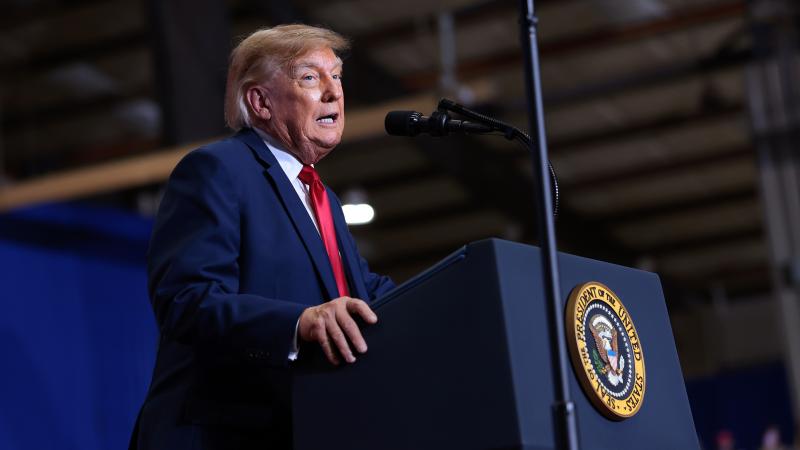
World financial markets surged Wednesday after President Donald Trump, speaking from Davos, Switzerland, appeared to rule out the use of military force regarding Greenland. But European leaders and media were quick to note there was still plenty of tension facing the fraying trans-Atlantic alliance.
Trump is one of more than 60 heads of state or heads of government at this year’s edition of the week-long World Economic Forum, where nearly every speaker directly addressed the latest dramatic moves from Washington.
Worries that Trump’s designs on Greenland could escalate sent global stocks into a major sell-off Tuesday, after unusually aggressive remarks Tuesday from Davos speakers including French President Emmanuel Macron and Mark Carney, prime minister of Canada.
“We are shifting toward a world without rules, where international law is trampled underfoot and where the only law that seems to matter is that of the strongest,” said Macron, who spoke wearing blue-tinted sunglasses due to an eye infection.
“The old-world order is not coming back,” Carney said. “We are in the midst of a rupture, not a transition.”
But most of Tuesday’s sell-off was erased Wednesday after Trump’s arrival in Davos, where he appeared to assuage fears from markets by appearing to take the prospect of military action in Greenland off the table.
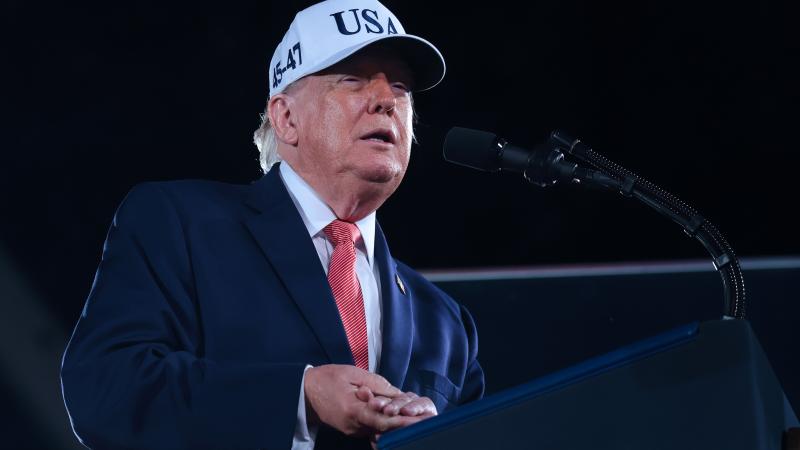
“We probably won’t get anything unless I decide to use excessive strength and force, where we would be, frankly, unstoppable,” Trump told world political and business leaders and other attendees. “But I won’t do that, OK? Now everyone says, ‘Oh, good.’
“I don’t have to use force, I don’t want to use force, I won’t use force,” the president concluded. “All the United States is asking for is a place called Greenland.”
But while markets responded to Trump’s remarks positively, other leaders were less convinced.
European lawmakers said Wednesday that they would suspend their approval of a difficult-to-negotiate trade deal between the European Union and the U.S. that had been finalized in July, noting that while Trump said he would not consider the use of military force in Greenland he did not back away from plans to raise tariffs on countries that have expressed diplomatic or military solidarity with the vast Arctic island.
Late on Tuesday, there were reports that European Central Bank head Christine Lagarde abruptly walked out of a 100-person formal dinner in Davos after Howard Lutnick began loudly criticizing European policy as a speaker there.
Denmark, which is the sovereign state that oversees Greenland, said this week that it would sell off U.S. Treasury notes in the state pension system, holdings worth around $100 million. That was a move that U.S. Treasury Secretary Scott Bessent dismissed on Wednesday as “insignificant.”
Despite his apparently conciliatory remarks regarding military force in Greenland, Trump did not hold off on blasting other countries, stating that most of the world was “almost entirely reliant” on the U.S. for peace and prosperity and that the country had been “mistreated” by allies that profited from Washington’s global security guarantees.
“Without us, most of the countries don’t even work,” Trump said.
In recent days, Trump has also threatened a 200-percent tariff on French wine because Macron refused to commit to a $1 billion seat on Trump’s “Board of Peace” for rebuilding Gaza.
European media, which for much of the last year often urged restraint when it came to diplomacy with the U.S., now appears to be turning on the leadership of the world's largest economy.
From Milan to London and from Paris to Warsaw, newspaper editorials said countries had to play tough with the U.S. to guarantee their autonomy.
The European Union edition of Politico reflected many of those views in a commentary by former Italian Prime Minister Mario Monti titled, “This is what the EU’s trade bazooka was meant for.”
Monti was referring to the three-year-old Anti-Coercion Instrument, which is aimed at helping European Union member states from outside pressure over trade and investment. Though the pact was designed to withstand trade pressure from China, Monti said it should be on the table for talks with the U.S.
The agreement “can create links between the EU and other countries affected by the same or similar coercion,” Monti wrote.
“The idea being that when a dominant power tends to follow the principle of [divide and conquer], it may be wise for its designated prey, both within and outside the EU, to seek a coordinated response.”
The Facts Inside Our Reporter's Notebook
Links
- Davos, Switzerland
- more than 60 heads of state or heads of government
- a world without rules
- We are in the midst of a rupture
- most of Tuesdayâs sell-off was erased Wednesday
- I donât have to use force, I donât want to use force, I wonât use force
- suspend their approval of a difficult-to-negotiate trade deal
- Christine Lagarde abruptly walked out
- sell off U.S. Treasury notes
- insignificant
- most of the countries donât even work
- refused to commit to a $1 billion seat on Trumpâs âBoard of Peaceâ
- This is what the EUâs trade bazooka was meant for.
- Anti-Coercion Instrument

Top Stories

Trending
Just the News Spotlight
Just News, No Noise