Vance’s Visa Ventures: VP’s crackdown turns hawkish on legal immigration
In the past few weeks alone, the administration has targeted the H-1B visa, the Optional Practical Training (OPT) program, Permanent Labor Certification (PERM), and J1 visas, all of which have faced criticism from immigration hawks over purported fraud and the displacement of American workers.
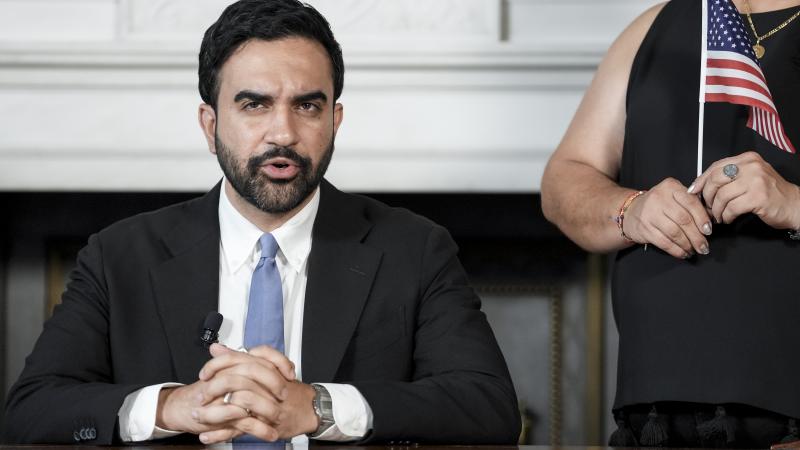
Vice President JD Vance’s anti-fraud task force has in recent days rapidly expanded its oversight of legal immigration programs, zeroing in on a series of visas and work programs that it says are rife with fraud. The development marks a discernible change in the administration’s stance on such visas since a high-profile 2024 debate among members of the administration on the issue.
In the past few weeks alone, the administration has targeted the H-1B visa, the Optional Practical Training (OPT) program, Permanent Labor Certification (PERM), and J1 visas, all of which have faced criticism from immigration hawks over alleged fraud and the potential to displace American workers.
$70,000 fee proposed on applications
In late September, the Trump administration announced an executive order directing federal agencies to coordinate H-1B applications and scrutinize requests from companies that have recently laid off American employees.
Earlier this week, the Department of Homeland Security proposed a rule that would impose a $70,000 fee on applications for the OPT program and a $30,000 fee for extensions. The DHS further warned that it could shut down the program entirely if not permitted to impose the fees.
PERM and J1 visas fell into the crosshairs on Thursday, with Vance announcing the review of major universities and their use of the J1 visas for federally funded grants. Vance also booted Microsoft from the PERM program, contending that it had abused the system.
Collectively, these programs account for millions of legal foreign workers and the recent reforms could collectively turn off the spigot of foreign labor to a plethora of institutions. Here’s a look at the recent moves.
H-1Bs and layoffs
President Donald Trump’s executive order in late September reaffirmed the currently enjoined $100,000 fee per application for the program, but also directed federal agencies to coordinate with one another to review the prior layoffs of any company seeking H-1B workers.
Critics of the program have argued that the program has effectively become a tool for companies to hire large numbers of foreign workers en masse for lower wages than Americans, a point that Vance highlighted at the time. "Our message to corporate America is simple: We’re not going to let you lay off American workers so you can replace them with cheap foreign labor," Vance said.
During that event, the administration also announced that H-1B registrations from the largest IT outsourcing firms had dropped by 92%. H-1Bs are capped at 85,000 per year.
The administration’s scrutiny of the H-1B program comes after the issue became the subject of a high-profile public debate among members of the administration after the 2024 election. Vivek Ramaswamy, then expected to serve as co-chair of the Department of Government Efficiency (DOGE), posted a lengthy tirade backing H-1Bs and criticizing American workers in December 2024 that then prompted administration figures like Vance to weigh in against the program. Trump himself expressed support for the H-1B program at the time. But Vance’s view seems to have gained traction with the administration in recent months.
“My view is the H-1B program is completely broken, and I’d be very supportive of just eliminating it. But while we have it, what we have to do is protect American workers. So I understand people are annoyed. What I would say is tell your congressman to fix this program," he said in a recent interview.
OPT and grad students
The Department of Homeland Security this week announced a proposed rule that would impose a $70,000 fee on new OPT applications, and a $30,000 fee on extensions for existing ones. The agency insisted that the program had become so rife with fraud that it needed the fees to handle the cost of review. It further warned that it may shutter OPT altogether if it was not able to implement the higher fees.
In making the announcement, the DHS highlighted assertions that the OPT program, too, had become an effective labor subsidy for foreign workers and is being abused.
“Optional Practical Training was never meant to be a back door into the American workforce, a subsidy for cheap labor, or a prize for those who game the system,” a DHS spokesperson said at the time. “DHS is upskilling OPT to require foreign students to justify their worth to employers. American workers should not have to compete against a program that has been turned into a pipeline for cheap foreign labor.”
Currently, an OPT application costs roughly $500 per application. It is a temporary employment certification for 12 months that students on F-1 visas may seek. Any time employed under OPT while in school is deducted from the 12-month total and the remainder may be used after graduation.
PERM and big tech
PERM, for its part, is a process by which employers may seek permanent work authorization for those with temporary status. It is common for recipients of H-1Bs and other visas to try to secure permanent authorization through the program.
But PERM has also faced the same criticisms as the H-1B program, namely, that it has become a pipeline for cheap foreign labor and an incentive for companies to avoid hiring Americans. In his Thursday announcement, Vance confirmed that the administration had suspended Microsoft, which he said was a major abuser of PERM, from the program altogether.
"We decided to suspend the PERM program for Microsoft, which means they will no longer be able to apply, they'll no longer be able to take those H1Bs and apply for permanent resident status within the United States of America," he said.
J1s and colleges
The Thursday press conference also saw Vance single out a group of elite universities for allegedly using another visa program to undercut American wages. Among those schools Vance named were Harvard, Yale, Stanford, Brown, the University of Pittsburgh, UC Davis, Caltech, Arizona State and MIT.
"These universities are employing J1 visas for federally funded grants at a rate of about 61%. The national average is 38%. So something weird is going on at these universities!" Vance said. "They're using these visas way too much. They're using them to undercut the wages of American grad students and American researchers. And it simply has to stop."
The J1 visa is a non-immigrant visa issued to foreigners in work-study exchange programs. The State Department issues roughly 300,000 J1 visas per year.
Ben Whedon is the Chief Political Correspondent at Just the News. Follow him on X.
The Facts Inside Our Reporter's Notebook

Top Stories





Trending
Just the News Spotlight
Just News, No Noise