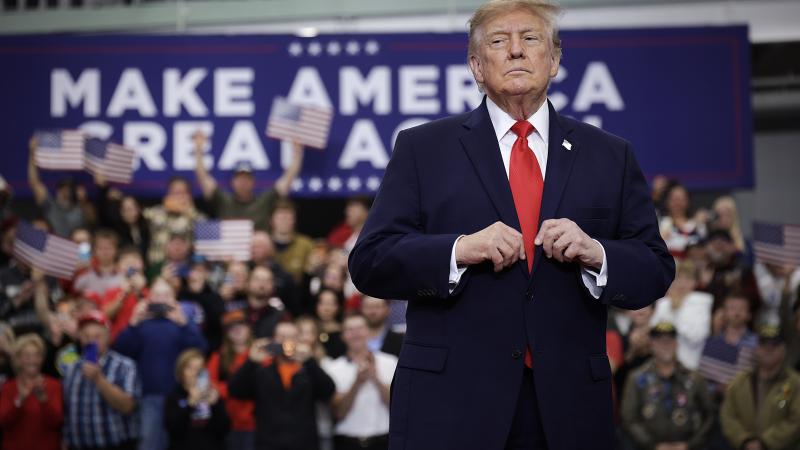
Australia responds to Bondi Beach massacre of Jews with more gun laws that don't stop shootings
As the United States moves closer to its founders’ intent to not infringe on citizens’ rights to keep and bear arms, Australia inches closer and closer to near-obliteration of any such rights.
Following Sunday's mass murder at Sydney's Bondi Beach in what has been characterized by law enforcement as an antisemitic attack, Australia's National Cabinet is set to impose even stricter gun laws, ultimately increasing so-called soft targets in a nation with some of the most restrictive gun laws in the world.
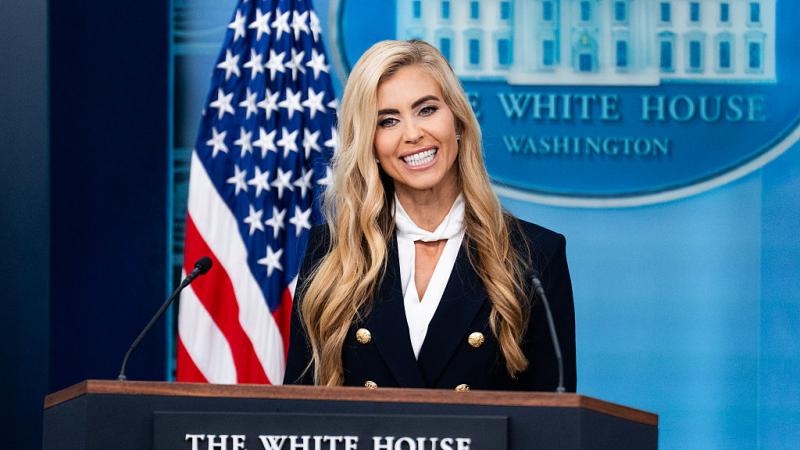
"Gun free zones obviously don't work. Didn't work in Australia. They didn't work at Brown University. They don't work virtually everywhere. So across the board, what we're seeing is the need for the Second Amendment, and especially the Bruen decision from the Supreme Court, to be upheld," Willis K. Lee, NRA (National Rifle Association) board member, tells Just The News.
Trump administration protecting citizens' gun rights
Lee's reference was to the 2021 Supreme Court case, New York State Rifle & Pistol Association, Inc. v. Bruen, which held 6-3 that New York State's law requiring individuals to demonstrate a special need or "proper cause" to carry a concealed handgun in public violated the Second Amendment, and affirmed that law-abiding citizens have a constitutional right to carry handguns for self-defense outside the home. The decision also requires gun regulations to be consistent with historical tradition rather than modern interest-balancing tests.
The Supreme Court decision, along with many pro-Second Amendment actions by President Donald Trump's administration, highlight that the United States is moving in the direction of gun freedom while Australia is moving further away.
Lee added, "The DOJ with [U.S. Assistant Attorney General] Harmeet Dhillon in the Civil Rights Division is actually starting to enforce the law, to enforce the Second Amendment, to enforce Bruen, and it's been wonderful with the lawsuits that they're bringing against these governments, local governments, state governments, that are infringing on our rights."
Australia's vanishing gun rights
Australia has a complicated history with gun ownership. Australia's response to the 1996 Port Arthur massacre was a wide-ranging crackdown that banned semi-automatic rifles and shotguns while forcing almost all law-abiding citizens to surrender their firearms, without any evidence of criminal misuse. In that tragedy, 35 people were killed and many more injured in a 1996 mass shooting at the historic Port Arthur tourist precinct in southeast Tasmania.
The subsequent gun buyback programs, which destroyed over a million legally owned weapons between 1996 and 2003, represented a massive government project that disarmed the populace and wasted taxpayer money, all while failing to deter determined criminals who ignore such mandates.
Since then, additional restrictions like handgun controls after the 2002 Monash incident involving the murder of two students at Monash University and more recent efforts against the making of 3D-printed firearms have continued to burden responsible gun owners with unnecessary bureaucracy, even as rising gun numbers show Australians' enduring desire for personal protection weigh heavily in the debates over the laws' actual effectiveness.
In Australia, individuals can obtain a firearm only if they hold a valid license, which requires them to be deemed a fit and proper person (typically aged 18 or older, with no disqualifying criminal history or domestic violence orders), complete safety training, and prove a genuine reason such as sport/target shooting, recreational hunting/vermin control, primary production, or occupational needs—explicitly excluding self-defense.
New gun law proposals after Bondi Beach attack
Licenses are issued by state/territory authorities under the framework of the National Firearms Agreement, with strict background checks, waiting periods, and safe storage requirements.
Following the Bondi Beach terrorist attack, Australian leaders have unanimously agreed to renegotiate the National Firearms Agreement and implement sweeping reforms, including limits on the number of firearms an individual can own and ending perpetual licenses in favor of time-limited ones with periodic reviews.
They also propose restricting gun licenses to Australian citizens only, excluding permanent residents. Additional measures involve greater use of intelligence in assessments, tighter controls on firearm types and modifications, and accelerating a national firearms register.
Antisemitism surges in Australia
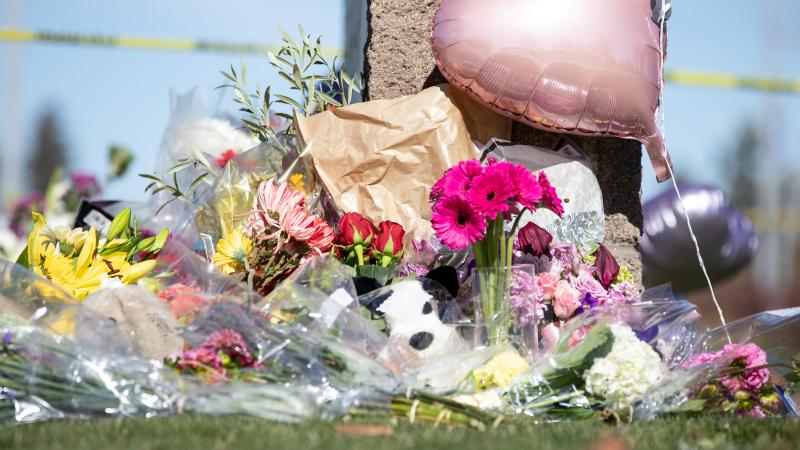
The massacre targeted those attending a public Hanukkah celebration called "Chanukah by the Sea," a Jewish festival gathering, and resulted in at least 15 people being killed and dozens injured. Australian officials, like Prime Minister Anthony Albanese, noted it struck Jewish Australians on the first day of Hanukkah.
"There has been a shocking level of antisemitism that has been rearing its head in this country as it has in other countries," Levi Wolff, lead rabbi of Sydney's Central Synagogue, told Reuters.
In recent years, particularly since October 2023, antisemitic incidents in Australia have surged dramatically, with the Executive Council of Australian Jewry recording 2,062 incidents from October 2023 to September 2024—a more than 300% increase over the prior year—and 1,654 in the following year, fiscal year 2025, remaining about five times higher than pre-2023 averages. These have included verbal abuse, vandalism, assaults, synagogue arson attacks, and escalating violence, prompting the government to appoint a Special Envoy to Combat Antisemitism in 2024, establish police taskforces, and strengthen hate crime laws.
Australian government concerned with Muslims as the 'real' victims
This most recent attack on Australia's Jewish community comes just months after Albanese's government harangued Australians about alleged Islamophobia in a report released on September 12.
Australia's Special Envoy to Combat Islamophobia, Aftab Malik, released a report titled "A National Response to Islamophobia: A Strategic Framework for Inclusion, Safety and Prosperity," which described Islamophobia as pervasive and at unprecedented levels since October 2023.
The report highlighted spikes in hate incidents, including verbal abuse, physical attacks, and online harassment, particularly affecting Muslim women, and identified structural discrimination in media, politics, and counter-terrorism policies. It proposed 54 recommendations, including inquiries into Islamophobia and anti-Palestinian racism, reviews of counter-terrorism laws, mandatory training for MPs, and stronger hate crime measures, which the government said it would carefully consider.
Benjamin Netanyahu lashes out at Albanese
Israel's Prime Minister, Benjamin Netanyahu, has laid responsibility for the deadly Bondi shooting attack at the feet of Anthony Albanese, accusing the Australian leader of pouring "fuel on the antisemitism fire" by prematurely recognizing a Palestinian state.
It is not the first time Netanyahu has criticized Albanese, in a repeat of previous allegations of weak leadership leveled by the Israeli prime minister. In an overnight address, Netanyahu said "antisemitism is a cancer" and that it "spreads when leaders stay silent."
The Facts Inside Our Reporter's Notebook
Links
- Port Arthur massacre
- a million legally owned weapons
- additional restrictions
- 2002 Monash incident
- obtain a firearm
- proper person
- issued by state/territory authorities
- unanimously agreed
- propose
- explicitly noted
- surged dramatically
- Executive Council of Australian Jewry
- 2,062 incidents
- harangued Australians

Top Stories

Trending
Just the News Spotlight
Just News, No Noise