Trump steamrolls over California’s anti-fossil fuel crusade to get oil flowing from offshore rigs
Were it not for the fact that California GDP accounts for 14% of the U.S. total, and is home to military installations and key shipping ports, Trump might be happy to let the state run its energy industry into the ground. But with its impacts reaching beyond state borders, Trump is taking action.
The Trump administration authorized a Houston-based offshore oil company to restart oil platforms off the coast of California, called the Santa Ynez Unit, which the state has aggressively fought as part of its overall hostility toward all oil and gas production.
While the governor and state lawmakers remain committed to their anti-fossil fuel policies that are driving away its oil and refining industry, the state is home to approximately 12% of the U.S. population, numerous key military facilities, a dozen shipping ports, and approximately 14% of the U.S. GDP.
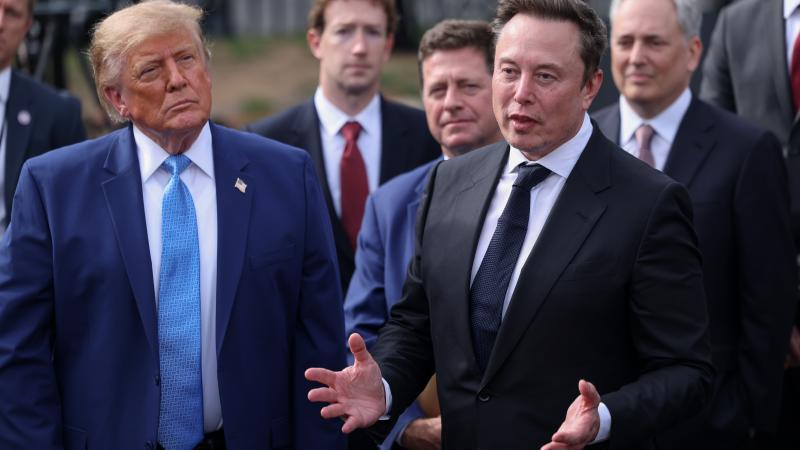
What happens in California’s energy policy doesn’t stay in California, and the impacts on its economy can impact the nation’s. With the impacts of its net-zero emissions policies potentially causing harm beyond California’s borders, President Donald Trump is asserting more control over the state.
California fights domestic oil, imports foreign oil
By some estimates, California has some of the largest oil reserves in the country, even more than Texas, according to the “Tuco’s Child Newsletter,” which cited two independent studies. Over the years, as the state has tried to force consumers to transition to fossil-fuel alternatives, its oil production has declined to about one-quarter what it was in the 1980s.
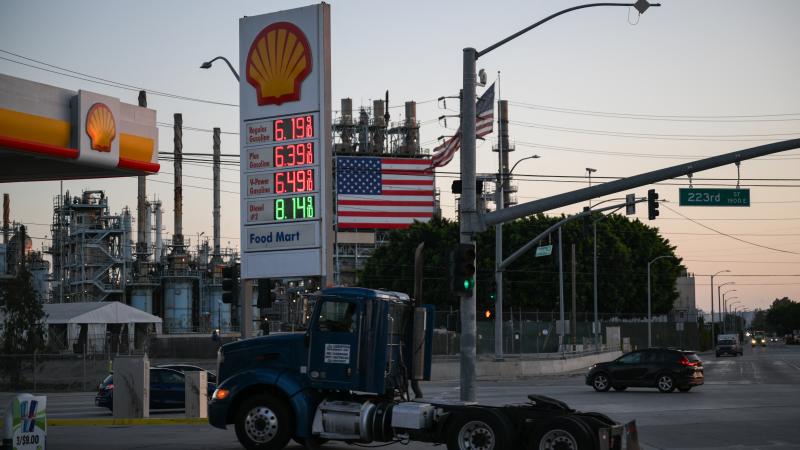
California Gov. Gavin Newsom has boasted of his efforts to fight the state’s oil companies, and they responded, perhaps predictably, by leaving the state. Two major refineries have closed, and Chevron relocated its headquarters to Texas. Newsom responded to the impending gasoline shortage by trying to work with the refiners to secure gasoline imports, which are more expensive and produce more carbon emissions.
The Santa Ynez Unit, which is operated by Sable Offshore Corporation, is in fact three offshore oil platforms, an oil processing facility at Las Flores Canyon northwest of Santa Barbara, and associated pipelines. It was shut down in 2015, and resumed limited production last year. It has the potential to be one of the most productive offshore oil fields in the country, and it could lessen California’s self-created reliance on imports.
Newsom vowed he would fight to stop Sable from resuming full operations. He blamed Trump’s actions in Iran for high gasoline prices in his state. He argued that the production from the Santa Ynez facility wouldn’t lower prices and accused the Trump administration of sacrificing California’s coastal environment and economy.
“Donald Trump started a war, admitted it would spike gas prices nationwide, and told Americans it was a small price to pay. Now he’s using this crisis of his own making to attempt what he’s wanted to do for years: open California’s coast for his oil industry friends so they can poison our beaches,” Newsom said in a statement, which included a picture of a baby seal covered in oil.
Attacking infrastructure at multiple points
Over the years, California has been throwing everything it can at the facility to stop it from coming fully online.
The California Fire Marshall issued a ruling in October that concluded that Sable needed further repairs before it restarted the pipeline, which leaked approximately 3,380 barrels of oil in 2015. The spill was the result of corrosion, the Santa Barbara Independent reported, and Sable argued that the Fire Marshal was requiring repairs that weren’t previously discussed.
In December, the Pipeline and Hazardous Materials Safety Administration (PHMSA) ruled that the pipeline was an interstate infrastructure, which granted the federal government the final say over the matter. California Attorney General Rob Bonta sued the Trump administration over the decision, warning that the pipeline will cause “devastating environmental and public health impacts.” Environmental groups also filed a lawsuit.
In July 2025, a Santa Barbara judge issued an injunction against opening the pipeline until the company acquired all the state permits the infrastructure requires. Since the state appears to have no intention of issuing the permits, it was a de facto ban on Sable operations. Last month, the judge upheld the injunction, CalMatters reported.
Trump administration takes action
The Trump administration began taking steps to force the issue. The Department of Justice issued a legal opinion earlier this month concluding that, under the Defense Production Act, the federal government could supersede state law. The Defense Production Act grants the president a wide range of authority to influence the domestic industrial base in the interest of national security.
On Friday, President Donald Trump signed an executive order amending his earlier order declaring a national energy emergency to include the Secretary of Energy in the delegation of presidential authority to exercise the emergency.
On the same day, Energy Secretary Chris Wright followed that up with an order directing Sable Offshore Corp. to resume operations at its Santa Ynez Unit and the associated pipeline system. In a statement, Wright said that the Trump administration is putting energy first.
“Unfortunately, some state leaders have not adhered to those same principles, with potentially disastrous consequences not just for their residents, but also our national security. Today’s order will strengthen America’s oil supply and restore a pipeline system vital to our national security and defense, ensuring that West Coast military installations have the reliable energy critical to military readiness,” he said.
The facility could produce up to 50,000 barrels of oil per day, which would increase in-state oil production by 15%. This would, the Energy Department's announcement explained, replace nearly 1.5 million barrels of imported oil each month.
It’s not the only effort the Trump administration has taken to push back on California’s anti-fossil fuel regulations. Last week, it filed a complaint in the U.S. District Court for the Eastern District of California, which argues that state-adopted regulations related to fuel economy are illegal. Newsom vowed to fight the lawsuit, according to The New York Times.
For now, it appears that the benefits of increased oil production and cheaper cars, as well as the risks to national energy security, won’t deter the state of California from its quest to stop oil from being produced and used off its coasts or within its borders.
Kevin Killough is the energy reporter for Just The News. You can follow him on X for more coverage.
The Facts Inside Our Reporter's Notebook
Links
- state lawmakers remain committed
- Tucoâs Child Newsletter
- one-quarter
- boasted of his efforts
- Chevron relocated its headquarters to Texas
- secure gasoline imports
- Santa Ynez Unit
- said in a statement
- Santa Barbara Independent reported
- California Attorney General Rob Bonta sued
- Environmental groups
- CalMatters reported
- issued a legal opinion
- Defense Production Act
- Trump signed an executive order
- In a statement
- complaint
- according to the New York Times
- follow him on X


Top Stories




Trending
Just the News Spotlight
Just News, No Noise