As gas supplies in California dwindle, Newsom works to secure imports with ‘Big Oil’ he once fought
Strange bedfellows: A refining company that's shutting down a California refinery announced it will boost the state's gas supplies with imports. Gov. Gavin Newsom took credit for his leadership in "working closely" with the company. Only a few years ago, Newsom was proudly proclaiming he fought "Big Oil" and won.
A refining company proceeding with its plans to idle its gasoline refinery in California announced Tuesday it will help out California consumers by importing gasoline, which will help shore up the state’s dwindling supply.
After the announcement, California Democratic Gov. Gavin Newsom took credit for his leadership in working with the company to ensure fuel supplies, departing from his rhetoric a few years ago when he claimed to have successfully fought the state’s oil industry and won.
“While others point fingers to spread fear and divide us, California is doing the actual work — collaborating with industry, using data and transparency to protect consumers, and building the all-of-the-above energy future America needs,” Newsom said in a statement Tuesday.
Collaborating with industry he formerly demonized
Valero provided an update Tuesday on its plans to cease operations at a refinery in Benicia, California, explaining that the closure is proceeding as planned and will be complete by April. The facility will continue producing gasoline for California drivers until April, after which the company will import gasoline, the announcement said.
The governor went on to say he will continue “working closely” with Valero while California completes its “ongoing energy transition.”
Over the past several years, Newsom took a much more hostile stance toward the state’s oil industry. Tim Stewart, president of the U.S. Oil and Gas Association, told Just the News that Newsom played a big role in creating the problems he’s now claiming to be solving.
“Governor Newson trumpeting his leadership is like the captain of a sinking ship taking credit for handing out life jackets after he’s crashed the ferry on the rocks. It was the lack of leadership on energy policy that got California to this point, and ultimately the White House may have to intervene to mitigate further damage from the governor’s leadership on this issue,” Stewart said.
Laws against price gouging, but no price gouging found
When California’s gasoline prices spiked in the summer of 2022, Newsom claimed refineries were “price gouging,” even though his own energy officials disputed the claim. Newsom ignored the experts and instead signed legislation against the price gouging he insisted was happening.
“With this legislation, we’re ending the oil industry’s days of operating in the shadows. California took on Big Oil and won,” Newsom declared in March 2023. The legislation required oil companies to be transparent about how much money they’re making from their products. Companies spent the money to comply with the law, but no price gouging was ever uncovered.
A year later, the industry Newsom fought so hard against began to reconsider its investments in California. In August 2024, Chevron moved its headquarters to Texas.
But Newsom wasn’t finished with his fight against “Big Oil.” In October 2024, he signed a law that requires refineries to maintain a certain amount of product so that when supplies are low, California residents don’t get hit with price spikes at the pump.
Investing in California not an acceptable "risk," Chevron says
Industry spokespersons with trade groups said the measure would have the opposite effect. Catherine Reheis-Boyd, CEO of Western States Petroleum Association (WSPA), warned the previous August that the refinery supply mandate would create artificial shortages by forcing refiners to withhold fuels from the market.
Arizona and Nevada get a large portion of their gasoline supplies from California refineries. Arizona Gov. Kathie Hobbs, a Democrat, and Nevada Gov. Joe Lombardo, a Republican, wrote a letter to Newsom a month before the law passed, warning that the refinery regulations would drive up costs for consumers.
Andy Walz, president of Americas products for Chevron, wrote the California Energy Commission in August 2024, arguing the legislation would raise prices for consumers. “California policymakers continue to risk making the state ‘uninvestable,’ which erodes energy infrastructure and increases consumer costs,” Walz said in the letter.
Two days after the law passed, Phillips 66 announced it would close its Los Angeles-area refinery, and the following April, Valero announced it would close its Benicia facility
Dealing with the fallout
The type of gasoline flowing out of California’s still-operating refineries isn’t easily replaced. The state requires a special blend called "California Reformulated Gasoline Blendstock for Oxygenate Blending", also known as CARBOB. Only California refineries produce the product.
The Jones Act requires that shipping between U.S. ports be done solely by U.S. built and crewed ships. The text of the statute, among other things, requires shipping between U.S. ports to be conducted by US-flag ships. There aren’t many of these ships available to transport gasoline from the Gulf Coast or Washington state, and even if there were, those refineries would need to start producing CARBOB. It’s not clear where Valero will be sourcing its imports of the fuel blend.
In August 2024, the California Energy Commission began to sense that “Big Oil” might lose interest in the risk of pumping out CARBOB supplies in the state, which would lead to shortages and high prices as they abandon their refining facilities. The CEC drew up a proposal for the state to purchase and operate the refineries until such a time they wouldn’t be needed, after the state had forced all California drivers to drive EVs.
Before any movement could be made on the proposal, Valero and Phillips 66 announced their departure, so California began looking for a buyer to take over the Valero facility. No investors stepped up to bet on the operation.
Disruptions and geopolitical situations make price spikes still possible
In September, Newsom signed legislation, which, among other things, allows for increased oil production in California’s Kern County. Now, as Valero completes the last step in shuttering the Benicia facility, the company is going to help the state import gasoline supplies.
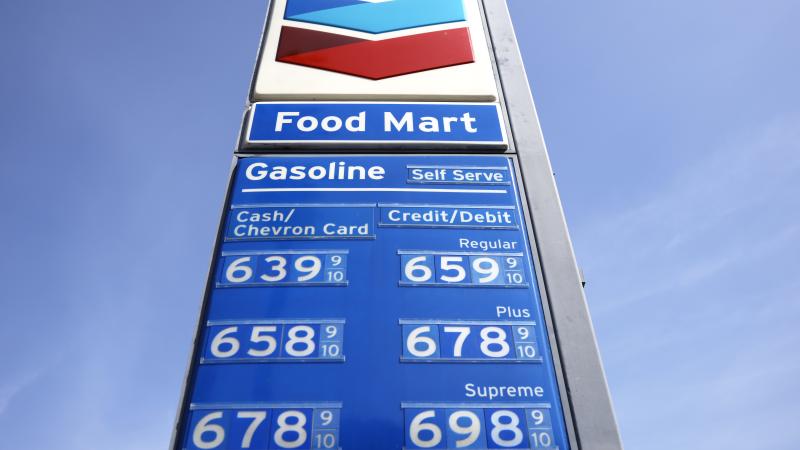
University of Southern California professor Michael Mische estimated in July that consumers would pay approximately $0.30 per gallon for imported gasoline. On Friday, California drivers were paying an average of $4.22 per gallon, according to AAA. This was the second highest in the country after Hawaii.
Mische told Just the News at the time that imports are vulnerable to extreme weather events, such as hurricanes, and geopolitical situations. If any of these disrupt imports, price spikes will follow.
The state is also down to just seven refineries producing gasoline compliant with California’s complex regulations. This means any disruption in their operations would also spike gas prices in the state.
A disruption could be a maintenance issue that’s quickly resolved, or something far worse. One of the remaining refineries is the Chevron Richmond refinery, which sits right on the Hayward Fault. That fault, geologists believe, is due for a major seismic shift.
Committed to climate policies despite using the word "partnership"
While Newsom’s statements Tuesday spoke of partnership rather than war against the state’s oil and gas industry, he continued to deny any role in the gasoline supply issues. He also expressed no reconsideration of the state’s anti-fossil fuel policies.
Newsom disputed that refinery closures are unique to California and praised his price-gouging legislation as creating “data transparency tools” while the state continues its transition away from petroleum-based transportation. By 2035, state law will require car dealerships to stop selling gas-powered vehicles.
Newsom also argued in the statement that California’s transition to “clean” energy will improve energy security for the state, and he touted his “climate leadership” in reducing the state’s greenhouse gas emissions.
Based on those statements, it’s unlikely that the state will pursue a regulatory environment friendlier to the oil and gas industry anytime soon. So, given the chokehold effect that California's regulatory environment has on investment by fuel companies, it remains to be seen if any of the seven remaining refineries will decide to shut down.
Kevin Killough is the energy reporter for Just The News. You can follow him on X for more coverage.
The Facts Inside Our Reporter's Notebook
Links
- Valero provided an update
- said in a statement
- U.S. Oil and Gas Association
- spiked in the summer of 2022
- energy officials disputed the claim
- signed legislation
- Newsom declared
- Chevron moved its headquarters to Texas
- signed a law
- Western States Petroleum Association
- warned the previous August
- wrote a letter to Newsom
- said in the letter
- Phillips 66 announced
- California Reformulated Gasoline Blendstock for Oxygenate Blending
- according to The Center Square
- CEC drew up a proposal
- California began looking for a buyer
- Newsom signed legislation
- Michael Mische
- estimated in July
- according to AAA
- seven refineries
- due for a major seismic shift
- state law


Top Stories




Trending
Just the News Spotlight
Just News, No Noise