Trump has options to address Iran's killing of protesters, not all plans include military strikes
In a challenge to President Trump’s warnings not to harm them, the Islamic Republic's security forces have started to crack down on protesters with violence, reportedly killing hundreds. Iran has cut off communications to the world, so facts on the ground are difficult to verify.
Protests are rocking the Iranian regime, which has now resorted to violent crackdowns on protesters to regain control. President Donald Trump, who previously vowed to punish Iran if it started killing protesters, is weighing how to respond.
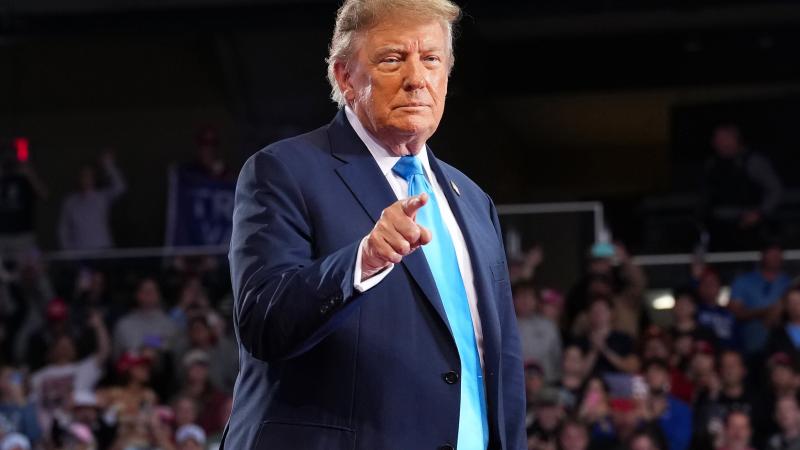
“We’re looking at it very seriously,” President Trump told the press on Air Force One when asked about whether the administration is weighing a military response. “The military is looking at it, we’re looking at some very strong options.”
Options other than military strikes on the table
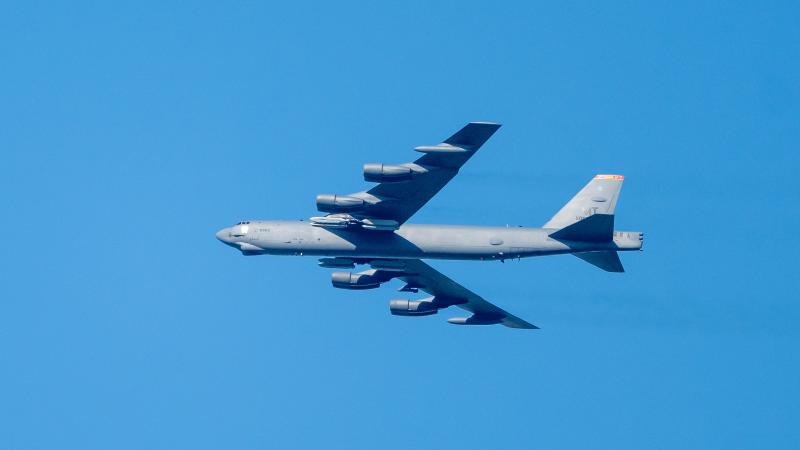
President Trump ordered the bombing of Iranian territory last year, targeting key sites belonging to Iran’s nuclear program in a surprise attack. However, the U.S. has other options to pressure the regime short of direct military strikes, experts tell Just the News.
The protests in Iran began shortly before the New Year in urban commercial districts, sparked by increasingly difficult economic conditions. However, after the New Year, demonstrations have expanded across the country and have taken on a decisively anti-regime character. The rapid spread of the protests pushed the Islamic Republic to cut phone and internet services across the country last week to halt the spread of online information.
The regime’s security forces have also started to crack down on protesters with violence. According to the U.S.-based Human Rights Activists News Agency, which monitors Iranian anti-regime activity, nearly 500 protesters have been killed as of Monday. The group also reported that 48 members of regime security forces have also been killed and that over 10,000 protesters have been arrested.
The Sun reported last night, without citing direct sources, that protester Erfan Soltani "is due to be executed tomorrow, just four days after he was seized for taking part in anti-government protests." The Sun speculated that "Tehran is now beginning to expedite court hearings so they can execute convicted 'ringleaders of unrest.'”
As the protests gathered steam, President Trump warned Iran that the U.S. would intervene if Iran kills any peaceful protesters.
Trump: "Locked and loaded"
If Iran shots [sic] and violently kills peaceful protesters, which is their custom, the United States of America will come to their rescue," Trump posted on Truth Social early Friday. "We are locked and loaded and ready to go. Thank you for your attention to this matter! President DONALD J.TRUMP."
Now that the regime’s security forces have engaged in violent crackdowns, Trump has said that he is weighing how to respond, including military strikes. However, several other options remain open to the president short of using force.
“The Trump administration has a range of policy options, which do not require American boots on the ground,” Bridget Toomey, a research analyst at the Foundation for Defense of Democracies, told Just the News.
As the protests escalated, the regime imposed a multi-day internet blackout to prevent footage of the protests and violence against protesters from spreading. “Given the ongoing multi-day internet blackout in Iran, the Trump administration could enable internet and communications to circumvent the regime’s blackout which would allow Iranians to not only connect with each other but also share with the world the violence of the regime,” Toomey said.
Reuters reported that despite the theocracy's efforts to make Iranians incommunicado by using jamming technologies, Elon Musk's Starlink internet service appears to have some functionality in Iran, and although illegal there, users there are trying to tell their stories to the world.
Additionally, Toomey said the Trump administration could use a range of methods to directly undermine the security forces underpinning the regime or seek to deprive the regime of funds.
Non-military options range from tech to tankers
“The United States could conduct cyber operations targeting the Islamic Republic’s repression apparatus which would hinder their ability to surveil and target the people. Another avenue for the Trump administration would be seizing tankers in the regime’s illicit oil ‘Shadow Fleet,’ which enrich the regime and its cronies,” Toomey said.
The seizure of sanctioned oil vessels is already a tool that the U.S. has employed with great success against so-called “shadow fleet” vessels transporting oil out of Venezuela. After the United States raided the country and captured its dictator, Nicolás Maduro, the Trump administration has used the military to intercept at least five oil ships it accused of violating Venezuelan sanctions.
Iran’s senior diplomat urged Trump not to intervene and on Monday threatened retaliation against the United States if Iran is attacked amid the protests. “We do not want war, but we are completely prepared for it — even more prepared than before the previous war,” Foreign Minister Abbas Araghchi told an assembly of foreign diplomats.
President Trump said that the Iranians have reached out to him directly, offering to negotiate on their pursuit of a nuclear program that the U.S. damaged in military strikes last year. Trump said that a meeting with Iran’s leaders was being set up, but left open the possibility of responding to the regime’s crackdown before then.
“Iran called to negotiate yesterday. The leaders of Iran called. They want to negotiate. I think they’re tired of being beat up by the United States,” Trump said. “We may meet with them — a meeting is being set up, but we may have to act because of what’s happening before the meeting, but a meeting is being set up.”
President Trump came into office earlier this year promising a reordering of the Middle East. Key parts of his vision for the region included dealing major blows to the twin pillars of Iran’s bid for regional supremacy—its illicit nuclear program and a network of foreign proxies, Just the News previously reported.
The "red line" of nuclear capability
The Iranian regime’s nuclear weapons program has been a thorn in the side of successive U.S. administrations since the first stages of development began covertly in the 1990s. The Trump administration in particular viewed Iran’s aim to possess a nuclear weapon as a bright red line, given the regime’s long-time hostility to America and to other allies in the region.
From the earliest days of his new administration, Trump made clear that he intended to return to the signature policies of his first administration, signing an executive order directing the government to apply “maximum pressure” to the government of Iran to hamper its nuclear program, starve it of oil revenues, and disrupt funding to its proxy network.
The policy laid out by that order culminated in the strike against three Iranian nuclear sites earlier this summer after months of failed negotiations with the regime. Damage assessments from U.S. and Israeli intelligence agencies concluded that the regime’s nuclear program has been severely damaged.
In September, an independent nuclear monitor found that Iran has “no identifiable route” to enrich uranium after the strikes likely severely damaged its centrifuges and nuclear facilities, Just the News reported.
Iran's proxies severely diminished
The U.S. and its long-time ally Israel have also crippled Iran’s network of proxies across the region, weakening the second pillar of the regime’s power. Israel has crushed Lebanese Hezbollah and Hamas in Gaza, depriving Iran of two key proxies that served as a proverbial knife at Jerusalem’s throat in any potential conflict with Iran, Just the News previously reported.
Trump took on the Iran-backed Houthis in Yemen, who have attacked commercial shipping traffic and military vessels near the entrance of the Red Sea. In March, Trump ordered several bombing campaigns against the Houthis. The strikes forced the group into a ceasefire deal and attacks on shipping declined.
Hezbollah remained a powerful force in Lebanon until it was severely weakened last year by Israeli military attacks, one of which killed the group’s longtime leader. The group was forced into a ceasefire and has retreated away from the Israeli border.
Exploiting Hezbollah’s weakness, Syrian opposition groups rapidly advanced on the capital, Damascus, and in 2024 overthrew the reigning dictator, Bashar al-Assad — another close ally of Iran — who used the regime’s support, both directly and through Hezbollah, to stay in power. Al-Assad is reportedly living in a luxury home in Moscow, The Guardian reported.
The Facts Inside Our Reporter's Notebook
Links
- told the press
- sparked by increasingly difficult economic conditions
- cut phone and internet services
- nearly 500 protesters
- over 10,000 protesters have been arrested
- President Trump warned Iran
- research analyst
- employed with great success
- urged Trump not to intervene
- Trump said
- promising a reordering of the Middle East
- Just the News previously reported
- signing an executive order
- Iran has âno identifiable routeâ to enrich uranium
- forced the group into a ceasefire deal



Top Stories



Trending
Just the News Spotlight
Just News, No Noise