Growing concerns about ‘activist judges’ intensify calls for structural reforms
The long-simmering calls have recently intensifies as a number of federal district court judges have repeatedly blocked major executive branch initiatives.
Long-simmering conservative concerns about so-called “activist judges” have intensified in recent months, as a number of federal district court judges have repeatedly blocked major executive branch initiatives and reshaped national policy through judicial orders.
Critics argue such rulings exceed the proper role of the judiciary and concentrate outsized power in the hands of individual trial-level judges. The debate has renewed calls for intervention by the Supreme Court’s leadership and for legislative reforms that would curb judicial authority.
One judge frequently cited in these critiques is U.S. District Judge James Boasberg, of the District of Columbia. Appointed by President Barack Obama, Boasberg has overseen several high-profile cases involving executive power, administrative agencies, and national security. Conservatives point to his rulings limiting federal detention authority, scrutinizing intelligence-related actions and supervising politically sensitive investigations as emblematic of what they view as judicial overreach.
Boasberg, who also serves as the chief judge of the D.C. district court, drew particular attention for his order blocking the Trump administration’s efforts to deport Venezuelan men accused of gang ties under the 1798 Alien Enemies Act.
The order prompted Texas GOP Rep. Brandon Gill to introduces articles of impeachment on the ground that Boasberg used “his judicial position to advance political gain” and obstructed “the President’s constitutional prerogatives.”
Boasberg is not alone in facing such criticism. District Judge Tanya Chutkan, also of the District of Columbia, has faced conservative criticism for her handling of cases related to the Jan. 6, 2021, Capitol riot including her rejection of broad executive immunity arguments advanced by President Donald Trump's lawyers between his term.
And Judge Amit Mehta, another Obama appointee in the same court, has been faulted by conservatives for allowing civil lawsuits against Trump and extremist groups to proceed under expansive theories of conspiracy and incitement.
Outside Washington, Judge Jon Tigar, of the Northern District of California, has repeatedly enjoined immigration policies, including asylum restrictions, issuing rulings that applied nationwide. Conservatives argue that these decisions effectively rewrite immigration law and prevent the executive branch from exercising authority delegated by Congress.
Judge Brian Murphy, of the District of Massachusetts, has also been criticized for blocking the Trump administration’s immigration and asylum agenda.
The concentration of these cases in a handful of judicial districts has further fueled conservative frustration. Because plaintiffs can often choose where to file suit, litigants can seek out sympathetic judges, a practice some describe as “forum shopping.” The result, critics argue, is that national policy can hinge on the views of a single judge in one courthouse.
One proposed solution lies within the judiciary itself. Under the Judicial Conduct and Disability Act, the Judicial Conference of the United States may refer a judge to Congress if it determines that the judge’s conduct could warrant impeachment.
Chief Justice John Roberts, who chairs the Judicial Conference, is responsible for transmitting any such certification to lawmakers. While referrals are rare, some legal commentators contend that the mechanism should be used more aggressively when judges act beyond their constitutional authority.
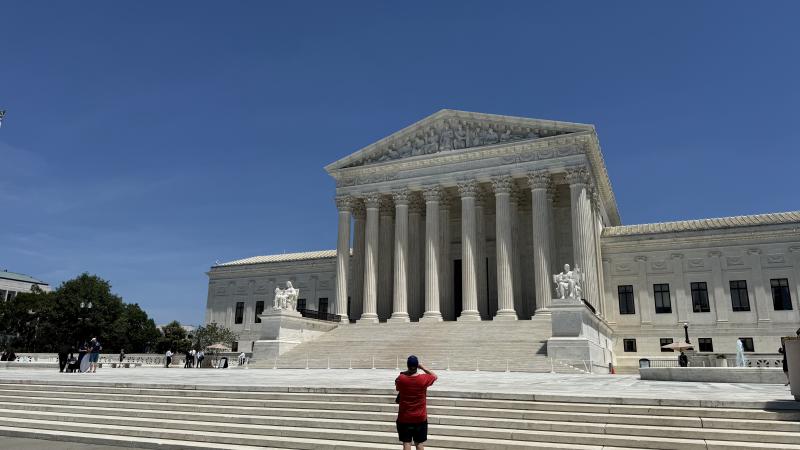
Another avenue for reform lies with Congress, which has clear constitutional authority to define the jurisdiction and powers of lower federal courts. Lawmakers could, for example, require cases with national implications to be heard by three-judge panels, or mandate expedited Supreme Court review of injunctions blocking federal laws or regulations.
The debate over activist judges ultimately reflects deeper tensions about the role of courts in a polarized political system. As Congress struggles to legislate and presidents rely increasingly on executive action, courts have become a primary battleground for policy disputes. Whether through judicial self-restraint, judicial intervention, or congressional action, pressure is mounting for reforms that clarify—and potentially limit—the power of individual judges to shape national policy.
The Facts Inside Our Reporter's Notebook
Links


Top Stories





Trending
Just the News Spotlight
Just News, No Noise