Related Articles
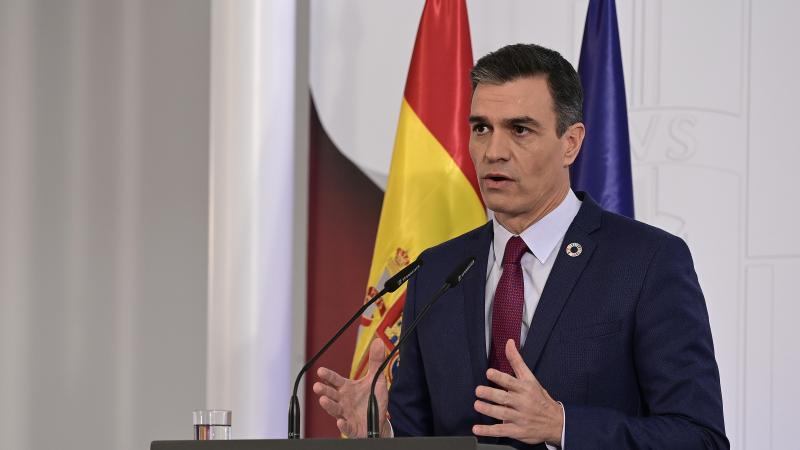
Treasury Secretary Scott Bessent warned that nations facilitating Tehran’s financial and trade networks must now choose between partnering with the United States or facing economic isolation.
U.S. Treasury Secretary Scott Bessent on Monday laid the foundations to significantly expand the wartime economic pressure campaign against Iran to isolate the regime from the global financial system.
The new measures will target both “entities, individuals, and vessels” globally and Iran’s “enablers”–third countries that facilitate Tehran’s financial transactions, illicit oil trade, as well as bolster its weapons industry.
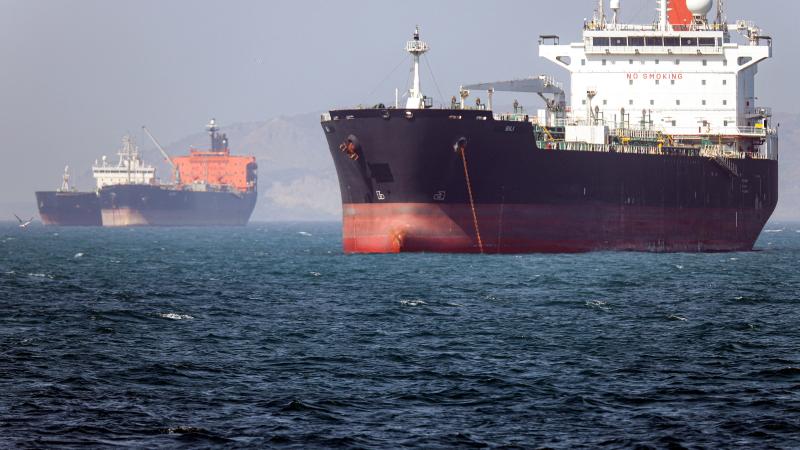
In a press conference announcing the new measures, Bessent called out the enablers, which he did not name, for purchasing Iran’s petroleum products, allowing their financial systems and banks to facilitate transfers of Iranian funds, and allowing Iran’s shadow fleet to transfer oil products in their territorial waters.
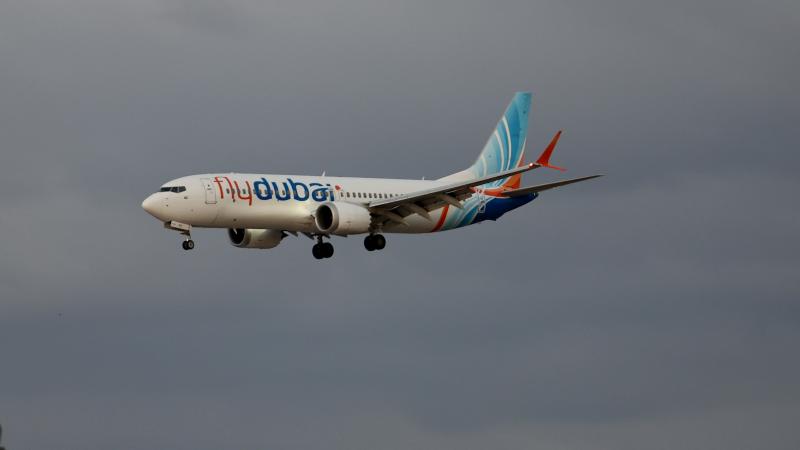
These activities, which Bessent described as operating in the “gray spaces” of conflict, have provided Tehran lifelines in the midst of its ongoing conflict with the United States that began nearly six months ago in late February. The new sanctions, Bessent told reporters, are designed to cut five key lifelines for Tehran: “digital assets, technology, gold, aviation, and shipping.”
These key lifelines travel through many countries that have refused to cut off business ties with Iran during the war. Bessent said that the time has come for these countries to choose between joining the United States or share in the isolation of the Iranian regime.
Though the secretary did not name the countries enabling Iran, he clearly identified the activities that the United States views as aiding the regime.
“Iran's enablers purchase, transport its petroleum. They facilitate the flow of its finances through exchange houses and free trade zones. They welcome Iran's flights and maintain registries on its behalf. They turn a blind eye to seaborne fuel transfers and overland transits. They condone illicit use of their banks, all the while concealing the extent of their complicity,” Bessent said.
“[N]ations that facilitate any international interactions with the regime should quickly heed our message. Those who stand with the United States will reap the rewards of our partnership. Those who tether themselves to the Iranian regime should expect to share in the isolation of a withering regime,” he added.
Bessent, President Trump and his administration have begun calling and meeting with global leaders outlining American expectations. “Every country has a defined timeline to shut down activities we have identified. If they do not take action, we will do so unilaterally through Treasury authorities,” Bessent said. “And let me be clear: any entity that facilitates money laundering on behalf of Iran will be removed from the U.S. dollar system. The clock just started ticking.”
Currently, the United States is neither sharing the names of leaders and countries that the president has approached nor in what timeframe the United States expects a response.
“Economic D-Day is officially here. But what will measure its success for the administration is how many of Iran’s international enablers are taken down, and how quickly,” Behnam Ben Taleblu, senior director of the Iran Program at the Foundation for Defense of Democracies, told Just the News.
”Despite years of sanctions, Iran has benefited from a host of illicit networks allowing it to sell and transfer oil and launder those payments back through the international financial system,” he said. “These networks and their beneficiaries, who often work out of friendly jurisdictions, must be taken down. Otherwise, maximum pressure will not have meant maximum pressure.”
Bessent specifically identified Iran’s Bank Melli, the country’s leading commercial bank, and said that every branch of the financial institution across the globe “must be shuttered and dark.” Bank Melli was sanctioned by the U.S. Treasury Department several times, including in 2007 and 2018, but it still operates branches in the United Arab Emirates, Iraq, Oman, Azerbaijan, Germany and France, Miad Meliki, a former U.S. government sanctions official, posted to X. The bank also has subsidiaries in the United Kingdom, Hong Kong, Russia and Afghanistan.
Some countries, like the United Arab Emirates, have already started to take action to cut Tehran’s lifelines, Just the News previously reported.
One of the countries likely to face pressure from the United States is China.
Before the war, China was Iran’s top trading partner and had signed an economic accord with Tehran promising billions of dollars in investments in Iranian industries in exchange for continued access to its oil exports. China has purchased the vast majority of Iranian oil for years, even while its exports are under international sanctions. Chinese banks and front companies help Iran with oil transactions to avoid the sanctions as well as operate ships in a shadow fleet to transport the sanctioned oil, according to the U.S.-China Economic and Security Review Commission. China has also sold Iran the technology and inputs required to construct its fleet of attack drones and missiles.
“Crucially, America’s willingness to threaten or levy secondary sanctions against banks and businesses in China will also be in focus. China remains the single biggest importer of Iranian energy products, [and] has a lot to lose if its anti-American partner in the Middle East collapses,” FDD’s Taleblu said. “The art of the deal for the administration will be how to turn the screws on China without inviting greater global economic ruin, and how to get China to sell Iran out at the right price.”
As part of Operation Economic Outcast, the Treasury announced on Monday sanctions against the Hong Kong-based Sweet Ocean Industrial Limited, China-based individuals Tian Jianbai and Zhang Limei, and Hong Kong-based Tiany Technology Limited for allegedly facilitating Iran’s nuclear program. The companies Feili Co Limited, Minvur Limited, Feisu Limited, and Guska Co Limited were also identified as having participated in this network.
This year, the Trump administration has already targeted with sanctions Chinese “teapot” oil refineries, shadow fleet vessels operated by China-based shipping companies, and Chinese companies said to have provided Iran with satellite imagery to enable Iran’s military strikes as well as entities and individuals that have helped Iran secure materials and components for its weapons programs. Teapot refiners are small, independent plants that often seek out cheaper, sanctioned oil.
In April, Washington warned Chinese banks that they could face sanctions for facilitating transactions for the small refineries dealing in sanctioned oil supplies. However, to date, the United States has refrained from directly targeting such Chinese financial institutions. Bessent on Monday warned that such institutions will no longer be beyond the reach of U.S. sanctions if they do not comply.
“[If] they facilitate transactions and are part of the ecosystem that turns Iranian oil into money, into repression, they will be targeted,” Bessent said of China. “We find that the best way to engage with countries is through quiet diplomacy, and we are level setting with every country to tell them our expectations.”
Chinese Foreign Ministry spokesman Lin Jian said on Friday that “sanctions and pressure” will not bring the conflict to an end. “China calls on all relevant parties to take responsible measures and resolve the problem through political and diplomatic means,” he said. “China opposes illegal unilateral sanctions that have no basis in international law and are not authorized by the UN Security Council.”
Earlier this year, China already directed its companies not to comply with U.S. oil sanctions. In May, China’s Commerce Ministry issued a directive prohibiting Chinese refineries accused of purchasing Tehran’s oil from complying.