Related Articles

Some officials, particularly in states under Democratic leadership, argue that reducing tax collection could jeopardize funding for education, healthcare and infrastructure
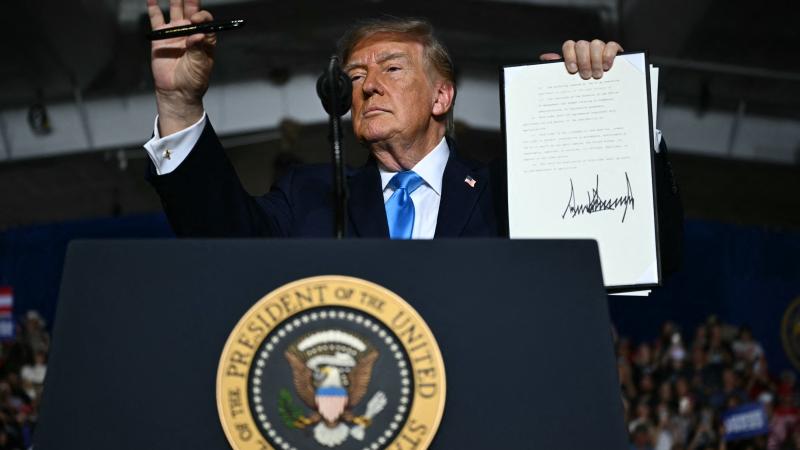
As state legislatures prepare to convene early next year, they face a pivotal decision on whether to adopt a series of federal tax cuts enacted this year under President Donald Trump's signature "One Big Beautiful Bill" passed by Congress last summer.
The Treasury Department is urging states to “immediately conform” to key provisions of the new federal law, which offers temporary tax deductions for workers’ tips and certain overtime earnings, as well as breaks on interest for new automobile loans and deductions for business equipment.
Most states have yet to do so, according to The Associated Press.
Treasury Secretary Scott Bessent has publicly criticized Democratic-led states for not adopting the tax changes, which Trump signed in July 2025. While they become effective for federal returns, state tax codes in many places do not automatically mirror federal law.
Workers in states that don’t adopt the changes could pay no federal tax on tips and eligible overtime, for example, but still owe state taxes on those same amounts.
Only a handful of states have adjusted their tax codes so far.
Michigan became the first to adopt the federal deductions for tips and overtime, making them effective in 2026. Legislators there offset the revenue losses by rejecting several federal corporate tax breaks that would have reduced state tax collections even more, state news reports said.
Budget Concerns and Political Resistance
Lawmakers in many states are grappling with budgetary issues that could result in resistance to cutting tax revenue. Some officials, particularly in states with Democratic leadership, argue that reducing tax collection could jeopardize funding for education, healthcare and infrastructure, AP reported.
In Illinois, for example, lawmakers have passed measures to decouple parts of the corporate tax changes in the bill to preserve hundreds of millions of dollars for state priorities. Gov. J.B. Pritzker, a Democrat, said his state must protect its budget against what he described as “an onslaught from the federal government” that could leave certain essential services underfunded.
Timeline Pressure
Most state legislative sessions start in January, which means lawmakers will not have much time to decide whether to adopt the tax breaks retroactively for 2025 filings. Some could choose to implement changes for the tax year 2026 instead, which would delay potential tax relief for residents, AP noted.
Supporters of conforming to the federal tax changes argue that doing so would boost workers’ take-home pay and simplify compliance. Critics, on the other hand, counter that the cost to state revenues would require trade-offs, especially in states with budgetary issues.