Democrats once called out links between drug trafficking and terrorism but then came Trump
That was then, this is now: Dems even specifically identified Venezuela, where Trump has focused most of his pressure, as a hub for drug trafficking linked to such terrorist groups.
Democrats are sharply criticizing President Donald Trump’s use of force against alleged drug smugglers he calls narco-terrorists, but the Democrats themselves — including Joe Biden — once argued for firm action and highlighted the links between drug traffickers and terrorist groups.
The Trump administration’s recent strikes against alleged drug trafficking boats and threats to battle them on land have drawn a rebuke from some Democrats warning against unapproved use of war powers, but a decade ago, Democrats and the Obama administration were leading the charge on calling attention to “narco-terrorists” and outlined plans to combat them.
Biden in 1989: "America is under attack" from cartels, drug lords
But, calls for tougher actions on drug lords, cartel leaders, and their traffickers from Democrats date back even earlier. They even specifically identified Venezuela, where Trump has focused most of his pressure, as a hub for trafficking linked to terrorist groups.
“America is under attack literally. Under attack by an enemy that is well financed, well supplied, and well armed—and fully capable of declaring total war against a nation and its people,” then-Senator Joe Biden said in a televised address in 1989. “We are fighting, and losing, a war on our own soil.”
The then-senator, D-Del., who was at the time the Chairman of the Senate Judiciary Committee, was not talking about a foreign country or military, but drug bosses, traffickers and the product they peddled in the United States.
He was responding to a speech from President George H.W. Bush outlining his plan to combat the flow of drugs into the United States. Biden didn’t think the president was willing to go far enough.
“Let’s go after the drug lords where they live with an international strike force,” Biden proposed. “There must be no safe haven for these narco-terrorists.”
Obama and Democrats: links between terrorism and drug trafficking
By the time Biden became vice president, the Democratic administration of President Barack Obama developed a “Strategy to Combat Transnational Organized Crime” which warned that terrorist groups and insurgent groups were increasingly turning to criminal networks for funding and logistics.
“In FY 2010, 29 of the 63 top drug trafficking organizations identified by the Department of Justice had links to terrorist organizations,” the Obama White House said in a fact sheet on the strategy, released in 2011.
Democrats have warned about the nexus between drug traffickers and terrorist groups as recently as December 2020, during President Trump’s first term. The House Democrat-led Western Hemisphere Drug Policy Commission identified the links between “international terrorist groups and Latin American criminal organizations,” specifically highlighting Hezbollah’s activities there.
Now Trump's plans used as a cudgel against him to fight his combatting the problem
More than ten years ago, Democrats claimed to be front and center on the issue, but in these rimes of "anything goes" partisanship, leading Democratic officials have criticized President Trump for ramping up airstrikes on alleged drug boats transiting both the Caribbean Sea and the Pacific Ocean.
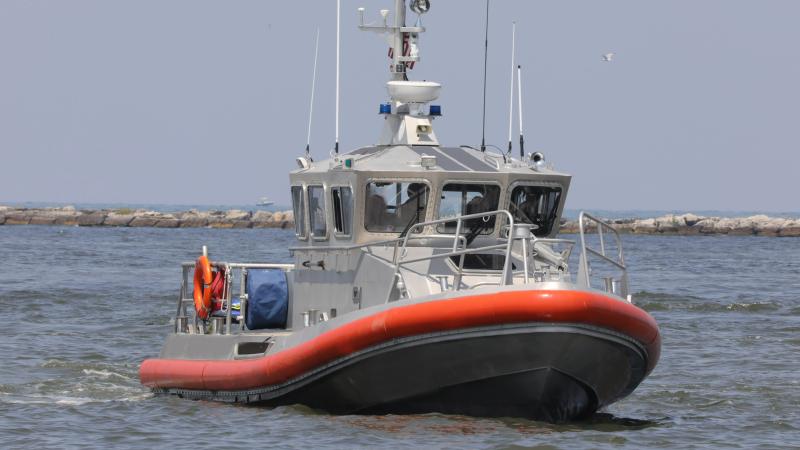
At the same time, the president has ordered an unprecedented buildup of military forces in the region aimed at putting pressure on Venezuelan President Nicolás Maduro and his regime. The buildup, President Donald Trump says, is to combat the illicit drug trade and combat what the administration has labeled “narco-terrorism.”
Many Democrats, and even some Republicans, now argue that the strikes represent an overstepping of presidential authority and that Trump should be required to seek approval from Congress for the actions. Senators Tim Kaine, D-Va., Rand Paul, R-Ky., Chuck Schumer, D-N.Y., and Adam Schiff, D-Ca. filed a war powers resolution on Wednesday that would block the president’s ability to use the U.S. armed forces to engage in hostilities “within or against” Venezuela.
“It’s shameful that Democrats are so fraught with Trump Derangement Syndrome that they would run cover for designated narcoterrorists trying to kill Americans with illicit narcotics. While Democrats will say or do anything to oppose the President, the Trump administration will continue to stop this scourge of poison entering our shores,” White House spokeswoman Anna Kelly told Just the News.
Controversy over alleged "second strike"
This week, Trump's Pentagon came under fire from the alliance of senators over a second strike carried out against one of those alleged drug boats, which anonymous sources said was aimed at survivors. Many argued this was a breach of the laws of war.
“I think if the public sees images of people clinging to boat debris and being blown up, I think that there is a chance that, finally, the public will get interested enough in this to stop this,” Sen. Paul said. “And I think that Congress, if they had any kind of gumption at all, would not be allowing this administration to summarily execute people that are suspected of a crime.”
The Trump administration has denied this framing, saying that the strikes were conducted within the law and under the president’s Article II constitutional powers as Commander-in-Chief.
Curiously, The New York Times has challenged the accuracy of The Washington Post story alleging that Hegseth ordered military staff to go back and "kill them all."
Lebanese Hezbollah, an Islamist group backed by the Islamic Republic of Iran, has engaged in so-called “Narco-terrorism” since its founding in the early 1980s and has been welcomed in Venezuela, a close ally of Tehran. Hezbollah is reportedly involved in drug trafficking, especially cocaine, in the country.
Under Venezuelan leader Nicolas Maduro, and his predecessor Hugo Chavez, Hezbollah has reportedly established a presence within the country, maintaining cells that engage in drug trafficking, money laundering, and illicit smuggling. Both the 2018 and 2019 Country Reports on Terrorism from the U.S. State Department noted that there are Hezbollah sympathizers in the country.
Examples show Hezbollah’s presence in the country has endured for years, over successive administrations. In 2008, the U.S. Treasury Department sanctioned two Venezuela-based supporters of Hezbollah, Ghazi Nasr al Din and Fawzi Kan'an, and accused them of using travel companies to provide funds to the terrorist organization.
In 2020, federal prosecutors charged Adel El Zabayar, an alleged associate of Venezuelan President Maduro, for participating in a narco-trafficking conspiracy and weapons offenses. El Zabayar, who the U,S. government alleged was part of Venezuelan’s secretive Cártel de Los Soles, or Cartel of the Suns, is said to have coordinated cocaine and weapon trafficking between Maduro’s government and Hezbollah. He also allegedly worked to secure Hezbollah’s assistance in carrying out attacks on the United States.
As recently as October, Assistant Secretary for Terrorist Financing and Financial Crimes Marshall Billingslea testified to the Senate on the enduring links between Hezbollah and the Venezuelan regime.
Obama cuts a deal with Iran, suspends attacks against narco-terrorism
A federal task force was on the verge of executing an “ambitious” law enforcement campaign against Hezbollah, including its operations in Latin America, under President Obama. However, the administration backed off as it sought to cement a nuclear deal with Hezbollah’s sponsor, Iran, according to former officials affiliated with the effort, Politico reported in 2017.
The investigators had assembled evidence of drug flights between Syria and Venezuela, Hezbollah-linked individuals in Lebanon facilitating the trade of drugs to the United States through a Mexican cartel, a Syrian-born Venezuelan businessman Walid Makled, who after being arrested in Colombia in 2010, claimed to have 40 Venezuelan generals on his payroll and evidence that would implicate Venezuelan leadership in drug trafficking. But, Colombia extradited him to Venezuela, instead of the United States.
However, federal investigators involved in the task force said that Obama administration officials slow-walked and blocked enforcement operations over concerns that it would anger Tehran and endanger negotiations over a nuclear deal, Politico reported.
The Facts Inside Our Reporter's Notebook
Links
- said in a televised address in 1989
- a speech from President George H.W. Bush
- said in a fact sheet
- Western Hemisphere Drug Policy Commission identified
- filed a war powers resolution
- said in a statement
- a second strike carried out against one of those alleged drug boats
- Sen. Paul said
- conducted within the law
- under the presidentâs Article II constitutional powers
- engaged in so-called ânarco-terrorismâ
- sanctioned two Venezuela-based supporters
- participating in a narco-trafficking conspiracy
- testified to the Senate on the enduring links
- the administration backed off
- assembled evidence of drug flights
- said that Obama administration officials slow-walked and blocked enforcement operations

Top Stories

Trending
Just the News Spotlight
Just News, No Noise