As war looms, indicted al-Qaeda chief has been under Iranian regime's protection for years
Nukes, missiles, terrorist proxies — and al-Qaeda? The Iranian regime's seemingly unlikely partnership with the jihadist group has been largely unremarked upon in the lead up to possible war.
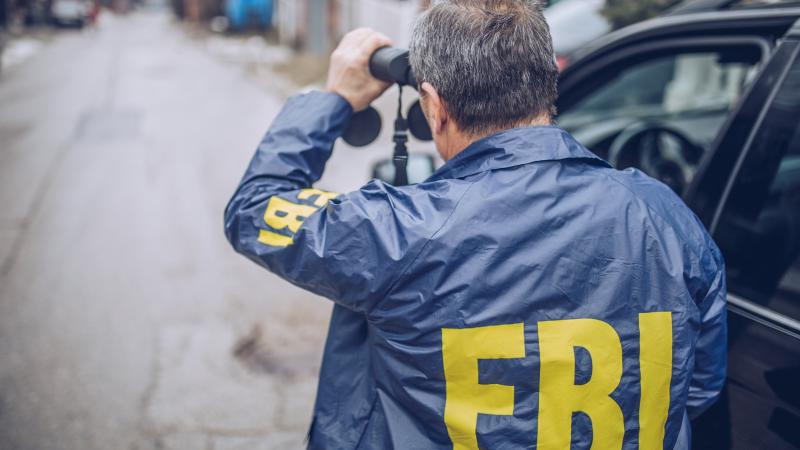
As a war between the United States and Iran seems possible, the Shiite theocratic Iranian regime continues to shield one of the leaders of the Sunni jihadist terrorist group responsible for the 9/11 attacks, with the FBI's "Most Wanted" Saif al-Adel running the global terror network under Tehran's protection.
Saif, a longtime leader in al-Qaeda since the 1990s and a former close ally of Osama bin Laden, took over al-Qaeda in the 2022 timeframe in the wake of the deaths of the terrorist group’s two prior leaders: founder Bin Laden, who was killed by U.S. forces in Pakistan in 2011, and his successor Ayman al-Zawahiri, who was killed in Kabul by a U.S. drone strike in 2022 following the Taliban conquest of Afghanistan.
Saif, who was indicted in the Southern District of New York in 1998 for his role in al-Qaeda’s deadly bombings of U.S. embassies in Africa that year and who fled to Iran after 9/11 and perhaps even earlier, is assessed to have taken over as al-Qaeda’s top leader following Zawahiri’s death a few years ago.
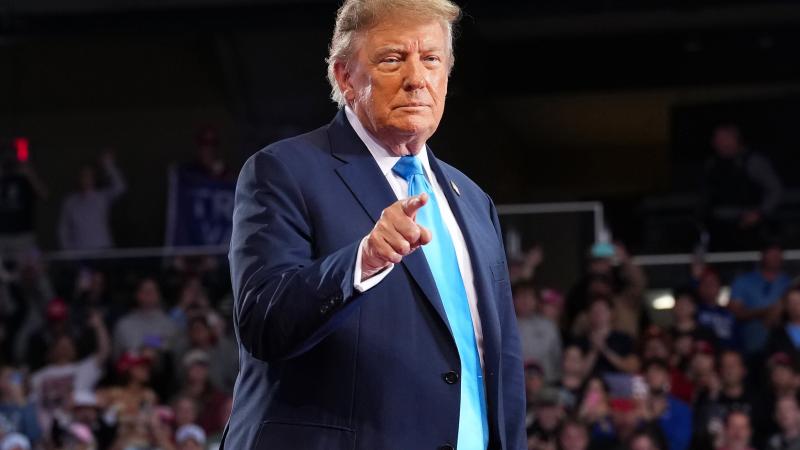
President Donald Trump appears to be moving toward striking Iran, with the U.S. military moving significant assets into the region, as the president insists he would prefer to strike a deal with the Iranian regime but that, if it comes to war, his top general has told him “it will be something easily won.”
Nukes and proxies scrutinized, but sheltering al-Queda not examined
Much of the discussion around possible conflict has focused on the Iranian regime’s nuclear program, its ballistic missiles, and its support for terrorist proxies like Hamas, Hezbollah, and the Houthis — but little attention has been paid to Iran hosting al-Qaeda operatives, including its newest chief, inside the country for many years.
“Iran is clearly sheltering Iran’s top leadership. Iran views al-Qaeda as an important tool in its efforts to undermine the U.S. and the West in the Middle East,” Bill Roggio, a senior fellow at the Foundation for Defense of Democracies, told Just the News. “By sheltering Saif Al-Adel, Iran ensures continuity for al-Qaeda’s leadership, and he essentially is untouchable unless the U.S. actually decides to go after him in Iran.”
Roggio, who is also the editor of FDD’s Long War Journal, added that “Saif Al-Adel has been reported to travel between Iran and Afghanistan, but I assess that he is primarily based in Iran” and that “Iran provides Al-Qaeda with a base of operations for its global leadership.”
Despite theological differences, the Iranian regime has a long history — both before and after 9/11 — of collaborating with al-Qaeda, with the two displaying some ideological flexibility in working together against the West. The DOJ and U.S. investigators have pointed to links between al-Qaeda, Hezbollah, and the Iranian regime during the pre-9/11 era. The State Department and other agencies have repeatedly lamented over many years that Iran has continued to shield al-Qaeda operatives inside their country after 9/11.
Federal courts in the U.S. have also concluded that Iran used al-Qaeda as a tool against the U.S. before 9/11 and assisted the terrorist group and the Taliban in their successful efforts to evict the U.S. from Afghanistan.
Edmund Fitton-Brown, also a senior fellow at FDD and the former British ambassador to Yemen, told Just the News that “Saif is believed still to be in Iran” and that “he has encouraged fighter migration to Afghanistan, but that doesn’t mean he himself is there.”
Fitton-Brown, also the former coordinator for the United Nations team responsible for sanctions and threat assessment on the Taliban and terrorist groups like ISIS and al-Qaeda, added that Saif’s presence in Iran “is one reason for the continuing deconfliction” between al-Qaeda in the Arabian Peninsula and the Houthis as well as “the emerging AQAP-brokered relationship” between the Houthis and al-Qaeda-linked Al-Shabaab in Somalia.
Al-Qaeda leader has been hiding out in Iran for more than two decades
The FBI's "Most Wanted" notice about Saif says that he is “an Iran-based al-Qaeda senior leader and a leader of the Hittin Committee, which governs and coordinates the group's transnational activities.” The UN has said that the Hittin Committee was “formed in 2015 to facilitate operational and financial connections with al-Qaida regional affiliates.”
The State Department’s "Rewards for Justice" page says that Saif “moved to southeastern Iran and lived under the protection of Iran’s Islamic Revolutionary Guard Corps” after the 1998 bombings of the U.S. embassies. The reward page says that “Iranian authorities placed him and other AQ leaders under house arrest” in 2003, and that Saif “and four other senior AQ leaders were released from Iranian custody” in 2015 “in exchange for an Iranian diplomat kidnapped by AQ in Yemen.”
The Long War Journal reported in 2011 that Saif “has a decades-long relationship with Iran” and that, after 9/11, the terrorist “fled to Iran along with other al Qaeda operatives. He was eventually placed in a loose form of house arrest after American and Saudi intelligence officials complained about his links to international attacks, including the May 2003 Riyadh bombings.” The outlet said that Saif “was freed by Iran in 2010” but remained there under the regime’s protection.
“Ayman al-Zawahiri, partly through the agency of senior al-Qaeda leadership figures based in the Islamic Republic of Iran, Abu Muhammad Al-Masri and Saif Al-Adel, has been able to exert influence on the situation in north-western Syrian Arab Republic,” a UN report said in 2018.
Masri had been al-Qaeda’s number two under Zawahiri but was shot to death in Tehran in 2020.
Pompeo: "al-Qaeda has a new home base"
Former United States Secretary of State Mike Pompeo announced in January 2021 — in the final days of Trump’s first term — that “Al-Qaeda has a new home base: it is the Islamic Republic of Iran. As a result, bin Laden’s wicked creation is poised to gain strength and capabilities. We ignore this Iran and al-Qaeda nexus at our own peril.”
Pompeo said then that al-Qaeda “has centralized its leadership inside of Tehran” and so “al-Qaeda terrorists like Saif al-Adel and the now-dead Abu Mohammed al-Masri have been able to place a new emphasis on global operations and plotting attacks all across the world.”
Photographic evidence of Saif and two other al-Qaeda leaders living in Tehran emerged in 2022, with the picture allegedly dating back to 2015 or earlier. The Long War Journal said that two U.S. intelligence officials independently confirmed the authenticity of the picture. The Long War Journal has also noted that “members of Osama’s family, including his son Hamza, fled to Iran after 9/11 as well.”
Christine Abizaid, then the director of the National Counterterrorism Center, said in 2022 that “in addition to al-Qaeda affiliate leaders, we are particularly focused on the role that Iran-based legacy leaders, such as Saif al-Adel, may play in the future of the organization.”
Saif’s ascendancy means “Iran controls al-Qaeda” now
The UN specialized monitoring team said in 2023 that the “predominant view” of UN member countries was that Iran-based Saif was “now the de facto leader” of al-Qaeda and that his leadership was “uncontested.”
The UN team repeated in 2023 that “some Member States assessed that Saif al-Adel is most likely to succeed Ayman al-Zawahiri and reportedly still in the Islamic Republic of Iran.”
The Treasury Department’s National Terrorist Financing Risk Assessment said in 2024 that “U.S. and UN officials have confirmed that AQ’s new leader, Saif al Adel, is currently residing in Iran.”
The Soufan Center assessed last year that “while al-Qaeda core remains hobbled by the attrition of its senior leadership, some of which is still believed to be based in Iran, including its de facto head Saif al-Adel, taking this organization or any of its regional branches for granted is a recipe for disaster.”
The Defense Intelligence Agency stated in its 2025 Worldwide Threat Assessment that al-Qaeda “never officially named a successor” to Zawahiri after his death in 2022, assessing that the terrorist group’s “probable acting emir” was the “Iran-based Saif al-Adl.”
Fitton-Brown said on FDD’s Generation Jihad podcast earlier in February that “you cannot talk about what al-Qaeda is intending as a global organization without reflecting on the impact of its leader being a guest of the Iranian government and residing in Iran.”
“Everyone I’ve talked to has confirmed that he is in Iran, that he has not left Iran, that he has not been to Afghanistan recently,” the terrorism expert said.
“The reason that this is so critically important is that al-Qaeda is increasingly becoming at least a partial member of the Iranian axis of resistance, and if we’re about to have another conflict with Iran, which we might be, and even if we don’t — because the other possibility is that the U.S. kind of walks away from the current standoff and the Iranians start rebuilding and figuring out what they can do to continue to attack their enemies — well, they are going to rely more and more on proxies,” Fitton-Brown said.
“And if Al-Qaeda is becoming an Iranian proxy because its leader is dependent on the goodwill of the Iranians who are hosting him and lavishly looking after him in Iran, people need to know that.”
The terrorism expert bluntly assessed that “since Zawahiri’s death, Iran controls Al-Qaeda.”
Saif’s presence in Iran is a complicating factor for al-Qaeda and Taliban
The Taliban, Haqqani Network, and al-Qaeda are deeply intertwined in Afghanistan, and the Taliban have integrated Haqqani leaders and fighters with al-Qaeda links into their command structure. Zawahiri and Bin Laden both pledged allegiance to top Taliban leaders.
Zawahiri quickly moved to Afghanistan following the American retreat and the Taliban rise to power. The U.S. carried out a successful air strike against Zawahiri at the end of July 2022. The strike killed Zawahiri when he was on the balcony of his Kabul safehouse.
The Biden administration said that top Taliban leaders knew Zawahiri was hiding in Afghanistan when he was killed in 2022.
Then-FBI Director Christopher Wray said he was “not surprised” that Zawahiri was staying in a Kabul safehouse belonging to Taliban deputy leader Sirajuddin Haqqani.
ISIS-K, the Islamic State’s affiliate in Afghanistan, was responsible for the late August 2021 suicide bombing at the Kabul airport, which killed 13 U.S. service members and dozens of others. The Taliban — including Haqqani forces — were providing security outside the airport when the bomber got through.
The UN Sanctions Monitoring Team said in 2023 that “neither Al-Qaeda nor the Taliban formally acknowledged the death. The presence of al-Zawahiri in central Kabul at the time, in a building reported by Member States to belong to the Haqqani Network, demonstrated an ongoing and cooperative relationship between Al-Qaeda and the Taliban. His death has raised the questions of succession and its impact on the threat posed by Al-Qaeda.”
The specialized UN team said that the “predominant view” is that Saif “is now the de facto leader of Al-Qaeda, representing continuity for now. But his leadership cannot be declared because of Al-Qaeda’s sensitivity to Afghan Taliban concerns not to acknowledge the death” of Zawahiri as well as “the fact of” Saif’s “presence in the Islamic Republic of Iran. His location raises questions that have a bearing on Al-Qaeda’s ambitions to assert leadership of a global movement in the face of challenges from ISIL.”
The UN team also said that most of its member nations judged that the “key factor” in Al-Qaeda declining to formally name Saif as its chief was his “continued presence … in the Islamic Republic of Iran. This raised difficult theological and operational questions for Al-Qaeda.”
Saif the "de facto" leader of al-Qaeda
The UN monitoring team assessed in 2024 that “several Member States noted individuals traveling to provide liaison between” Saif in Iran “and senior al-Qaeda figures in Afghanistan.”
Saif called upon terrorists and al-Qaeda members in June 2024 to travel to the safe haven of Afghanistan to have their terror skills honed by the Taliban: “The loyal people of the Ummah [worldwide Islamic community] interested in change must go to Afghanistan, learn from its conditions, and benefit from their [the Taliban’s] experience.”
Al-Qaeda continues to enjoy the “patronage” of the Taliban despite the theocratic group's claims that there are no terrorist groups in Afghanistan, the UN monitoring team assessed earlier this month, with the report warning about a “multipolar” threat posed by jihadist groups worldwide.
Saif’s lengthy jihadist résumé — embassy bombings, Black Hawk Down, and more
The FBI says the terrorist is “wanted in connection with the August 7, 1998, bombings of the United States Embassies in Dar es Salaam, Tanzania, and Nairobi, Kenya.” Those bombings killed 224 civilians, including 12 Americans, and wounded 5,000 others.
The bureau says that the Rewards For Justice Program “is offering a reward of up to $10 million for information leading directly to the apprehension or conviction” of the al-Qaeda leader.
Saif was indicted by the DOJ in 1998 in the wake of al-Qaeda’s bombings of the U.S. embassies in Africa. He was charged alongside the now-deceased leaders of al-Qaeda — Bin Laden and Zawahiri.
The indictment says that Bin Laden, Zawahiri, Saif, and other al-Qaeda figures “unlawfully, willfully, and knowingly combined, conspired, confederated and agreed to kill nationals of the United States.” The charges said that Saif personally “provided military and intelligence training in various areas, including Afghanistan, Pakistan, and the Sudan, for the use of al-Qaeda.”
The DOJ said that Saif’s goal was to kill U.S. service members in Somalia, Yemen, and Saudi Arabia, as well as to kill Americans at the U.S. embassies in Africa.
The prosecutors further said al-Qaeda had a "military committee" which approved "military" matters, and that Saif served on the committee and reported to Abu Hafs on the committee. The DOJ said that Hafs was one of Bin Laden’s “two principal military commanders” along with Abu Ubaidah al Banshiri until Banshiri died in 1996. Hafs, to whom Saif reported in the 1990s, “had the principal responsibility for supervising the training of al-Qaeda members.”
“As a lieutenant colonel in Egypt’s special forces in the mid-1980s, he became involved in efforts to overthrow the Egyptian government,” his Rewards for Justice page said. “In 1987, he was arrested along with thousands of other anti-government militants after an assassination attempt against the Egyptian Interior Minister. Authorities released and then demoted al-Adel, who in 1989 traveled to Afghanistan where he became a trainer for the nascent AQ.”
The rewards page said that, as early as 1990, Saif and other al-Qaeda operatives “provided military and intelligence training in various countries, including Afghanistan, Pakistan, and Sudan, to members of AQ and its affiliated groups, including the Egyptian Islamic Jihad.”
Saif also played an allegedly central role in the “Black Hawk Down” attack in Somalia. Nineteen U.S. troops were killed in Mogadishu in 1993 on what had been the deadliest day for U.S. troops since the Vietnam War.
The rewards page said that, in 1992 and 1993, Saif “provided military training to AQ operatives and Somali tribesmen who fought against U.S. forces in Mogadishu during Operation Restore Hope.”
Now-former FBI agent Jack Cloonan said that “there was a four or five man team” inside Somalia which was “operating for bin Laden” and that Saif “was the commander."
Nineteen U.S. troops were killed in Mogadishu in 1993 in what had been the deadliest day for U.S. troops since the Vietnam War, with 18 killed in the major battle in early October and a 19th killed two days later. The battle was immortalized in the 1999 book Black Hawk Down by Mark Bowden and in the 2001 Ridley Scott film starring Ewan McGregor and Josh Hartnett.
President Bill Clinton had ordered Task Force Ranger into Somalia in August 1993 in response to increasing violence on the part of Habar Gidir clan forces led by warlord Mohammed Farah Aidid. Clinton began a troop withdrawal shortly after the events of Black Hawk Down, which al-Qaeda pointed to as a sign of U.S. weakness.
Ali Soufan, a former FBI agent with extensive experience against al-Qaeda, wrote for West Point’s Counterterrorism Center in 2021, saying Saif played a “central role in audacious attacks” in Somalia.
“Saif took a small al-Qaeda team to the city […] As he had done in Afghanistan, he proceeded to train fighters to shoot missiles at helicopters. In an inversion of his earlier experience, however, now the weapons were Russian and the targets American,” Soufan wrote. “On the afternoon of October 3, 1993, two MH-60 Black Hawks participating in an anti-terror operation in central Mogadishu were brought down within a few blocks of each other using Soviet-made rocket launchers. It has been reported that one of the rockets was fired by a Tunisian member of Saif’s al-Qaeda squad.”
The now-former FBI agent said: “Saif and his men may have participated directly in the fighting on the ground; at the very least, the downing of the Black Hawks would likely not have been possible without Saif’s military training.”
The rewards page also said that Saif was “a senior lieutenant to Abu Musab al-Zarqawi, founder of AQ in Iraq, which later became the Islamic State of Iraq and Syria.”
9/11 Commission lays out Saif’s key role within Al-Qaeda
The 9/11 Commission Report, which was published in 2004, also mentioned Saif multiple times.
The commission said that alleged 9/11 mastermind Khalid Sheikh Mohammed “admits traveling frequently between Pakistan and Afghanistan in 1997 and the first half of 1998, visiting Bin Laden and cultivating relationships with his lieutenants” — including Saif al Adel — “by assisting them with computer and media projects.”
The 9/11 report also laid out how Saif helped train Al-Qaeda fighters in Afghanistan.
“The Mes Aynak training camp was located in an abandoned Russian copper mine near Kabul. The camp opened in 1999, after the United States had destroyed the training camp near Khowst with cruise missiles in August 1998, and before theTaliban granted al Qaeda permission to open the al Faruq camp in Kandahar,” the commission wrote. “Thus,for a brief period in 1999, Mes Aynak was the only al Qaeda camp operating in Afghanistan. It offered a full range of instruction, including an advanced commando course taught by senior al Qaeda member Saif al Adel.”
The 9/11 commission also made it clear that Saif was part of Bin Laden’s inner circle and had foreknowledge of the 9/11 attacks — although the report suggested that he opposed the plot.
“Those who reportedly sided with Bin Laden included … KSM,” the report said. “But those said to have opposed him were weighty figures in the organization — including” Saif.
The Rewards for Justice page also says that Saif “also heads Al-Qaeda’s military committee.”
Al-Qaeda has had extensive presence in Iran after 9/11 attacks
The Treasury Department in 2009 announced that “Treasury Targets al-Qaeda Operatives in Iran.” The department sanctioned Mustafa Hamid, who was described as “the father-in-law” of Saif and as “a senior al-Qaeda associate who served as a primary interlocutor between al-Qaeda and the Government of Iran.”
The department said that “while living in Iran, Hamid was harbored by the Islamic Revolutionary Guard Corps, which served as Hamid's point of contact for communications between al-Qaeda and Iran.”
The Rewards for Justice page for Abd al-Rahman al-Maghrebi — also an al-Qaeda leader and Zawahiri’s son-in-law — lists a $7 million reward and says that “following the events of September 11, 2001, Al Maghrebi fled to Iran and possibly travels between Iran and Pakistan.”
Then-Under Secretary for Terrorism and Financial Intelligence David Cohen said in 2011 that “Iran is the leading state sponsor of terrorism in the world today. By exposing Iran’s secret deal with al-Qaeda allowing it to funnel funds and operatives through its territory, we are illuminating yet another aspect of Iran’s unmatched support for terrorism.”
The State Department said the same year that “in 2011, Iran remained unwilling to bring to justice senior AQ members it continued to detain, and refused to publicly identify those senior members in its custody” and that “it also allowed AQ members to operate a core facilitation pipeline through Iranian territory, enabling AQ to carry funds and move facilitators and operatives to South Asia and elsewhere.”
The State Department in 2016 then repeated that “Iran remained unwilling to bring to justice senior al-Qaeda members” and argued that “since at least 2009, Iran has allowed AQ facilitators to operate a core facilitation pipeline through the country, enabling AQ to move funds and fighters to South Asia and Syria.”
Then-Secretary of State Mike Pompeo told the Senate Foreign Relations Committee in 2019 that “the factual question with respect to Iran’s connections to al-Qaeda is very real. They have hosted al-Qaeda. They have permitted al-Qaeda to transit their country. There is no doubt there is a connection between the Islamic Republic of Iran and al-Qaeda, period, full stop.”
Pompeo said in 2021 that “the Iranian Ministry of Intelligence and Security and the IRGC [Islamic Revolutionary Guard Corps] have provided safe havens and logistical support – things like travel documents, ID cards, passports – that enable al-Qaeda activity.”
Iranian regime assisted al-Qaeda ahead of 9/11 attacks
The 9/11 Commission detailed how the Iranian regime, often through its terrorist proxy of Hezbollah, assisted al-Qaeda in building up its effectiveness — including with explosives training — in the 1990s, as well as facilitated some of the perpetrators of 9/11 in the months ahead of the 9/11 attack.
“In late 1991 or 1992, discussions in Sudan between al-Qaeda and Iranian operatives led to an informal agreement to cooperate in providing support — even if only training — for actions carried out primarily against Israel and the United States,” the commission found.
“Not long afterward, senior al-Qaeda operatives and trainers traveled to Iran to receive training in explosives. In the fall of 1993, another such delegation went to the Bekaa Valley in Lebanon for further training in explosives as well as in intelligence and security. Bin Laden reportedly showed particular interest in learning how to use truck bombs such as the one that killed 241 U.S. Marines in Lebanon in 1983.”
The commission noted that “the relationship between al-Qaeda and Iran demonstrated that Sunni-Shia divisions did not necessarily pose an insurmountable barrier to cooperation in terrorist operations.”
“There is strong evidence that Iran facilitated the transit of al-Qaeda members into and out of Afghanistan before 9/11,and that some of these were future 9/11 hijackers,” the 9/11 Commission also found. “There also is circumstantial evidence that senior Hezbollah operatives were closely tracking the travel of some of these future muscle hijackers into Iran in November 2000.”
Judge John D. Bates of the U.S. District Court of the District of Columbia also issued a default judgment against Iran in 2011 finding that the regime had used al-Qaeda as a weapon against the United States during the 1990s.
“Iran had been the preeminent state sponsor of terrorism against United States interests for decades,” the judge found. “Throughout the 1990s — at least — Iran regarded al-Qaeda as a useful tool to destabilize U.S. interests.”
The federal judge added that “the government of Iran aided, abetted, and conspired with Hezbollah, Osama bin Laden, and al Qaeda to launch large-scale bombing attacks against the United States by utilizing the sophisticated delivery mechanism of powerful suicide truck bombs.”
Bates concluded that “prior to their meetings with Iranian officials and agents, Bin Laden and Al-Qaeda did not possess the technical expertise required to carry out the embassy bombings in Nairobi and Dar es Salaam” in 1998, and that “the Iranian defendants, through Hezbollah, provided explosives training to Bin Laden and al Qaeda and rendered direct assistance to al Qaeda operatives.”
With the U.S. withdrawal from Afghanistan following pressure from Iran and others, the Taliban is now back in charge, with the Iranian regime protecting al-Qaeda’s top man while the terrorist group itself is shielded in Afghanistan by its longtime Taliban patrons. It remains to be seen whether a potential U.S. war in Iran will lead to the capture of al-Qaeda's third emir.
The Facts Inside Our Reporter's Notebook
Links
- killed by U.S. forces in Pakistan
- killed in Kabul
- indicted in the Southern District of New York
- fled to Iran
- assessed
- appears to be moving toward
- Iranian regime's nuclear program
- senior fellow
- long history
- pointed to
- lamented
- continued to shield
- used Al-Qaeda as a tool
- assisted the terrorist group
- senior fellow
- notice
- said
- says
- reported
- said
- shot to death
- announced
- said
- noted
- said
- said
- repeated
- added
- said
- assessed
- stated
- said
- deeply intertwined
- knew
- said
- said
- assessed
- called upon
- continues to enjoy
- says
- says
- indicted
- said
- said
- central role
- said
- said
- ordered
- wrote
- said
- published
- made it clear
- also says
- announced
- said
- page
- said
- assessed
- said
- repeated
- told
- said
- assessed
- revealed
- said
- added
- detailed how
- default judgment
- according
- indictment
- entered a plea
- told
- defector
- provided testimony
- tweeted
- said
- said
- concluded
- concluded
- added


Top Stories



Trending
Just the News Spotlight
Just News, No Noise