Iran betting it can outlast the US by holding the global energy market hostage forever
The strategy has been successful in producing volatility in oil prices, but it remains to be seen if those price changes will prompt President Trump to reconsider — or even scale down — military operations in the region. “If you can tolerate oil prices above $200 per barrel, continue this game,” an Iranian military spokesperson said.
After 10 days of war, the Islamic Republic of Iran is betting on a strategy to outlast the United States and inflict maximum pain by disrupting global oil markets.
By indiscriminately attacking its Gulf Arab neighbors, who had professed neutrality in any conflict between the United States and Iran, the Islamic regime has provoked a broader coalition against it. However, it believes that by causing shortfalls in global oil supply, it can pressure the U.S. and its partners economically to sue for peace.
The strategy has been successful in producing volatility in oil prices that have impacted the U.S. market, but it remains to be seen if those price changes will ultimately prompt the American president to reconsider his military operation to defang and permanently denuclearize Tehran.
The regime is digging in for a longer struggle
The selection of the late Ayatollah Ali Khamenei’s son as Iran’s new Supreme Leader over the weekend is another signal that the regime is digging in for a longer struggle with the United States. Mojtaba Khamenei, whose father was killed in joint U.S./Israeli airstrikes at the beginning of the war, has close ties to the powerful Iranian Revolutionary Guard Corps (IRGC) hardliners and the fanatic religious ruling class of the theocratic regime.
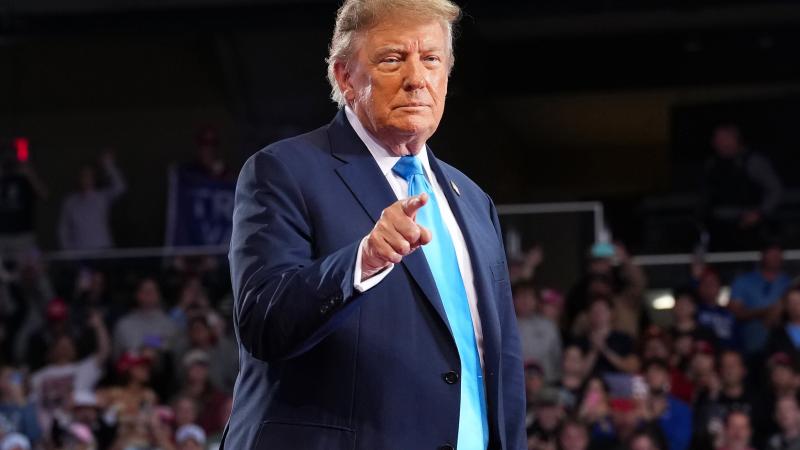
On Monday, President Donald Trump delivered a clear warning to the clerical regime: stop disrupting oil supplies or face steep consequences.
"I will not allow a terrorist regime to hold the world hostage and attempt to stop the globe's oil supply," Trump said. "And if Iran does anything to do that, they'll get hit at a much, much harder level."
He echoed a similar, and more explicit, warning in a Truth Social post later that night. “If Iran does anything that stops the flow of Oil within the Strait of Hormuz, they will be hit by the United States of America TWENTY TIMES HARDER than they have been hit thus far,” the president vowed.
"Death, Fire and Fury": Trump
“Additionally, we will take out easily destroyable targets that will make it virtually impossible for Iran to ever be built back, as a Nation, again — Death, Fire, and Fury will reign upon them — But I hope, and pray, that it does not happen!” he added.
Just the day before, Iran’s leaders directly threatened high oil prices if the U.S. and Israel continued its assault on the country’s infrastructure. The message appeared to come in response to an Israeli strike that hit oil storage tanks in the Iranian capital of Tehran.
“If you can tolerate oil prices above $200 per barrel, continue this game,” an Iranian military spokesperson said, according to a Iranian state broadcaster.
But, Iran has carried out its own share of attacks aimed at crippling the export capacity for oil and other energy products from its Gulf Arab neighbors whose economies are inextricably linked to the industry, ostensibly to build pressure on the United States.
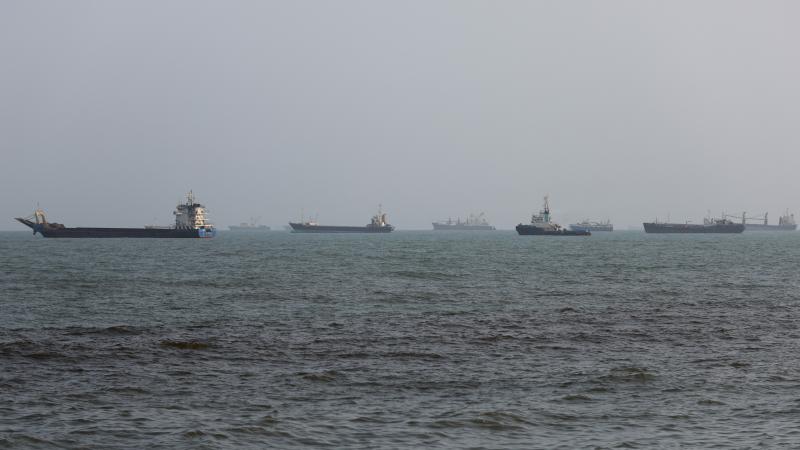
One of Iran’s main goals in the conflict has been maintaining the effective closure of the Strait of Hormuz, a strategic waterway between Iran and the Arabian Peninsula. About 25% of the world’s seaborne oil trade transits the strait, the vast majority of it destined for South and East Asian markets.
After the initial joint U.S. and Israeli strikes on Iran in February, the Iranian military leadership said that it would attack ships attempting to transit the strait amid the conflict. Several cargo vessels were also reportedly targeted with drones or missiles.
Now, after two weeks of conflict, the Strait of Hormuz has been effectively closed to all maritime traffic, except Iran-linked vessels, Bloomberg News reported on Tuesday.
Iran forcing shutdown of neighbors' oil production
The effective blockage of the waterway prompted Kuwait, one of the oil-producing gulf monarchies, to begin cutting its oil output as storage facilities filled. The Kuwait Petroleum Corporation declared a force majeure, a contract provision that frees a party from an obligation if an extraordinary event prevents one or both parties from fulfilling an obligation.
Iran has also targeted oil and natural gas infrastructure in at least four Gulf Arab states using missiles and drones. In Saudi Arabia, the world’s second largest oil producer by volume, Iranian missile and drone attacks were aimed at the Ras Tanura refinery complex, the world’s largest offshore loading facility, forcing a temporary halt to operations. The facility reportedly started reopening on Tuesday.
Qatar’s Ras Laffan Liquid Natural Gas (LNG) terminal was also forced to shut down following an Iranian missile strike last week. Qatar makes up roughly 20% of global LNG export capacity. After the closure, Qatar warned that it would take two weeks to restart production there and another two weeks to reach full capacity.
The uncertainty has fueled volatility in the oil markets, leading to wild swings in the United States. After spiking to more than $110 per barrel–the highest level since the COVID-19 pandemic–over the weekend, it dropped down to $88 per barrel by Tuesday after President Trump indicated that the Iran war may not last much longer.
Despite Iran’s intentions to exploit the price fluctuations to put pressure on the administration, the United States is far less vulnerable to foreign oil and gas supply shortages than in previous decades. For the first time since at least 1949, the U.S. became a net petroleum exporter in 2020 and has remained so. So, even if prices fluctuate because of the market disruptions abroad, the U.S. is unlikely to see a threat to its supply.
But, U.S. allies from Europe to Asia are facing a much more acute crisis that could pressure the Trump administration to seek out a quick resolution to the Iran war or at least maintain a focus on reopening the Strait of Hormuz.
In recent days, European officials prepared plans to draw down emergency reserves to battle the surging global oil prices, though they have not yet taken that action. They warned that the longer the war drags on, the more damaging the volatility would be to Europe. French Prime Minister Emmanuel Macron said that the resumption of shipping in the Strait of Hormuz “essential for the flow of gas and oil” and proposed a French mission to escort container ships through the waterway, but said such an operation could not happen while there were still active combat operations.
The United States’ key ally in the Pacific, Japan, is also heavily dependent on Middle Eastern crude oil. About 70% of Japan’s oil and 6% of its LNG imports transit the Strait of Hormuz.
Waiver issued to allow Russian oil to fill the gap
The market volatility has prompted the Trump administration to unwind some restrictions on Russian oil exports imposed to pressure Vladimir Putin into negotiating an end to his war in Ukraine. On Friday, U.S. Treasury Secretary Scott Bessent issued a 30-day waiver to allow Indian oil refineries to purchase Russian oil.
“This deliberately short-term measure will not provide significant financial benefit to the Russian government as it only authorizes transactions involving oil already stranded at sea,” Bessent said in a post to X.
“This stop-gap measure will alleviate pressure caused by Iran’s attempt to take global energy hostage,” he explained.
On Sunday, U.S. Secretary of Energy Christopher Wright expressed his confidence that the oil markets would eventually even out without major price increases. “[In] the worst case, this is a weeks, this is not a months thing,” he said, adding that the U.S. military has “no plans to target Iran’s oil industry, their natural gas industry, or anything about their energy industry.”
The Facts Inside Our Reporter's Notebook
Links
- Trump said
- a Truth Social post
- directly threatened high oil prices
- 25% of the worldâs seaborne oil trade
- destined for South and East Asian markets
- it would attack ships
- reportedly targeted
- effectively closed to all maritime traffic
- cutting its oil output
- second largest oil producer
- reportedly started reopening
- forced to shut down
- would take two weeks to restart
- more than $110 per barrel
- down to $88 per barrel by Tuesday
- prepared plans to draw down emergency reserves
- Emmaneul Macron said
- heavily dependent
- 70% of Japanâs oil and 6% of its LNG imports
- unwind some restrictions
- said in a post to X
- expressed his confidence

Top Stories



Trending
Just the News Spotlight
Just News, No Noise