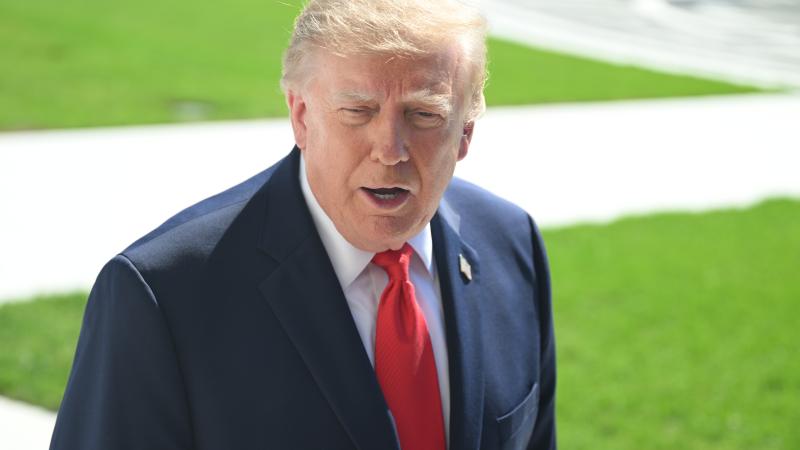
What’s next for Trump’s tariffs?
In a 6–3 decision, the court ruled that the president exceeded his authority by relying on the International Emergency Economic Powers Act of 1977 to impose tariffs on U.S. trade partners
The Supreme Court on Friday struck down President Donald Trump’s sweeping global tariffs, dealing a major blow to one of the central pillars of his economic agenda.
In a 6–3 decision, the court ruled that the president exceeded his authority by relying on the International Emergency Economic Powers Act of 1977 to impose tariffs on U.S. trade partners.
The majority opinion, authored by Chief Justice John Roberts, found that the law, designed to address national emergencies, did not grant the president such broad power over trade policy. Justice Kavanaugh authored the principal dissent, joined by Justices Thomas and Alito.
The court’s ruling could trigger significant refunds for U.S. importers who paid the tariffs. Emily Ley, founder and CEO of Simplified and the first small-business owner to file a civil lawsuit challenging the tariffs, announced shortly after the decision that her company intends to seek reimbursement.
Kavanaugh’s dissent acknowledged that possibility, noting that the federal government “may be required to refund billions of dollars to importers who paid the IEEPA tariffs, even though some importers may have already passed on costs to consumers or others.”
What happens next, however, depends largely on whether the Trump administration moves to revive the tariffs through other legal channels.
Even before the Court’s decision, administration officials signaled they were preparing for this possibility. Treasury Secretary Scott Bessent previously indicated that the White House was exploring alternative authorities, including provisions of the Trade Expansion Act of 1962 and the Tariff Act of 1930.
Jamieson Greer, the U.S. trade representative, echoed that view earlier this year, suggesting that similar tariffs could be reinstated quickly if the Court invalidated the current ones. In his view, a Supreme Court loss would represent a temporary obstacle rather than a fundamental defeat.
“The reality is the president is going to have tariffs as part of his trade policy going forward,” Greer told The New York Times in an interview earlier this year.
The Facts Inside Our Reporter's Notebook
Links

Top Stories




Trending
Just the News Spotlight
Just News, No Noise