Related Articles



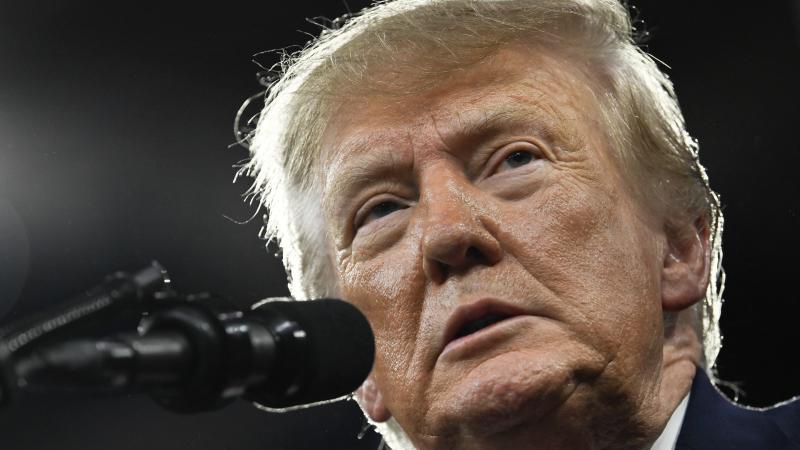
Trump said "They're going to get a beating." The door would open thanks to Trump's fury over the pair of recent attacks on U.S. airbases and outposts in the region. The avenues of freedom for the Iranian people may come from a variety of directions.
Following Iran’s Islamic Revolutionary Guard Corps’ (IRGC) missile attacks on U.S. bases in Kuwait and Jordan, President Donald Trump is now signaling readiness for full-scale military action that could shatter the cycle of tit-for-tat exchanges and accelerate an end to the conflict, opening the door for a full-on revolution for the Persian nation.
"We're going to beat the f****** s*** out of them [...] We'll be hitting them hard. They're going to get a beating," Trump said on Wednesday.
If the Iranian regime collapsed under external pressure and internal strain, the power vacuum could empower ordinary Iranians, who have long protested theocratic rule, to seize control of their country’s future. Hardcore Islamists brought the nation into a theocracy in February of 1979.
Free from the Revolutionary Guards and clergy, citizens would be able to organize, demand accountability, and reject new tyranny. Possible replacements include a secular democratic republic with free elections and separation of religion from state, a constitutional monarchy for continuity, or a federal system respecting ethnic diversity.
Success would require broad coalitions, economic stability, and institutions protecting minorities and women, which is possible but far from certain amid risks of chaos.
The opening door would come thanks to Trump's fury over the pair of attacks that could bring his administration to ramp up existing strategies, effectively maxing out each of the pressure methods and concluding the conflict.
A number of already-in-place actions could intensify to draw the conflict to a close. U.S. forces could launch targeted operations against senior IRGC commanders and key figures in Iran’s leadership, while striking hardened nuclear facilities such as Fordow and Natanz with bunker-busting munitions.
Such actions would potentially disrupt command structures and set back Iran’s nuclear program by years in a single coordinated campaign.
Israel has previously conducted similar strikes, and potential coordination with Jerusalem following Trump's Tuesday meeting with Israeli Prime Minister Benjamin Netanyahu could amplify the impact. According to the Council on Foreign Relations, Operation Midnight Hammer itself was executed exclusively by the United States military on June 22, 2025, on the heels of Israel's ongoing bombing campaign against Iran that had begun days earlier on June 13.
American naval and air assets could also impose a de facto blockade on the Strait of Hormuz, intercepting Iranian vessels and neutralizing coastal missile batteries and IRGC Navy forces to choke off Iran’s oil exports, a move that would directly target the regime’s economic lifeline.
This would represent a major escalation from current operations and risk disrupting global energy markets, but proponents argue it could force Tehran to the negotiating table far more quickly than limited tit-for-tat exchanges.
The U.S. military could also conduct large-scale suppression of enemy air defense operations, systematically destroying radar-guided weaponry, surface-to-air missile systems, and ballistic missile production and launch sites across Iran to achieve air superiority and eliminate the threat of future mass attacks.
This kind of sustained aerial campaign, building on recent strikes, would degrade Iran’s ability to retaliate and create conditions for decisive follow-on operations. The U.S. military and its allies have used these techniques successfully before in the region, most notably in Operation Desert Storm in 1991, according to a U.S. Army website. That operation virtually crushed Saddam Hussein's anti-aircraft modality.
Washington could also significantly expand covert assistance to Iranian opposition groups, ethnic minorities, and dissident networks inside the country, including weapons, intelligence, and funding, while intensifying information operations to undermine the regime’s authority. Combining external pressure with internal unrest has historically proven effective at bringing down authoritarian regimes, though such efforts carry risks of prolonged instability and refugee flows.
U.S. and partner forces could launch an expanded offensive against IRGC-backed militias across Iraq, Syria and Yemen, including strikes on command centers, supply lines and training camps, effectively dismantling Iran’s “axis of resistance” network in one synchronized effort.
This approach would aim to cut off Tehran’s regional influence and prevent proxy attacks that have fueled the current cycle of violence.
In a conflict where the U.S. has seen these methods already succeed, boots on the ground are likely unnecessary in lieu of the max-out strategy.
Furthermore, ground forces would face a large, hostile population, guerrilla resistance from the Revolutionary Guards, and the same quagmire risks seen in Iraq, Afghanistan and Vietnam — high American casualties, massive expense, and years of nation-building with uncertain results.
Deploying U.S. ground troops in Iran would also prove highly unpopular with the American public, as recent polls show roughly three-quarters or more oppose the idea. A July 2026 Quinnipiac University survey found 74% opposed and only 19% in favor, while a contemporaneous Reuters/Ipsos poll showed 79% opposed "putting boots on the ground" and only 16% of respondents were supportive. Many Americans remember with bitterness that by 1969, more than 500,000 U.S. military personnel were stationed in Vietnam. According to Britannica, 57,939 members of the U.S. armed forces died or were missing as a result of the war.
Tuesday's IRGC strike, the first such strike since Trump paused operations to pursue diplomacy, saw multiple ballistic missiles launched at Muwaffaq Salti Air Base in eastern Jordan, in what CENTCOM described as an attempted surprise attack, though all incoming missiles were successfully intercepted with no casualties or damage reported. In Kuwait over the last 48 hours, the IRGC has claimed multiple drone and missile strikes on U.S. facilities, including Ali Al Salem Air Base, Camp Udairi, Camp Doha, and Camp Arifjan.
Amanda Head is White House Correspondent for Just The News. You can follow her here.