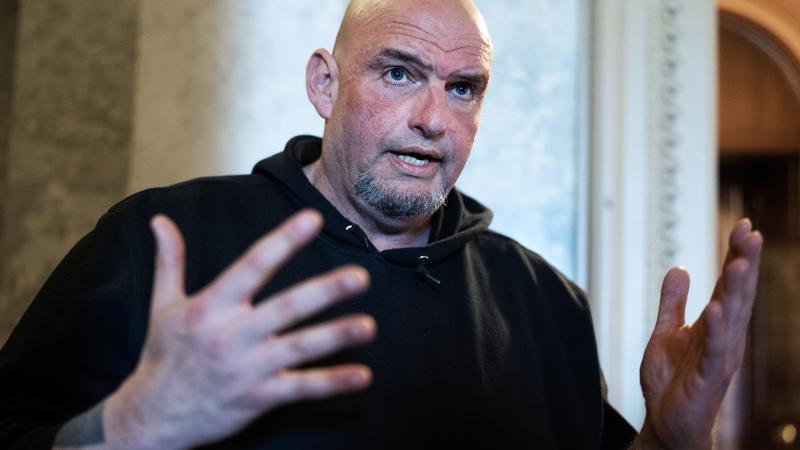
Pennsylvania Senators Fetterman and McCormick team up with plan on 'How to Regulate AI'
“It is not enough to say 'slow down' to American developers,” the two wrote. Fetterman and McCormick believe that to begin, “strong and explicit legal liability for AI companies, combined with targeted government oversight” is needed.
(The Center Square) -
U.S. Sens. John Fetterman and Dave McCormick are finding common ground, once again, on a hot-button issue: AI regulation.
“What is required is a clear, bipartisan, country-over-party assessment of the risks of AI, informed by three inescapable realities: the inevitability of the AI revolution; the existential stakes of the AI race with China; and the limits of our understanding of the technology,” Fetterman and McCormick write in an op-ed titled “How to Regulate AI” published in The Free Press on Thursday.
The debate over AI has continued to heat up over the past few months as the topic has drawn headlines across the globe.
Nearly one month ago, an Anthropic employee said he resigned from the company and argued that the technology could end humanity. Following that post, some industry leaders have called for a slowdown in AI development.
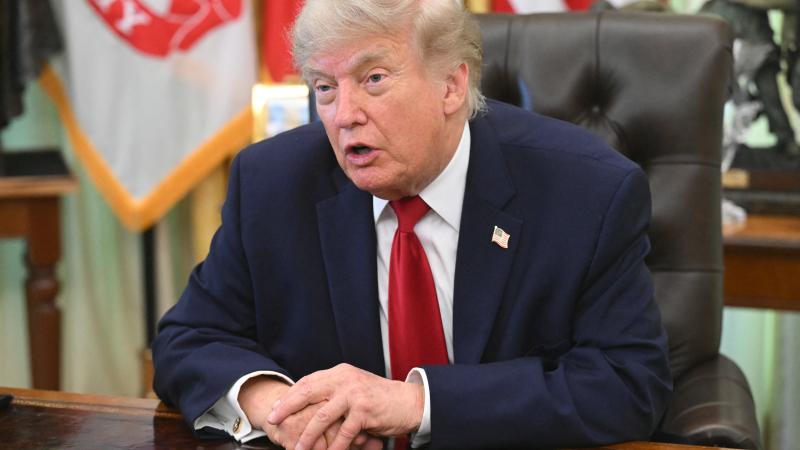
Earlier this week, President Donald Trump hosted an AI summit at the White House, resulting in a voluntary accord that will impose internal and external review processes to assess the safety of new AI models.
On Thursday, Fetterman and McCormick described that as a “positive starting point,” but argued that more needs to be done.
“More will be required to harness AI’s benefits while mitigating its risks,” Fetterman and McCormick wrote.
The two senators described AI as the modern era’s “Manhattan Project,” and made the case that if the U.S. ceded AI leadership to China, “we risk surrendering our way of life.”
“Just as every safe car needs a gas pedal, brake, and seat belts, AI needs protective guardrails,” Fetterman and McCormick wrote. “Government and industry must address the specific risks it poses to our country and families, while maintaining global AI leadership.”
The first step, the two senators argue, involves what they call the “uncompromisables: America’s children and workers.”
“The federal government must set national safeguards, such as age thresholds for AI usage, that prevent AI exploitation of children,” Pennsylvania’s U.S. Senators wrote. “We must also protect American workers.”
“We grew up in working-class towns in Pennsylvania and saw the damage caused when globalization hollowed them out,” they continue. “While early data suggest AI creates jobs, especially for blue-collar workers, we must stay vigilant and ensure workers have the training and skills to succeed in the AI era.”
The second concern the two senators said they have is the accelerating concentration of wealth.
“All Americans should have an ownership stake in the financial windfall of AI, not just the select few at the top of the socioeconomic ladder,” Fetterman and McCormick said.
The debate over data centers and AI regulation is not solely falling along partisan lines. In Pennsylvania’s race for governor, Gov. Josh Shapiro signed an executive order in August, in which he said he would put the “strictest guardrails in the nation” on the industry, arguing that Pennsylvania has become filled with data center speculators. However, some Democrats are calling for a moratorium.
The governor’s Republican challenger, State Treasurer Stacy Garrity, has called for a “pause” on data center development, while Trump has advocated for continued development of them.
Data centers are seen as integral to expanding the use of AI technology and have raised concerns among residents about property rights, environmental impact and mass surveillance.
“To win the AI race, America needs more brute computation and energy, which means more data centers,” Fetterman, a Democrat, and McCormick, a Republican, argue. “It is a national security imperative.”
The two senators made the case that these projects are creating good-paying jobs and are increasing tax revenue that supports schools, policing, and infrastructure. However, they also said communities and companies “should form a covenant” to ensure these data centers are “built the right way.”
The topic of AI regulation, however, is “more complicated,” according to Fetterman and McCormick.
“It is not enough to say 'slow down' to American developers,” the two wrote.
Fetterman and McCormick believe that to begin, “strong and explicit legal liability for AI companies, combined with targeted government oversight” is needed.
“If a company develops an extraordinarily powerful AI system that causes catastrophic harm, there has to be accountability,” they wrote. “In the same way that the law imposes consequences for cyberattacks, fraud, and theft of intellectual property, Congress should clarify the responsibilities that AI developers and hosts have when a model goes rogue.”
“The federal government must also work hand in hand with industry to increase its oversight of models that pose credible biological, cyber, or nuclear risks,” they continued. “That’s why this week’s White House accord was important.”
AI regulation has also gotten the attention of several governors across the country, including Shapiro. He called on the federal government to take a more proactive approach.
“I'm mindful that we are just one state, and despite our commitment to collaboration and the leadership of folks in this room and throughout the region, we can't address this alone,” Shapiro said during a speech last month. “It's going to require national, in fact, international leadership and collaboration.”
“I've called on the federal government to step up and regulate the AI industry, just like they do for nearly every other industry that significantly impacts our lives,” he added.
Those comments from Shapiro were made just days after Trump took to social media to dismiss calls for government regulation of AI.
“The only control or “guardrails” that AI needs is a STRONG AND SMART (High IQ!) PRESIDENT, and the U.S.A. has that, in spades!” Trump wrote on Monday. “The Trump Administration has stopped AI “people” from doing bad, or potentially bad, “things,“ like Dario (Anthropic!), who is now pretending to be a “perfect little angel” - and we will continue to do so!”
“We already have tremendous CRIMINAL and REGULATORY power over these companies!,” he continued. “There is a SICK conspiracy going on against AI and Data Centers, and the only one that is happy about it is China. WHOEVER WINS AI, WINS! We are leading China, and all others, and will continue to do so. Conspiracy Theorists, Treasonists, Traitors, and Leakers, BEWARE! Thank you for your attention to this matter! President DONALD J. TRUMP.”
Fetterman and McCormick argue in their Thursday op-ed that the government is “not properly equipped to oversee and evaluate every new model,” and said that “we must be pragmatic about its ability to understand or control this technology.”
“That’s why this moment requires a bipartisan, clear-eyed approach, not histrionics and moratoriums,” Fetterman and McCormick said.
The senators also detailed the potential upside and risks that AI is already providing to society.
“Already, AI is helping to treat incurable cancers, modernize manufacturing, and bring down costs for small businesses, creating good jobs,” the two senators wrote. “But the risks are bracing.”
“We cannot dismiss workers who fear they’ll be replaced, parents worried about their children, or the growing dangers of biological, cyber, and nuclear attacks,” they added.
This op-ed is the latest example of Fetterman and McCormick teaming up.
Other recent examples include the two re-upping a letter last month to U.S. Department of Health and Human Services Secretary Robert F. Kennedy Jr. about the cancellation of Agency for Healthcare Research and Quality, or AHRQ, grants to the Children’s Hospital of Philadelphia, known as CHOP, and the University of Pittsburgh.
Last month, Fetterman continued to anger fellow Democrats when he made a virtual appearance at the GOP midterm convention to introduce McCormick and tout their bipartisan relationship.
During the summer, the two appeared at an event together in Philadelphia promoting “Trump Accounts.”
And in July, the two launched Common Ground PA, a joint fundraising committee, which is a rare move for members of opposite political parties.
The Facts Inside Our Reporter's Notebook
Links
- Fetterman and McCormick write in an op-ed
- an Anthropic employee said he resigned
- President Donald Trump hosted an AI summit
- Gov. Josh Shapiro signed an executive order
- âpauseâ
- Trump has advocated for continued development
- Shapiro said
- Trump took to social media
- letter
- cancellation of Agency for Healthcare Research and Quality, or AHRQ, grants to the
- he made a virtual appearance at the GOP midterm convention
- two appeared at an event together in Philadelphia promoting
- the two launched Common Ground PA

Top Stories




Trending
Just the News Spotlight
Just News, No Noise