Exclusive: Legal challenge to Texas election puts spotlight on 'assisted voters'
The pattern raises concerns about voter integrity in a close election, Democrat Martha Morales, who is contesting the election results, argues. She’s requested help from the Republican Texas Secretary of State and Attorney General.
(The Center Square) -
In an ongoing civil election fraud case in Zapata County, hundreds of voters requested assistance to vote. Among them were those who were also sworn in to assist others requesting assistance, according to Secretary of State data.
The pattern raises concerns about voter integrity in a close election, Democrat Martha Morales, who is contesting the election results, argues. She’s requested help from the Republican Texas Secretary of State and Attorney General.
Morales, a Zapata ISD school board member who challenged incumbent Democrat Zapata County Judge Joe Rathmell, lost by 66 votes in the March 3 primary election. She argues she would have won if illegal voting hadn’t occurred.
She sued contesting the results, alleging fraud includes duplicate ballots, ballots that shouldn’t have been counted, a lack of chain of custody of ballots, voter registration irregularities, ineligible assisted voters and vote harvesting, The Center Square reported.
Rathmell did not respond to multiple requests for comment. In an initial response to the lawsuit, he denied “generally every allegation contained in Contestee’s original petition.”
Zapata County Clerk Mary Jayne Bonoan also did not respond to requests for comment, but in a Facebook post said the ballot numbers hadn’t changed after a recount and “there were no missing ballots. The ballots have always been secure and remain secure. Every procedure carried out by my office was done pursuant to Texas Election Code.” She also said she and her staff “performed our duties accurately, lawfully, and with integrity. … The numbers have never changed and neither has the truth.”
According to county data, of the 4,517 votes cast on March 3, 358 were assisted voters.
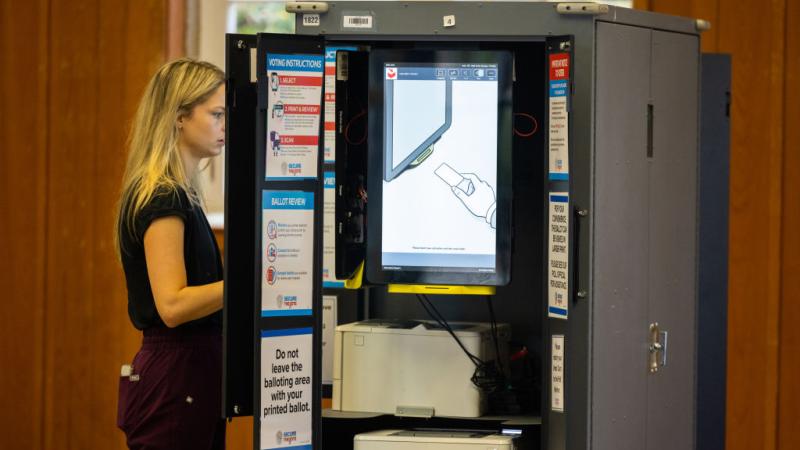
Assisted voters are those who claim to be disabled or have special needs and request assistance to register to vote and to vote “who need assistance to vote by reason of blindness, disability, or inability to read or write,” the Secretary of State explains.
According to state law, voters requesting assistance don’t have to provide proof of a disability. Those seeking voting assistance may be assisted by a person “the voter chooses who is not an election worker; two election workers on Election Day; or one election worker during early voting.” They may not be assisted by their employer or employer’s agent or their union’s officer or agent.
Individuals assisting voters are sworn in, take an oath, and sign a form recorded by the county clerk and SOS. The oath of assistance in part states, “I swear under penalty of perjury that the voter I am assisting represents to me they are eligible to receive assistance; I will not suggest, by word, sign, or gesture, how the voter should vote; I will prepare the voter’s ballot as the voter directs; I did not pressure or coerce the voter into choosing me to provide assistance.”
According to an SOS register of sworn assisters for the primary election, they claimed they were a “friend,” “neighbor” or a family member of the person requesting assistance.
Of the 358 assisted voters, 158 appear to have been assisted by 10 people, according to a review of the SOS data. The majority, nearly 90, appear to have been assisted by three county employees, Martha Garcia, Laura Garza, and Norma Garcia. Martha Garcia appears to have assisted the most voters of more than 40, according to the data. Martha Garcia also assisted Priscilla Garza, who in turn assisted eight voters, according to the data.
Martha Garcia works for Justice of the Peace Olga Bruni. Laura Garza works for Rathmell. Norma Garcia works for the county sheriff. Martha Garcia, Norma Garcia and Laura Garza did not respond to requests for comment.
Priscilla Garza, assisted by Martha Garcia, is Bruni’s daughter. In a Facebook post, Bruni criticized investigators knocking on doors inquiring if her adult daughter needed assistance. She said her daughter “has been using eyeglasses since she was a little girl, don’t you think maybe she lost contact lenses.” When asked if she was suggesting people who wear eyeglasses are disabled, and if her employee, Martha Garcia, took paid time off to assist voters, she said, “the election trial has not concluded and on the advice of my attorney I cannot comment.”
Despite receiving assistance to vote, Priscilla Garza is also listed as someone who assisted voters, according to the data. Despite swearing an oath that she needed assistance to vote because she was disabled, Priscilla Garza also assisted eight voters who also claimed to be disabled, according to the data.
One of the individuals sworn in to assist voters, Roman Guerrero Vargas, was sworn in under different names: Roman Vargas and Roman Guerrero, according to the data. When asked if this was legal or was a mistake, Bonoan did not respond to requests for comment.
Vargas also signed an affidavit alleging he was contacted by a Rathmell campaign operative, Laura Garza, via Facebook messenger on March 24, 2025, requesting his assistance to bring voters to vote for Rathmell for an upcoming election. “At that time, I was informed that I would be paid for my work and was instructed to contact her again when the election period approached,” the affidavit states. “When the election period began, I followed up as instructed and assisted in bringing in voters. I was instructed that I needed to tell or encourage voters to vote for Joe Rathmell.”
The affidavit states Vargas was paid $500 by Rathmell’s campaign and includes a copy of the check signed by his wife, Gina Rathmell. It also states he was “promised a total compensation in the amount of $5,000 upon completion of the campaign,” which he says he didn’t receive.
Neither Rathmell nor Garza responded to requests to comment on Vargas’ allegations.
The SOS press contact, Alicia Pierce, did not respond to requests for comment related to assisted voter standards, including what standards exist to ensure nondisabled people aren't voting as assisted voters, and what measures are in place to prevent assisted voters from also assisting others.
Without addressing the case specifically, Chad Ennis, VP of Honest Elections Project, told The Center Square, “Assistance fraud and ballot trafficking are certainly problems that everyone should be able to agree can lead to taking advantage of voters and fraud.”
Combatting inappropriate voter assistance is difficult, he said, because “under federal law, a voter is entitled to the assistant of their choice so there are limited ways for a state to limit assistance or the number of times a person can assist another. The best practice, as is the case in Texas, is to create a paper trail by logging the identity of assistants so that it can be shown who is assisting voters and how many voters are assisted. Without logging of assistants, it is virtually impossible for law enforcement to track down perpetrators.”
Ennis, who is also the former Texas SOS Director of the Forensic Audit Division, added that “Texas has some of the strongest laws against paid ballot harvesting in the nation. States like California, which has all mail elections, do not ban ballot trafficking at all. Law enforcement should be diligent in enforcing these laws in states that have them and legislators should pass ballot harvesting bans in states that do not. No one who is not an election official should be able to handle hundreds of ballots.”
The case continues as a deadline of Aug. 17 is approaches for Morales to be added to the Nov. 3 ballot.
The Facts Inside Our Reporter's Notebook




Top Stories

Trending
Just the News Spotlight
Just News, No Noise