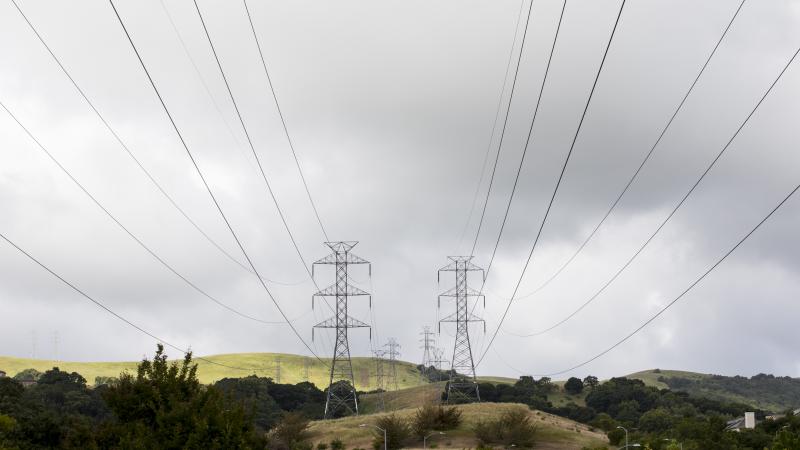
Indiana’s electricity bills have soared, now bill would make utilities prioritize affordability
Jumps in electricity rates in Indiana have lawmakers in the state looking to change the way rate increases are approved so that utilities will prioritize affordability.
Indiana lawmakers are trying to address rising energy costs in the state. A bill making its way through the Hoosier State’s legislature aims to make utilities prioritize affordability and reliability.
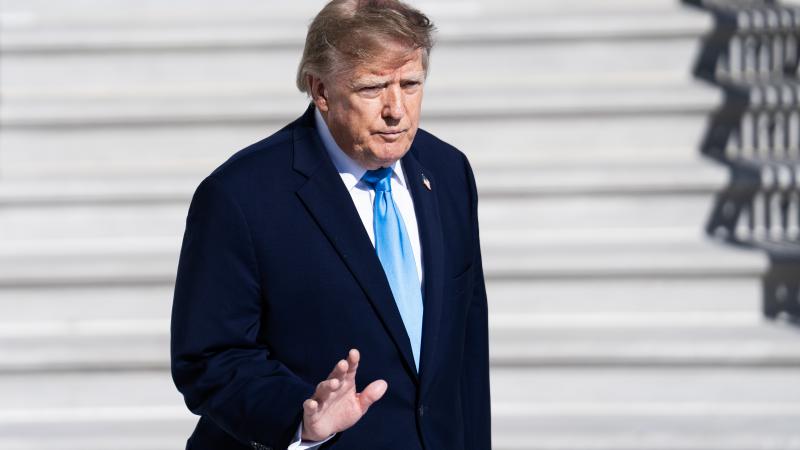
Rep. Marlin Stutzman, R-Ind., said on the Just the News No Noise television show that the Indiana Utility Regulatory Commission hasn’t been held accountable.
"Sticker shock right now with utility bills"
“This winter has been a harder winter than what we've normally seen, but I'll tell you, people are really — they're seeing sticker shock right now with utility bills,” Stutzman said, adding that it’s seniors who are hit the hardest by the rate increases.
Stutzman also pointed out that demand is rising, and part of the reason is the proliferation of electricity-hungry data centers.
“We could point the finger at certain culprits, but we need to make sure that these data centers are paying their own way. It should not fall back on rate payers,” Stutzman said.
Performance-based ratemaking
This is another problem that Indiana Gov. Mike Braun is trying to address, Stutzman said. Last month the Indiana House passed House Bill 1002. Among other things, it requires performance-based ratemaking. On Thursday, the Senate Appropriations Committee recommended the bill pass.
Traditionally, the profit that utilities make is determined by regulator-approved rate increases, which allow the utility to recover capital improvement costs plus a margin of return. This is known as cost-of-service regulation.
Performance-based ratemaking (PBR) is a collection of tools that try to align utility incentives with certain performance outcomes. Indiana has been toying with PBR for years, and House Bill 1003 incorporates a piece of PBR that’s focused on affordability, the IndyStar reported.
In 2023, the Indiana General Assembly had the Indiana Utility Regulatory Commission conduct a study on implementing a PBR framework into Indiana regulations. The authors of House Bill 1002 used the report as a basis for the bill’s language, according to the IndyStar.
Tying profits to performance
The bill would allow for new rate cases every three years, and it ties the utility’s profits to performance metrics, including affordability, reliability and quicker restoration of service after outages. Rate hikes would then reward positive performance or penalize poor results.
Indiana state Rep. Alex Burton, a Democrat who co-authored the regulation, urged the senate to pass the bill.
“Every month, households anxiously wait for their energy bills, and far too often those high costs force families to choose between groceries, medicine or other basic necessities,” Burton said in a statement.
Indiana powered by fossil fuels
The Citizens Action Coalition, an Indiana consumer advocacy group, reported that the Indiana Utility Regulatory Commission approved rates that jumped an average of 17.5% from 2024 to 2025, which comes to about $28 per month for the average household. This was the highest increase since at least 2005, according to the coalition.
While a sudden jump in rates can be disruptive to household budgets, Indiana electricity rates are about average for the U.S.
The state has some of the lowest rates of electricity consumption from renewable energy sources. Only about 5% of Indiana’s electricity consumption comes from renewable sources, according to the U.S. Energy Information Administration. The other 95% is derived from coal and natural gas.
Isaac Orr and Mitch Rolling, analysts with Always on Energy Research, published a report on their “Energy Bad Boys” Substack that looked at 10 states with the highest total rate increases from 2020-2025. It found that of those 10 states, of which Indiana is one, states with "clean energy" mandates have higher rate increases than states without such regulatory restrictions.
Indiana has only a voluntary, non-binding clean energy standard, but it had the sixth-highest rate increases in the time period of all states.
Cost-of-service model
When it comes to electricity generation, as opposed to electricity consumption, Indiana’s power plants are 83% powered by coal and natural gas. Solar and wind farms provide about 14% of the total electricity generated in the state.
U.S. Department of Energy Secretary Chris Wright in December issued an emergency order requiring the state to keep two coal units running past their planned retirements. The order lasts until March 23. One of those units was offline since last summer, and would take months to repair, according to The New York Times.
Utilities pass on capital costs of As Rolling and Orr explain on their Substack, utilities in states that use the cost-of-service model are incentivized to make capital investments. The model allows utilities to profit from investments in new builds, including wind and solar farms, as well as converting coal plants to natural gas.
This has incentivized utilities to expand their portfolio of wind and solar generators, as they can pass the capital costs of building out "green" infrastructures onto ratepayers.
If House Bill 1002 passes and moves the state away from that model and penalizes utilities for failing to meet affordability standards, it may help remove this incentive.
The Facts Inside Our Reporter's Notebook



Top Stories

Trending
Just the News Spotlight
Just News, No Noise