Abbey Gate: DOJ rests case against ISIS-K member as judge considers acquittal before jury verdict
Mohammad Sharifullah is on trial for his alleged role in the Abbey Gate massacre. A judge will now need to rule if the trial will continue.
A week of evidence and testimony against an alleged Abbey Gate co-conspirator hit what could be a major snag Thursday, as the Justice Department rested its case against the ISIS-K terrorist while the defense lawyers pushed the judge to acquit their client before the jury could even consider a verdict.
Mohammad Sharifullah, also known as “Jafar," has been charged with a single count of providing and conspiring to provide material support and resources to a designated foreign terrorist organization – ISIS-K – which resulted in death. He has pleaded not guilty to the charge, and the trial against him in a northern Virginia federal courthouse started this week, with a lengthy list of government witnesses testifying Monday afternoon through Thursday afternoon.
Minutes after the DOJ said that it had finished the presentation of its side of the case and was resting, and prior to the defense team starting its own presentation before the jury, a defense attorney for Sharifullah told the judge Thursday that his team was moving for a judgment of acquittal and for the charges to be tossed before the jury could consider a verdict.
This sort of motion can be granted by judges only if they determine there is no way that a reasonable jury could find the defendant guilty of the alleged crime beyond a reasonable doubt, according to legal experts.
Judge Anthony Trenga, appointed to the U.S. District Court for the Eastern District of Virginia by President George W. Bush, is presiding over the trial in Alexandria, Virginia, and he seemed to take the defense motion seriously. If he rules in favor of the defense, it could end the case before a jury even has a chance to find Sharifullah guilty or not.
It has been revealed that Sharifullah confessed to the FBI last year that he played a reconnaissance role in the bombing at the gate of the Hamid Karzai International Airport in Kabul, Afghanistan, during the final evacuation of U.S. personnel from the country on Aug. 26, 2021.
The FBI has said that Sharifullah confessed to being involved in “route reconnaissance” in the lead-up to the Abbey Gate attack, in which a suicide bomber detonated an explosive vest, killed 11 Marines, one Army soldier, one Navy corpsman and an estimated 170 Afghan civilians, while wounding dozens of other U.S. troops and scores of Afghans in the crowd.
The FBI has said Sharifullah also confessed to a role in facilitating a June 2016 suicide bombing attack that killed more than 10 guards tasked with protecting the Canadian embassy in Kabul. The FBI has further said Sharifullah also claimed to have trained ISIS-K gunmen for a deadly attack on a concert hall in Moscow in 2024.
Many of Sharifullah’s confessions – made to FBI investigators while in Pakistan, while on an airplane on the way to the U.S., and at an FBI office in northern Virginia – were played in court Thursday morning and early afternoon.
Defense lawyer Geremy Kamens argued late Thursday afternoon that the Justice Department had failed to provide any corroboration of Sharifullah’s many statements claiming involvement in ISIS-K terrorist attacks – including his confession that he had provided reconnaissance on a road outside the Kabul airport hours before the suicide bombing there. The lawyer argued that there was no evidence that his client was involved in the Abbey Gate attack outside of Sharifullah’s own limited claims.
Sharifullah faces a potential life sentence for the charges.
Kamens noted that the DOJ charge against Sharifullah includes a punishment enhancement because of his alleged conspiracy “resulting in death” at Abbey Gate, as he questioned whether Sharifullah’s alleged actions – checking a road for Taliban checkpoints near the Kabul airport and reporting back to his ISIS-K superiors – even mattered.
The defense lawyer argued that there were two main routes to the airport that day — one from the south that would run into Taliban control or another from the north that would lead to a canal along the perimeter of the airfield that led to Abbey Gate – and contended that DOJ had provided no evidence on how the suicide bomber had carried out his attack.
Kamens said that no testimony had connected Sharifullah’s route scouting to the yet-unknown route taken by an ISIS-K suicide bomber named Abdul Rahman al-Logari to Abbey Gate and that prosecutors had not provided evidence showing Sharifullah’s actions made any difference.
A Justice Department prosecutor pushed back, arguing that the reality that an offense has been committed is sufficient to provide for corroboration, arguing that the Abbey Gate attack happened, and Sharifullah allegedly confessed to a role in it, and that should be sufficient corroboration to allow the trial to continue moving forward.
The DOJ lawyer added that Sharifullah’s confession was sufficiently trustworthy to meet legal requirements.
The prosecutor also pointed to a business card allegedly belonging to Sharifullah that was seized from an ISIS-K safehouse, thus allegedly proving that he was a member of the terrorist group. The DOJ attorney said that this fact – combined with Sharifullah confessing in detail to a role in helping plan and facilitate an attack on Canadian embassy guards and claiming to have done recon ahead of the Abbey Gate attack – was sufficient to keep the criminal charge alive.
The DOJ attorney also said that it was fully justified to charge Sharifullah with a conspiracy “resulting in death” because the ISIS-K member’s scouting ahead of the Abbey Gate attack was a “but-for cause” – meaning the terrorist’s alleged actions helped cause the attack on U.S. troops. The prosecutor compared it to the Butterfly Effect of a butterfly flapping its wings and causing a spiral of deadly consequences.
“The case presents substantial legal and factual issues,” Trenga said after hearing from both the prosecution and defense, saying he would review the defense team’s full motion, would give the DOJ time to file a rebuttal, then would make a decision, but would allow the case to proceed at least for now.
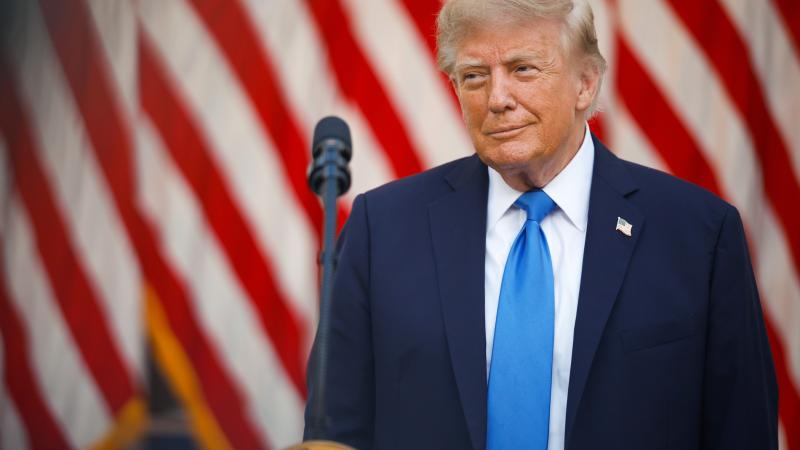
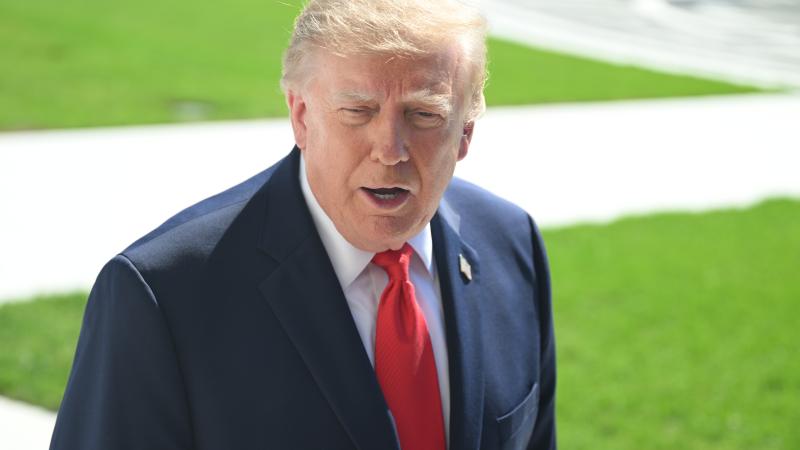
Sharifullah's capture by Pakistani intelligence, with alleged help from U.S. spy agencies, was announced by President Donald Trump at a joint session of Congress in March of last year. Trump has thanked Pakistan for “helping arrest this monster.” Trump also called Sharifullah “the top terrorist responsible for that atrocity” which killed thirteen U.S. service members on August 26, 2021.
Al-Logari – who had been freed by the Taliban from a prison at Bagram Air Base in mid-August 2021, mere weeks after the U.S. abandoned the base – has been identified as having carried out the suicide attack at Abbey Gate.
Assistant U.S. Attorney John Gibbs said during his opening argument on Monday that ISIS-K is a designated foreign terrorist organization and that it is a “crime to provide material support to an FTO like ISIS-K.”
Gibbs said Sharifullah had previously told a reporter that he wanted to strike at "the Crusaders" and got his chance with Abbey Gate.
The DOJ attorney said that Sharifullah admitted to helping with reconnaissance and with the transportation of the suicide bomber in an attack on Nepalese security guards for the Canadian Embassy.
Gibbs said that the defendant also provided “granular detail” about his alleged participation in numerous other terrorist attacks, including a deadly ISIS-K attack in Moscow in 2024.
Sharifullah was arrested in 2019 and was put in Pul-e-Charkhi prison near Kabul. Once the Taliban seized Kabul they emptied the prisons, including at Bagram Air Force Base and the one where Sharifullah was held.
“Almost as soon as he was released” from prison, he linked up with ISIS-K again and participated in plotting related to the Abbey Gate attack, Gibbs said.
The prosecutor said that Sharifullah ID’ed a photo of Logari and named him, with the DOJ attorney saying that the duo had both spent time at Pul-e-Charkhi prison. Gibbs stressed that the defendant had confessed to a recon role in the Abbey Gate plot.
The Pentagon, under Democrat President Joe Biden, had argued that the Abbey Gate attack was not preventable – going so far as to say it still would have occurred even if the bomber had remained behind bars rather than being freed by the Taliban — despite a host of evidence indicating that the attack did not have to happen the way it did.
The FBI has said Sharifullah was read his "Miranda rights" by the FBI in March and that the alleged terrorist proceeded to tell them he was recruited into ISIS-K around 2016. The FBI said the terrorist was imprisoned in Afghanistan from approximately 2019 until two weeks before the Kabul airport attack.
The FBI has said Sharifullah was contacted by another ISIS-K member upon being freed from prison in mid-August 2021 who connected Sharifullah with the plot to attack U.S. forces at the airport. The bureau said ISIS-K members provided Sharifullah with a motorcycle, funds for a cell phone and instructions on using social media to communicate with them in the lead-up to the attack.
Kamens had insisted Monday that his client was innocent, and hinted that the defense team would argue that the Taliban – and not Sharifullah – had in fact been involved in the Abbey Gate plot.
“We know a lot about the Abbey Gate attack [...] It was horrific,” Kamens said then.
The defense lawyer also said: "The question in this case is not really about what happened. But about who is responsible. [...] Mr. Sharifullah had nothing to do with the actual attack that day. The U.S. government got the wrong man.”
The defense attorney noted that the Taliban took Kabul in mid-August 2021.
“Then something crazy happened. ... The Taliban offered to help,” Kamens said. “Then something crazier happened: Rear Admiral Pete Vasely accepted their offer of help.”
Kamens said that the Taliban militants who took up security positions around the Kabul airport “were no ordinary Taliban soldiers” – they were members of the Haqqani Network Taliban.
The defense attorney asserted that “it is very likely” that the Haqqani Taliban helped with the Abbey Gate attack, and contended that “it is extremely likely that this was an inside job” that was “done with the help of the Haqqani Network.”
Kamens said that his client’s confession to doing reconnaissance for the bombing “makes no sense” and suggested Sharifullah had confessed because his pregnant wife and children had allegedly been imprisoned by the Pakistanis as well when Sharifullah himself had been arrested in Pakistan.
The defense attorney claimed that Trump had called Sharifullah the “mastermind” of the attack, and pointed out that the DOJ was not claiming that. While an unnamed U.S. official told the press Sharifullah was the “mastermind” of the attack, there is no evidence that Trump specifically called him that.
FBI Director Kash Patel tweeted shortly after Trump's announcement last year that "tonight the FBI, DOJ, and CIA have extradited one of the terrorists responsible for the murder of the 13 American soldiers at Abbey Gate during the disastrous Afghanistan withdrawal. One step closer to justice for these American heroes and their families."
Sanaullah Ghafari, the head of ISIS-K and a notorious terrorist attack planner in Kabul and across the region, still has a $10 million U.S. bounty on his head.
The Eastern District of Virginia is known for handling many national security cases, and Trenga has also been a member of the Foreign Intelligence Surveillance Court since May 2020, and has been the presiding judge on the secretive court since May 2023.
The judge predicted Monday that the trial would last five to seven trial days, and that proceedings would not be held this coming Friday, and so the trial will continue next week – unless he rules in favor of an acquittal.
A number of Abbey Gate Gold Star family members have been present in the courtroom gallery this week to watch the trial proceedings.
The Facts Inside Our Reporter's Notebook
Links
- charged with
- trial against him
- according
- legal experts
- appointed
- confessed to the FBI
- said
- confessed
- charged
- âresulting in deathâ
- âbut-for causeâ
- Butterfly Effect
- thanked Pakistan
- opening argument
- not preventable
- "Miranda rights"
- provided Sharifullah
- told the press
- tweeted
- U.S. bounty on his head.
- member of the Foreign Intelligence Surveillance Court


Top Stories


Trending
Just the News Spotlight
Just News, No Noise