General McKenzie, top commander during Afghan debacle in 2021, named president of The Citadel
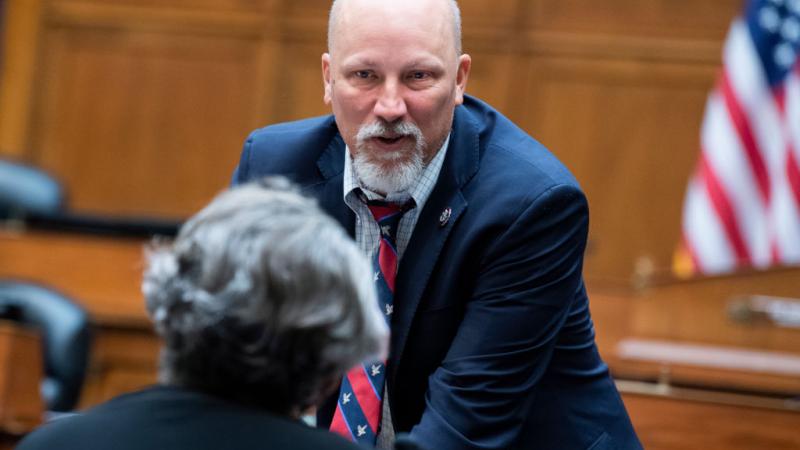
General Frank McKenzie, who oversaw the shambolic U.S. withdrawal and evacuation from Afghanistan, will be the next president of The Citadel.
The former commander of U.S. Central Command during the disastrous withdrawal and evacuation from Afghanistan in 2021 has been named the president of one of America’s six senior military colleges. Gen. Frank McKenzie, whose tenure leading CENTCOM spanned 2019 to 2022, was publicly announced as the next president of The Citadel Military College of South Carolina — known simply as The Citadel — on Monday.
The school became best known to most Americans as part of the foundation for novelist Pat Conroy's 1982 "Lords of Discipline." Conroy graduated from The Citadel in 1967. The book was dramatized on film in 1983.
These senior military colleges are not to be confused with service academies like West Point or Annapolis, but the six such colleges do have a special strategic relationship with the War Department. The Army ROTC says that “Senior Military Colleges offer a four-year college experience within a full-time Corps of Cadets.”
An investigation by Just the News showed that McKenzie, then-Chairman of the Joint Chiefs of Staff Mark Milley, and other military generals and commanders made significant mistakes during the disastrous withdrawal and evacuation from Afghanistan in 2021. The six-part investigative series by Just the News shone a light on many previously unreported or little-known misstatements, misjudgments, and questionable decisions by U.S. military leaders during the Afghan debacle in 2021 following the "Go-to-Zero" order made by President Joe Biden.
McKenzie, most notably, rejected on the spot a proposal from the Taliban to keep the enemy forces out of Kabul in mid-August 2021.
U.S. military had not done all it could to properly secure Kabul airport
The Taliban forces soon purportedly providing security outside of Kabul airport included the Haqqani Taliban’s Badri 313 suicide units. McKenzie admitted on TV, in congressional testimony, and in his memoir that the Taliban repeatedly refused to search or raid potential ISIS-K locations during the evacuation. A U.S. military investigation also concluded the Taliban failed to do all it could to prevent the Abbey Gate attack.
A U.S. military investigation also found that the U.S. military had not done all it could to properly secure Kabul airport against threats ahead of the evacuation. The U.S. military also did not conduct constant surveillance of Abbey Gate during the evacuation, despite the ISIS-K threats against the airport and against that gate.
The U.S. military also did not carry out any strikes against ISIS-K until after the Abbey Gate bombing.
War Secretary Pete Hegseth announced in late February that the Pentagon was canceling nearly one hundred Senior Service College fellowships at nearly two dozen institutions. Hegseth’s memo said the Pentagon was also “Realigning Senior Service College Fellowships” and listed 21 “Potential New Partner Institutions” — including The Citadel.
McKenzie, The Citadel, and the Department of War did not respond to requests for comment from Just The News.
“I am honored and humbled to come home to The Citadel”: McKenzie
The Citadel tweeted on Monday that “The Citadel has selected General Frank McKenzie to serve as its 21st president.” McKenzie most recently had been listed as the executive director for the Global and National Security Institute at the University of Southern Florida.
The school had said in February that The Citadel’s 13-member presidential search committee had announced four finalists — including McKenzie. The Citadel’s Board of Visitors selected McKenzie as the winner on Saturday, and “the vote for McKenzie was unanimous.”
“I am honored and humbled to come home to The Citadel,” McKenzie said in the Monday press release. “This is where it all began for me. I look forward to giving back some of the things that were given to me during my time as a cadet. Marilyn and I are excited and energized about the opportunities ahead.”
“The Citadel is incredibly lucky to have the opportunity to bring Gen. McKenzie back to campus as the 21st President,” Greg Delleney, the chairman of the board of visitors, also said in the press release. “We had an outstanding pool of candidates and an exceptionally strong shortlist of finalists making this decision extremely difficult. Having Gen. McKenzie, with his experience as a theater commander and an academic institution leader, agree to lead The Citadel is a reflection of the outstanding institution we currently have and our bright future.”
The press release also said: “A career infantry officer, McKenzie was commissioned through the Naval Reserve Officers Training Corps program at The Citadel, where he majored in English. Over more than four decades of service, he held a wide range of command and staff positions, including serving as Commander of Marine Forces Central Command and Director of the Joint Staff. His final military position was as the Commander, United States Central Command where he was responsible for all US military operations in a vast area of the world covering the Middle East and South Asia.”
Afghanistan was not mentioned directly.
McKenzie denied being “out of step” with Biden’s Go-to-Zero order
President Biden announced on April 14, 2021 the "Go-to-Zero" order, requiring all U.S. military forces to leave Afghanistan by September 11, 2021 — the twentieth anniversary of the 9/11 attacks.
McKenzie repeatedly testified that he had recommended against removing all U.S. troops from Afghanistan, but in a press conference a week after the order he argued that he was not “out of step” with Biden’s decision.
“You presented, if I may say, like some kind of a bleak assessment, is your assessment, the military assessment, at odds with the political decision to leave Afghanistan?” a reporter asked the general.
"No, I don't believe so, and I'm not sure, I'd — ‘bleak’ would not be the word that I’d use. Others have used that word,” McKenzie said. “I will tell you this, I had ample opportunity to give advice to the President of the United States, he received my advice, it was an iterative process.”
McKenzie added: “My views were fully heard, it was a thoughtful — very thoughtful, very in-depth process that went on over an extended period of time. So, we were — I was fully consulted in this, General Miller was fully consulted, and General Milley was fully consulted in this process.”
“So, I think they went out of the way — the President [Biden] went out of the way to ensure all views were on the table,” the general said. “And so, my assessment is, I don't believe it is out of step at all with the decision that's been made. I think we all recognize there are risks ahead that follow as a result of that decision, but I would reject the assertion that we're out of step.”
McKenzie on Iran and Pakistan in Afghanistan
McKenzie argued in a late April 2021 press conference that terrorism in Afghanistan was concerning to all of Afghanistan’s neighbors, including Pakistan and Iran, arguing that “everyone has a vested interest in a stable Afghanistan” and “everyone has a vested interest in an Afghanistan that does not harbor terrorist groups that have — such as al-Qaeda and ISIS that have an apocalyptic vision of a future world.”
The Pakistani government — especially its intelligence services — had long been a strong influence in Afghanistan, assisting the Taliban in its war against the Afghan government, giving safe haven to the Taliban, and cultivating a longstanding alliance with the Haqqani Network. Then-Prime Minister Imran Khan praised the Taliban takeover on August 17, 2021, claiming that “what is happening in Afghanistan now, they have broken the shackles of slavery.”
Just the News previously reported there is significant evidence that Iran collaborated with the Taliban and al-Qaeda to carry out attacks against U.S. troops, international coalition forces, and the Afghan republic’s military in an effort to eject the West from Afghanistan.
McKenzie pushes the “speed equals safety” mantra
The speed with which the U.S. military abandoned Afghanistan in 2021 — including the timing of the abandonment of the Bagram Air Base — by military commanders who adopted a “speed is safety” mantra while failing to plan for the Taliban’s jailbreak of ISIS-K terrorists was decided by McKenzie and others and approved by Biden.
McKenzie told Congress in 2024 that “we believed that speed brought safety” when explaining why the U.S. military conducted its retreat so quickly in 2021.
Then-Rep. Mike Waltz, R-Fla., told the authors of the book Kabul that he went on a congressional delegation to the Afghan capital prior to Biden’s April 2021 withdrawal decision, where he met with McKenzie, who told him that “if we get the green light to withdraw, I'm going to do it as fast as possible, because we will be vulnerable.”
Waltz, who went on to be Trump’s national security advisor and is currently the U.S. Ambassador to the United Nations, said he told McKenzie that that strategy would be like “looking at the issue with a soda straw on just the military operation.”
Waltz asked McKenzie how that took into account NATO partners, ongoing support for the Afghan military, U.S. contractors, the U.S. embassy presence, and all the languishing Special Immigrant Visa applicants, but he said McKenzie didn’t have much of an answer except to repeat that “if I get the green light, I’m putting my foot on the gas to get the heck out of there and limit our exposure.”
McKenzie told the House Foreign Affairs Committee in 2024 that “it was by design” that the U.S. military left Afghanistan so quickly after Biden’s withdrawal order. The general said: “From the very beginning, we wanted to get out as quickly as we could because we believed that speed brought safety.” He cited “concerns about the Taliban attacking us, concerns about ISIS being able to carry out attacks, but also a desire to have room at the back end in case we had trouble, we had weather problems, we had aircraft problems that slowed us down.”
McKenzie dismissed the idea that a slightly slower retrograde could have staved off the Afghan military’s collapse: “The Afghan military was read in from the beginning about the pace of the withdrawal, and frankly […] I don’t think waiting another 30 days would have had any material impact at all on the Afghan military’s ability.”
The general also wrote in his memoir, The Melting Point, that a swift retrograde was the best move. “The withdrawal had been paced by the dictum that ‘safe was fast’ and that we would also show our intent clearly to the Taliban by moving aggressively and unambiguously. The president was presented with many opportunities to change the pace of the withdrawal, and he always pressed for speed. He was right to do so.”
The failure of “over-the-horizon” in Afghanistan
The swift U.S. retrograde meant that the U.S. military would need to provide over-the-horizon assistance to the Afghan military, but U.S. military commanders never figured out how to do this effectively in time.
McKenzie on July 25, 2021 insisted that “we continue to provide contract maintenance and logistics support here in Kabul to maintain Afghan defense capabilities, including their aviation capability. We continue to provide maintenance, advising them from over-the-horizon, and we're prepared to execute over-the-horizon aircraft maintenance and refurbishment with aircraft that will be flown to a third country, repaired, and returned to service in Afghanistan with the Afghan Air Force.”
The general admitted that “I'm not going to kid you and say it's going to be easy. It will be far more difficult than it was in the past,” though he insisted that “we think we have a path to do that.” McKenzie said that the Afghan air force was the “singular advantage” and the “significant asymmetric advantage” that the Afghans had over the Taliban.
McKenzie later conceded during his 2024 book tour that it was a fantasy to think that the U.S. could continue assisting the Afghan military from over-the-horizon as the general laid out how ineffective the U.S. support for the Afghan air force was.
McKenzie and others deny Taliban had attacked U.S. bases in 2021
In the weeks after the fall of Kabul, U.S. military brass such as Milley and Defense Secretary Lloyd Austin would repeatedly testify that the Taliban had broken every provision of the Doha Agreement but one — its vow not to attack U.S. and NATO forces. McKenzie also denied that the Taliban conducted attacks against U.S. bases during the withdrawal.
In fact, the Taliban had also violated that provision, because the Taliban attacked U.S. and NATO bases in Afghanistan multiple times, both before and after Biden’s "Go-to-Zero" order, including attacks on Bagram when U.S. troops were still there. The Taliban’s official spokespeople would often take credit for the attacks too. McKenzie told the House Foreign Affairs Committee in March 2024 that “most of their attacks against us were probably low-level Taliban commanders who didn’t get the word.”
During his 2024 book tour, McKenzie repeatedly continued to claim that the Taliban never attacked U.S. forces in 2020 and 2021: “The Taliban had about seven things that they were supposed to do. They didn’t do six of them, but one they did very well and scrupulously, in fact — they did not attack American forces in Afghanistan anymore.”
“It’s hard to know exactly what the Taliban’s plan is”
McKenzie traveled to Kabul near the end of July 2021 and said then that “it’s hard to know exactly what the Taliban’s plan is” and that the Taliban’s tempo would “perhaps” pick up in the coming days. The Taliban takeover would culminate within about three weeks.
“It's hard to know exactly what the Taliban's plan is. There's been a little bit of a lull here over the Eid holiday period. We would expect the tempo perhaps to pick up in the days ahead. I think if you want to go to where the people are generally you're going to have to go into the cities. The Afghanistan of 2021 is not the Afghanistan of the mid-1990s, when the last time the Taliban tried to come to power,” the general said in July 2021.
“I think the human terrain is very different and they're going to have to deal with the cities if they actually want to try to claw their way back into power. And again, I don't think it's a foregone conclusion that they're going to be able to capture these urban areas or that they're going to be able to come back in to power.”
McKenzie also added that “we will leave enough forces here in Kabul to protect our embassy and to ensure, in cooperation with our Turkish partners, that the airfield remains open.”
The U.S. embassy would be abandoned and Hamid Karzai International Airport would be overrun on August 15, 2021 — just a few weeks later.
McKenzie turned down Taliban offer for U.S. to secure Kabul
McKenzie held a mid-August 2021 meeting with Taliban leader Mullah Baradar in Doha, Qatar which would end with the Taliban taking control of Kabul and the U.S. relying upon the goodwill of Taliban fighters to provide security at the Kabul airport during the evacuation.
During that meeting, Baradar said the Taliban was willing to withdraw its forces from in and around Kabul and would let the U.S. send in as many troops as it wanted to secure the Afghan capital and conduct the U.S. evacuation free from Taliban interference, but McKenzie admits that he turned the offer down on the spot. By the time McKenzie arrived in Doha for this meeting, the Taliban had already encircled Kabul and began to enter the city.
The U.S. was thus forced into relying upon the Taliban for security throughout the evacuation through Kabul airport, and Khalilzad served as an interlocutor between the U.S. military commanders on the ground at HKIA and the Taliban leaders still in Doha.
A book by Alexander Ward — titled The Internationalists — said that, once he arrived in Doha, McKenzie “devised a new proposal” for the Taliban “without directly clueing the White House in.” The proposal was for the Taliban to allow the U.S. to conduct its evacuation without interference, and then the Taliban could control all of Kabul.
McKenzie wrote in his memoir that he met with the Taliban at the Ritz-Carlton in Doha on the afternoon of August 15, 2021.
In his own words, during this meeting with the Taliban, McKenzie promised that the U.S. would not carry out any strikes against the Taliban — and, indeed, would not carry out any air strikes anywhere in Afghanistan — so long as the Taliban agreed not to interfere with the U.S. evacuation.
McKenzie explained that the Taliban asked him if the U.S. would consider securing Kabul, and wrote at length about why he didn’t pursue this option. The general wrote that “Baradar asked me: if they gave us assurances of safe passage, would we consider employing additional forces to provide security for Kabul? This wasn’t a serious question, and in my opinion then, and now, there was no practical way to undertake what he so casually suggested. While I believed his question to have been off the cuff, my response wasn’t. It was something we had carefully considered and planned for. I knew the facts inside and out. The introduction of significantly more U.S. combat forces would have been inconsistent with Taliban objectives of getting us out of the country quickly.”
“I told him that our mission was singularly focused on a safe withdrawal, and we would not commit forces for any other purpose. My guidance from the secretary for this meeting was very clear; we were leaving, and our forces would all be dedicated to protecting our withdrawal. I also knew from extensive analysis that it would have required a reinforced division, with a significant package of corps-level enablers, to hold Kabul,” McKenzie added.
McKenzie wrote in his memoir that, after the meeting, he joined a videoconference with the entire NSC, including Biden and Harris, with the president joining from Camp David. The general wrote, “I debriefed him and the rest of the participants on my meeting with Baradar and his companions. There was no interest in the Taliban’s idea about us assuming security for all of Kabul."
This purported discussion with Biden occurred only after McKenzie had already turned the Taliban’s offer down.
The “businesslike” Taliban outside Kabul airport
Multiple key Biden Administration officials also repeatedly praised the “businesslike” character of the Taliban during the evacuation at Kabul airport, despite clear evidence that the Taliban was beating up some Americans and blocking some U.S. citizens from escaping Afghanistan, and in spite of overwhelming evidence that the Taliban was beating up and even executing some Afghans who wanted to flee Taliban rule.
McKenzie described the U.S. evacuation effort at the end of August 2021, saying: “We had gone from cooperating on security with a longtime partner and ally to initiating a pragmatic relationship of necessity with a longtime enemy [...] The Taliban had been very — very pragmatic and very businesslike as we have approached this withdrawal.”
He added: “I will simply say that they wanted us out. We wanted to get out with our people and with our — and with our friends and partners. And so, for that short period of time, our issues — our view of the world was congruent, it was the same.”
McKenzie again testified in late September 2021 that “it was a very pragmatic, businesslike discussion” with the Taliban when coordinating security at HKIA with them. McKenzie told Politico in August 2022 that “by and large, the Taliban were helpful in our departure. They did not oppose us. They did do some external security work. There was a downside of that external security work, and it probably prevented some Afghans from getting to Kabul airport as we would have liked. But that was a risk that I was willing to run.”
Unmentioned were the Americans who were blocked by the Taliban and the Afghans who were murdered by them as the evacuees tried to escape during the NEO.
McKenzie insisted that “we did not rely on the Taliban for our security” but that “we used them as one tool among many to beef up our defensive posture.”
Despite McKenzie’s claims, the Pentagon inspector general emphasized in 2021 that the U.S. had relied upon the Taliban for security at HKIA: “DoD officials met with Taliban representatives and agreed to cooperate on security at HKIA, with the Taliban forming an external security cordon that U.S. forces inside the facility incorporated into their force protection operations.”
Of his agreement with the Taliban, McKenzie said, “So, yes, we shared a common purpose. I don’t trust the Taliban, I don’t like the Taliban, it was a highly transactional agreement. But it was designed to let us get out. And I will tell you that we certainly did not outsource our security to the Taliban, but I am confident that we would’ve had more Abbey Gate attacks had we not negotiated these limited agreements with the Taliban for some of the external security that they provided.”
McKenzie wrote in his memoir that the U.S. military “shared eighteen imminent threat warnings” with the Taliban, but admitted that “our success in this effort was mixed.” McKenzie said that the Taliban “sometimes […] responded and looked at areas we felt held ISIS-K members” but that “sometimes they did not.”
An ISIS-K bomber named Abdul Rahman al-Logari — who had been freed by the Taliban from a prison at Bagram Air Base in mid-August 2021 only weeks after the U.S. abandoned the base — has been identified as having carried out a partially successful suicide attack at Abbey Gate. That murder spree killed 13 U.S. service members and an estimated 170 Afghan civilians while wounding dozens of other U.S. troops and scores of Afghans in the crowd, on August 26, 2021.
When asked if the Taliban ever declined or refused to search or raid some suspected ISIS-K locations, Zalmay Khalilzad, the U.S. special envoy for Afghan reconciliation, replied in testimony to the HFAC, “No, not that I'm aware of. General McKenzie on the record said he hates the Taliban, but the Talibs did everything — his word, not mine — that we asked them to do during that period. You'd have to ask him."
But as McKenzie and others admitted, the Taliban had repeatedly declined to assist the U.S. in defending HKIA against the ISIS-K threat during the NEO. McKenzie said on August 26, 2021, shortly after the bombing, that “the Taliban have conducted searches before they get to that point” at the airport gates, but admitted that “sometimes those searches have been good and sometimes not.”
Biden also insisted after the blast that “no, I don’t” feel like it was a mistake to depend upon the Taliban to secure the perimeter of the Kabul airport.
McKenzie perpetuates the “eleven days” myth about the fall of Afghanistan
The Long War Journal produced a real-time mapping of Taliban control in Afghanistan which made it clear that the collapse of Afghanistan did not occur in just eleven days in August 2021, but rather over multiple months following Biden’s Go-to-Zero order.
Milley, Biden, and then-Secretary of State Antony Blinken all quickly argued that Afghanistan had fallen in only “eleven days.” McKenzie also testified in September 2021 that “I did not see it coming as fast as it did. I thought it would be a matter of into the fall or into the winter. I did not see it happening in eleven days in August.”
But in reality, the collapse of the Afghan army and government had clearly been happening for months — the fall of provincial capitals and the fall of Kabul were the culmination of months of Taliban battlefield victories and dozens of district seizures, Afghan military defeats, U.S. troop withdrawals, and deals between the Taliban and local Afghan leaders. The warning signs were there throughout 2021, not just in August. Missing these warning signs meant the Taliban was back in power.
- Reporter's disclosure
A quick word about this author (a disclosure that I shared in prior pieces on Milley and McKenzie). I co-authored a book — KABUL — on the withdrawal and evacuation from Afghanistan and, prior to joining Just the News, I worked as the senior investigator on the House Foreign Affairs Committee (HFAC), specifically tasked with reviewing the bungled Afghan withdrawal.
I resigned from the committee in protest in August 2024 over disagreements with then-GOP Chairman Michael McCaul over how his investigation was run and what I viewed as HFAC’s lack of desire to hold military leaders accountable. Emily Cassil, a spokesperson for McCaul, told Just the News that "Chairman McCaul stands by his comprehensive report, the culmination of 18 transcribed interviews, seven public hearings, and 20,000 pages of documents obtained under subpoena from the State Department.”
In full disclosure, I have also been serving as an independent factfinder in Defense Secretary Pete Hegseth's ongoing review of the Pentagon’s failings during the Afghan withdrawal, but I am participating in that exercise solely as a journalist. I'm not paid by any government agency and my participation is solely to help provide Just the News' readers and the American public with a better understanding of what led to such a disaster.
The Facts Inside Our Reporter's Notebook
Links
- special strategic relationship
- says
- six-part
- investigative
- series
- shone
- a
- light
- rejected
- included
- on TV
- in congressional testimony
- in his memoir
- also
- concluded
- found
- did not
- did not carry out
- announced
- tweeted
- listed
- said
- selected
- said
- said
- ordering
- argued
- argued
- claiming
- previously reported
- significant evidence
- speed
- decided by McKenzie
- told
- reported
- publicly endorsed
- told
- said
- said
- told
- said
- dismissed
- wrote in his memoir
- insisted
- admitted
- conceded
- Milley
- Lloyd Austin
- repeatedly
- Doha Agreement
- denied
- told
- repeatedly
- said
- admits
- encircled Kabul and began to enter the city
- told
- said
- wrote
- wrote
- promised
- explained
- wrote
- memoir
- repeatedly praised
- key role
- played his part
- described
- testified
- told
- Afghans who were murdered
- insisted
- emphasized
- told
- confirmed
- wrote
- replied
- said
- insisted
- real-time mapping
- all quickly argued
- testified
- disclosure
- shared
- prior pieces
- on
- Milley and McKenzie
- co-authored
- resigned from the committee in protest
- disagreements
- independent factfinder


Top Stories


Trending
Just the News Spotlight
Just News, No Noise