Pfizer's COVID antiviral, bankrolled by Biden administration, doesn't help high-risk adults: study
New England Journal of Medicine lets Anthony Fauci and his onetime deputy play down results in editorial alongside study from U.K., Canada trials. Critics suspect profit motive played role in long-delayed publication.
The Biden administration threw its weight and reportedly more than $12 billion in taxpayer money behind Pfizer's Paxlovid despite the COVID-19 antiviral's penchant for rebound infections – including in the First Couple and then-directors of the Centers for Disease Control and Prevention and National Institute of Allergy and Infectious Diseases.
A long-awaited study published in the New England Journal of Medicine suggests the nirmatrelvir-ritonavir combination marketed as Paxlovid, with nearly 24 million courses federally purchased at $530 each, is no better at protecting vaccinated adults at elevated risk than it is at mitigating so-called long COVID, as Pfizer's own research found two years ago.
The "two open-label platform trials," known as PANORAMIC in the U.K. and CanTreatCOVID in Canada, found Paxlovid "did not reduce the incidence of hospitalization or death among vaccinated higher-risk participants" – 50 and older and 18-50 with "coexisting conditions" – who tested positive for COVID and "had been unwell for 5 days or less."
"We found no evidence that early treatment" reduced their "already-low incidence of hospitalization or death in either trial and were unable to identify any prespecified subgroup with compelling evidence of treatment effect," the authors said.
It's just the latest black eye for Pfizer, which canceled a trial for its new COVID vaccine for healthy 50-64 year-olds this month due to lack of interest and did not answer a Just the News query for its response to the peer-reviewed study. The Canada Paxlovid trial similarly ended early "because of slow recruitment" and its supply being discontinued, the study said.
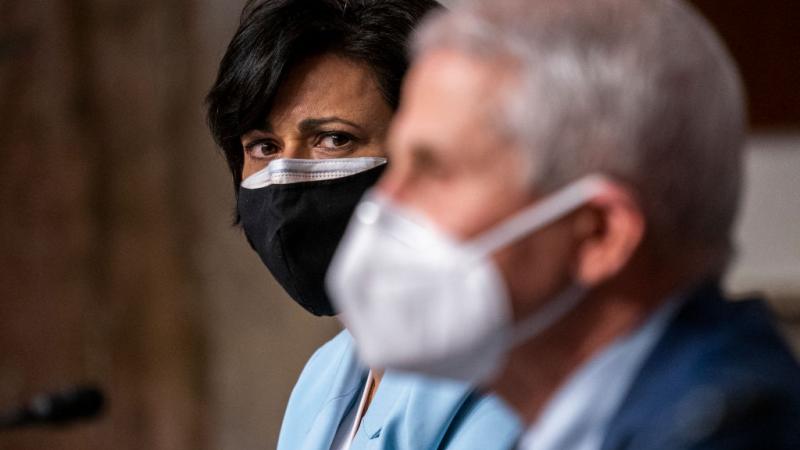
To play down the new results, NEJM published a same-day editorial by former NIAID Director Dr. Anthony Fauci and his then-deputy director for clinical research, Cliff Lane.
The new trials show the findings from Pfizer's EPIC-HR trial, the initial basis for the feds going all-in on Paxlovid, don't apply "to the current circumstances, in which most adults have varying degrees of preexisting immunity and the circulating variants are different," they wrote.
"However, one should be cautious not to overinterpret the new data and conclude that nirmatrelvir–ritonavir is not of current value," they said.
Clinicians could become "more selective" in who should get Paxlovid, considering antivirals "on a case-by-case basis, particularly in older adults, persons with a compromised immune system, and persons for whom more-rapid recovery is a priority," given the trials found "enhanced recovery and more-rapid reduction in viral load," Fauci and Lane wrote.
Fauci famously took a second Paxlovid course after getting a rebound, ignoring the Food and Drug Administration's rebuke of Pfizer CEO Albert Bourla's recommendation. Several months later, the agency instructed Pfizer to test a second course for rebound infections.
The nearly three-year trials of roughly 3,500 participants finished 19 months ago, prompting critics to seize on the unexplained delay in publication.
"The paper took far longer to publish than we would like due to multiple factors," corresponding author Christopher Butler, affiliated with the University of Oxford's Nuffield Department of Primary Care Health Sciences, told Just the News April 29.
"We completed participant recruitment in Sept 2024 and took the time necessary to meticulously clean the data and do the analysis, as well as validated CanTreatCOVID data," he wrote in an email. "The first draft was submitted to NEJM in Feb 2025. So it look [sic] over a year to get from first submission to publication. The manuscript has gone through 3 rounds of detailed, comprehensive review. The journal look [sic] time to schedule the publication date."
"Nearly two years to publish this null finding!" marveled Venk Murthy, associate chief of cardiology for translational research and innovation at the University of Michigan. He concluded his X post with the "suspicious" emoji.
"Epic Suppression of Results," former FDA regulatory review officer Jessica Adams scoffed, calling back to Pfizer's EPIC-SR trial, which found no benefit from Paxlovid in vaccinated high-risk or unvaccinated low-risk patients and ended early, yet was invoked by the FDA to justify full of approval of the antiviral three years ago.
"Paxlovid never earned the broad use it was touted for," she said.
One self-identified doctor claimed Twitter, before Elon Musk purchased and renamed the platform X, banned her for warning against Paxlovid "before it hit the market."
The findings support "the notion that changing environments require new data" and "trial results may often require an expiration date," cardiologist John Mandrola wrote in the Sensible Medicine newsletter, noting Paxlovid's only clear benefit had been found early in the pandemic, before mass vaccination and infection, in Pfizer's EPIC-HR trial.
"We’ve seen this beautifully played out in post-myocardial infarction data," with retests of beta blockers and "preventive low-dose aspirin" contradicting their effectiveness as determined in earlier eras of care, he said. What's different with Paxlovid is "profit motive."
"Mission accomplished" for Pfizer's balance sheet, another wag deadpanned, noting the drug company's record-breaking 2022 revenue haul. Fierce Pharma said Pfizer was the first company in biopharma history to cross $100 billion in annual revenue, with $18.9 billion from Paxlovid in 2022.
It continued to rake in money – $5.7 billion in 2024 and nearly $2.4 billion in 2025 — even as Paxlovid's downsides became unavoidable. Research suggested SARS-CoV-2 was already mutating around Paxlovid by mid-2022, when the FDA circumvented doctors by letting pharmacists prescribe it directly.
"I wonder if Pfizer will be returning the billions of dollars of USG corporate welfare they made peddling this junk?" Joseph Marine, vice director for operations in Johns Hopkins Hospital's cardiology division, wrote on X. He noted the study defined high-risk as a group with less than 1% hospitalization.
"It was never about your health. It was ALWAYS about the transfer of wealth," the Vaccine Safety Research Foundation, founded by onetime Democratic Party kingmaker Steve Kirsch, wrote on X.
While Mandrola noted the two trials did find faster symptom recovery with Paxlovid versus nothing – 14 versus 21 days for U.K. and 6 versus 9 days for Canada – "these were pragmatic open-label trials without a placebo, and symptom recovery is subjective and susceptible to placebo and nocebo [negative expectations] effects."
University of Pennsylvania medical professor Jeffrey Morris concluded: It seems that only the unvaccinated needed it" based on EPIC-HR, and "perhaps" it should have been only offered to vaccine refusers. He noted the hospitalization and death rate was actually slightly higher in the Paxlovid group (0.8%) than the control (0.7%) in the new trials.
The antiviral did seem to outperform Pfizer's own mRNA COVID vaccine among high-risk vaccinated patients with an average age under 60 in a 2022 trial, finding large differences in emergency room visits, hospitalizations and deaths.
The Facts Inside Our Reporter's Notebook
Links
- reportedly more than $12 billion
- penchant for rebound infections
- New England Journal of Medicine
- 24 million courses federally purchased
- $530 each
- Pfizer's own research found two years ago
- canceled a trial for its new COVID vaccine
- NEJM published a same-day editorial
- took a second Paxlovid course
- agency instructed Pfizer to test a second course
- Venk Murthy
- Jessica Adams scoffed
- invoked by the FDA to justify
- One self-identified doctor claimed Twitter
- cardiologist John Mandrola wrote
- another wag deadpanned
- Fierce Pharma said it was the first company
- $5.7 billion in 2024
- nearly $2.4 billion in 2025
- SARS-CoV-2 was already mutating around Paxlovid
- Joseph Marine
- group with less than 1% hospitalization
- Vaccine Safety Research Foundation
- onetime Democratic Party kingmaker Steve Kirsch
- Jeffrey Morris concluded
- outperform Pfizer's own mRNA COVID vaccine

Top Stories




Trending
Just the News Spotlight
Just News, No Noise