Related Articles

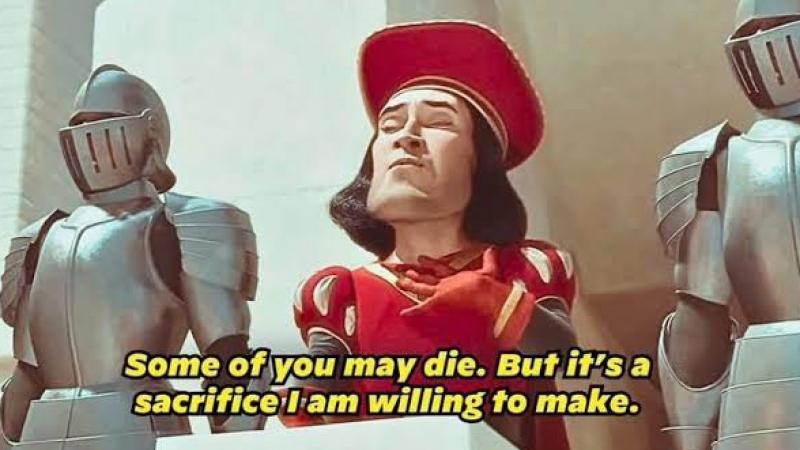
Unlike the Hawaii and California laws, New Mexico's is not limited to campaign season. It applies to both AI-generated meme creators and users who share their content, including social media reposts.
Two weeks before Meta faces off against 29 states in a jury trial that could saddle the social media giant with $1.4 trillion in damages, for data collection practices and design decisions pertaining to children on Facebook and Instagram, a single state extracted nearly two-thirds of that potential amount from Meta for its allegedly addictive products.
Celebrated as the home of fictional methamphetamine kingpin Walter White and his charismatic lawyer Saul Goodman, New Mexico crowed over the civil penalties and final judgment it obtained, which give the Democrat-led state staggering influence over the design and even content of Meta's products, including tobacco-style risk warnings.
The Land of Enchantment may have snorted more than it can inhale, however, by seeking to regulate artificially generated political satire after The Babylon Bee and other satirists convinced federal courts in Hawaii and California to invalidate those states' similar laws as First Amendment violations of "long cherished" American political traditions.
The conservative Christian website sued the New Mexico State Ethics Commission on Tuesday, seeking a preliminary injunction against enforcement of HB 182 provisions requiring a state-prescribed "disclaimer" on any "advertisement" with "materially deceptive media." The law specifies "reasonably constituted" satire and parody must include these disclaimers.
Covered content is defined as a communication "referring to a candidate or ballot question" that uses AI to depict that individual doing something that didn't happen, without their consent. It has five exceptions, one of which the Bee explicitly disavows is applicable to its work: "a communication appearing in a news story or editorial."
"Willfully and knowingly" distributing such AI creations is a first-conviction misdemeanor and second-conviction felony, with individual fines of $1,000 and a $20,000 maximum.
The challenged provisions violate the First Amendment as well as the 14th because they are "unconstitutionally vague," not giving the Bee "adequate notice" of prohibited speech and letting the commission "engage in discriminatory enforcement," reads the motion, seeking either a block on the law itself or as applied to the Bee.
"Satire and parody, by their nature, require swift reaction to current events," and the law threatens the Bee for responding to as-yet unknown "opportunities for effective satire or parody" as the state's November election approaches, the complaint says.
The law has "practically zero constitutional applications," since other state laws already cover its only legitimate prohibitions, such as defamatory or fraudulent speech, the motion says.
The commission has not disavowed enforcement despite its members warning Democratic Gov. Michelle Grisham before she signed the bill that it had "enforceability" problems, and despite state Attorney General Raul Torrez warning in an advisory opinion that the explicit coverage of satire and parody is "likely unconstitutional on its face.”
The Bee notes its long history of being censored and deplatformed on social media, most notably its eight-month suspension by Twitter before Elon Musk bought the platform and reinstated its account. It risks social media sanctions again for violating New Mexico law, including the loss of millions of followers and associated revenue.
Year-round 'joke police,' not just campaign season
New Mexico officials and their progressive politics are a repeated target of the Bee's lampooning.
In a recent "Visit New Mexico" promo that touts the "Democrat Utopia" for lacking constitutional freedoms, an AI-generated state Supreme Court Justice David Thomson – who's running for reelection – declares its elimination of "the Second Amendment, the First Amendment, or any other amendment that lets people do things."
Unlike the Hawaii and California laws, New Mexico's is not limited to campaign season. It applies to both AI-generated meme creators and users who share their content, including social media reposts that routinely run into the thousands for Bee content, such as its ribbing of President Trump for securing "unlimited chips and salsa" in a Mexico trade deal.
“We’re used to getting pulled over by the joke police, but comedy isn’t a crime" and the First Amendment protects "AI satire poking fun at political candidates," Bee CEO Seth Dillon said.
The state commission didn't answer Just the News queries for its response to the lawsuit.
Not all courts have viewed regulation of so-called election deepfakes as inherently problematic for free speech.
The full 8th U.S. Circuit Court of Appeals declined to review a three-judge panel's refusal to block Minnesota's law, finding it had an unwritten parody exception that protected satirist Chris Kohls, a.k.a. "Mr. Reagan," from liability. The case is notable for Attorney General Keith Ellison getting caught submitting an expert declaration with AI "hallucinations."
Tolerates disinformation by 'conventional news sources'
The Bee's complaint against New Mexico stands out for twice citing a pornographer's victory over a religious-right icon to defend the right of Christian satirists to "freely poke fun at those running for office."
Citing the "graphic depictions and satirical cartoons" of American politicians dating to "George Washington as an ass," the Supreme Court tossed Jerry Falwell's lawsuit against Larry Flynt's Hustler magazine for intentional infliction of emotional distress – a liquor-ad parody featuring the televangelist recounting intoxicated incest with his mother.
The Bee's AI-generated content is akin to political cartoons that "achieve their point by exaggerating reality," such as outlandish depictions of presidents' physical features, according to the suit, filed by the Bee's longtime lawyers at the Alliance Defending Freedom.
The point of parody and satire is making audiences "do a double-take by convincing them that they are seeing a serious rendering of an original, and then allowing them to laugh at their own gullibility," it says. In order to "prompt thought, internal reflection, and public dialogue about the subject of the satire," it must have "proximity to the real or original."
Some of the statutory language in HB 182 appears ambiguous – failing to specify whether disclaimer-required public distribution includes "text messaging, email, direct messaging, or reposting" or paid subscriber-only content, the suit says. Its use of "passive voice" suggests that third parties may be liable for sharing others' content.
The law doesn't specify whether it's triggered by using AI to create portions of any given content other than deepfaking an individual, according to the Bee, which also faults the definition of "advertisement" as nonsensical, requiring no "commercial transaction."
The law explicitly favors radio and TV broadcasters who include materially deceptive media in "bona fide" news and interviews, requiring one disclaimer "at most" that the content is artificially generated, while the Bee and others must disclaim "throughout their entire display of the image or video."
The motion for preliminary injunction cites the state's controlling 10th U.S. Circuit Court of Appeals, which invoked a Supreme Court ruling against the Stolen Valor Act to strike down a Kansas law that prevents animal rights activists from using deception to get into ranches and document alleged abuses.
False speech must "imminently" cause a "legally cognizable harm," such as property damage, to be punishable, the appeals court said. HB 182 has the same problem of being "too attenuated from the false speech," the motion says.
The law doesn't have a problem with falsity when it's committed with the approval of the "depicted individual," meaning New Mexico political candidates and allied organizations can create materially deceptive ads with no disclaimer, but not "rivals and satirists," which is viewpoint discrimination, the motion says.
Its "underinclusion" problem makes HB 182 an active threat to accuracy in elections, the Bee argues. By exempting any "news story or editorial" from a disclaimer requirement, the law leaves out the exact setting where "AI-generated 'materially deceptive media' would do the most harm [...] trusted, conventional news sources."