Related Articles

Just because Surprise, Arizona doesn't have to offer public comment doesn't mean it can censor them based on content, and city could easily resurrect biased comment policy it ditched after getting sued, Clinton nominee says.
More than four years after the Biden administration authorized investigations of conservative protests at public meetings under the rubric of "domestic terrorism," even for "non-criminal behavior," a court ruling Wednesday against a Phoenix suburb put government officials on notice that squelching criticism may be more trouble than it's worth.
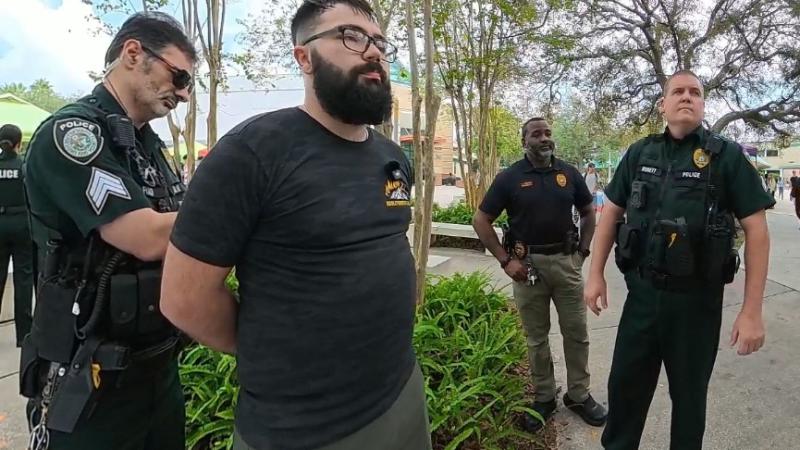
The City of Surprise will have to turn over pretrial information and evidence to a mother it arrested, detained and separated from her daughter at a City Council meeting for criticizing the city attorney's proposed salary increase, under an order denying its motion to dismiss Rebekah Massie's claim under Arizona's Open Meeting Law.
Senior U.S. District Judge Roslyn Silver, nominated by President Clinton, said "the statute is clear that if an open call to the public is held, it must be subject to reasonable time, place, and manner restrictions," rejecting the city's argument that it has unbridled discretion over public comment because "the open call to the public is permissive."
The founder of a Surprise-focused nonprofit watchdog, Massie argued the city violated the law through a viewpoint-discriminatory policy that exceeds its time, place and manner authority, enforced it against Massie to muzzle her and also violated her right to "listen to" meetings when an officer dragged her out.
Surprise also flubbed its argument that the libertarian activist – whose X handle "TheOtherMassie" alludes to libertarian-leaning GOP Rep. Thomas Massie of Kentucky, no relation – couldn't assert both First Amendment and Open Meeting Law claims, "as there is no requirement that claims be entirely separate in order to state a claim," Silver said.
The law's plain language allows anyone alleging a violation to sue "for the purpose of requiring compliance with" or preventing violation of the law "by the public body as a whole, or to determine" its applicability "to matters or legal actions of the public body," she said.
The city cannot get out of litigation simply because it scrapped its public comment policy prohibiting criticism but not praise of public officials at City Council meetings shortly after Massie sued, since it could easily renege on its replacement policy, the judge said.
“We’re going to continue to fight not only to vindicate Rebekah's constitutional rights, but to ensure that all Arizonans are free to speak their minds" without risking arrest, said Massie's lawyer Adam Steinbaugh, of the Foundation for Individual Rights and Expression.
Surprise didn't answer queries for its response to the ruling or why it has yet to move for dismissal of Massie's First and Fourth Amendment claims in 16 months of litigation.
It's a silver lining following a cloudy Christmastide for First Amendment litigants in the Pacific-to-Rockies jurisdiction of the 9th U.S. Circuit Court of Appeals, which sided with a censored university professor represented by FIRE the week before Christmas.
Over the 12 days of Christmas, the full appeals court upheld California's mandatory "implicit bias" training in medical education and a panel all nominated by Democrats reinstated the Golden State's so-called gender secrecy policies in schools while litigation continues, though the latter plaintiffs petitioned the Supreme Court on Thursday for an emergency stay.
Another 9th Circuit panel Tuesday unanimously upheld the religious rights of Yakima, Washington's Union Gospel Mission to hire only coreligionists in non-ministerial roles, overturning the state supreme court's interpretation of an antidiscrimination law. Unlike the gender-secrecy panel, this one included two President Trump nominees.
Strikeout for home of two MLB teams' spring training
Massie's slow-moving litigation, with a seven-month gap between her opposition to Surprise's partial dismissal motion and Silver's order Wednesday, has been a predictable headache for the city of nearly 168,000, known nationally as the spring training location for the Kansas City Royals and Texas Rangers.
Even before Massie sued, Mayor-elect Kevin Sartor denounced his lame-duck predecessor and future defendant, Skip Hall, for having her arrested for refusing to stop arguing that then-city attorney Robert Wingo should not get a pay increase for allegedly mishandling election violations by the city clerk, the Arizona Daily Independent reported.
"No citizen should ever be arrested for voicing their concerns, especially in a forum specifically designed for public input," Sartor said, promising his administration "will never arrest or silence our residents for expressing their views or questioning their elected officials."
A Maricopa County judge quickly dismissed Massie's prosecution with prejudice so she can't be prosecuted again, calling her arrest "objectively outrageous" for criminalizing political speech based on its content and rejecting Surprise's request to ignore the video record, which shows the entire exchange between Massie and then-Mayor Hall and her arrest.
Massie added new claims of assault, battery and intentional infliction of emotional distress a year ago based on bodycam footage by then-police officer and defendant Steven Shernicoff. Police Chief Benny Pina, who retired last May, also publicly defended Massie's arrest as "in alignment with what our policy is and what our philosophy is."
Silver's ruling responds to Massie's second amended complaint following a failed settlement conference in April, which alleged 11 federal and state claims including multiple First and Fourth amendment violations by Hall and Shernicoff, and Surprise's motion to dismiss only the Open Meeting Law claim and Massie's opposition to the motion.
It starts by dismissing Massie's state-law claims against Hall and Shernicoff in three counts, which were added in her first amended complaint a year ago, because state courts from top to bottom have "repeatedly stated that a notice of claim must be filed before suing for damages," superseding Massie's "various policy reasons" to the contrary.
Surprise went downhill from there, with Silver quickly dispensing with its arguments that the Open Meeting Law "does not establish a statutory right" of public participation, that its "substantial compliance" with the law should override any "technical violations and minor deviations" by the city, and that Massie can't sue for various reasons.