Federal law could punish sanctuary sheriffs, advocacy groups, but DOJ not using it for that purpose
DOJ has recently signaled interest in using the law – § 1324 – more aggressively. But as of early 2026, no prosecution of a sheriff or comparable official for detainer noncompliance has gone forward.
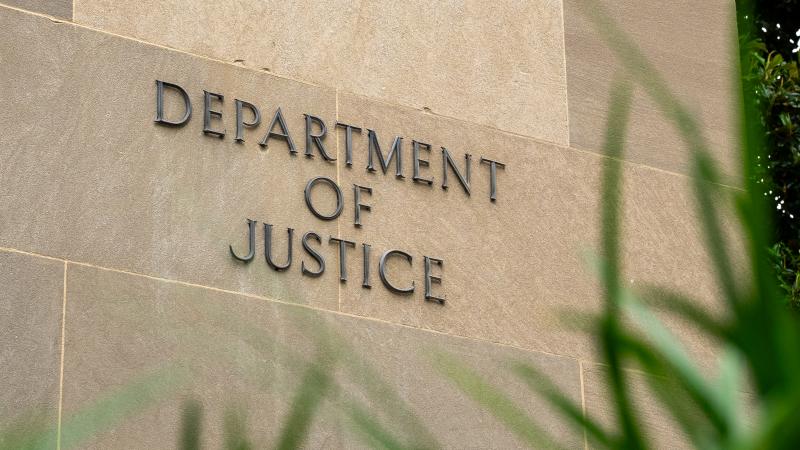
A federal law on the book makes it a crime to harbor or transport an illegal alien – punishable by up to a decade in prison. But the Justice Department has never used the law against the local officials and organizations most visibly defying federal immigration enforcement, despite years of escalating conflict over “sanctuary” policies.
Across the country, cities, counties and states have adopted measures that limit cooperation with Immigration and Customs Enforcement. Under so-called "sanctuary" policies, local law enforcement agencies routinely decline to honor ICE detainer requests, which ask jails to hold certain individuals past their release dates so federal immigration agents can take custody.
At the center of this standoff is an often-overlooked provision of federal law: 8 U.S.C. § 1324. The statute makes it a felony to knowingly “conceal, harbor, or shield” an illegal alien from detection, or to transport one within the United States in furtherance of unlawful presence. It applies broadly to “any person,” with no explicit exemptions for elected officials or nonprofit groups.
Yet the statute has never been successfully deployed against a sitting sheriff, local official or humanitarian organization for sanctuary-related conduct that appears, at least on its face, to fall within its scope – despite its sweeping language—and despite repeated clashes between federal authorities and hundreds of sanctuary jurisdictions.
The Scope of the Statute
The law is drafted in broad terms.
Under the harboring provision – § 1324(a)(1)(A)(iii) – any person who, “knowing or in reckless disregard” of an individual’s unlawful status, “conceals, harbors, or shields from detection” that person is guilty of a federal felony. A related provision criminalizes transporting unauthorized individuals within the United States when done with the same level of knowledge and “in furtherance” of their unlawful presence.
Penalties can reach five years per violation for basic offenses, 10 years when committed for financial gain and 20 years or more if the conduct causes serious bodily injury. Crucially, violations are charged on a per-person basis, meaning large-scale activity could theoretically produce dozens or even hundreds of counts.
DOJ is well aware of the statute’s breadth. Its Criminal Resource Manual describes § 1324 as covering a wide range of conduct, including smuggling, transportation, harboring, inducement and conspiracy.
Is looking the other way enough?
Local government officials who take steps to protect unauthorized immigrants could be prosecuted under § 1324. The statutory language – “any person” – does not exclude them.
The key legal question is whether inaction – such as declining to honor an ICE detainer – can qualify as “harboring” or “shielding.”
Courts have generally said no, drawing a distinction between passive noncooperation and affirmative assistance.
Federal appellate decisions have emphasized that the statute targets conduct that “substantially facilitates” an individual’s continued unlawful presence or actively helps prevent detection. In other words, it contemplates doing something, not merely declining to act.
Under that framework, releasing a detainee – whether because state law forbids extended detention or because ICE detainers are requests rather than commands – has not been treated as criminal harboring. Sanctuary policies are typically characterized as restrictions on government action, not as affirmative efforts to conceal.
But that line is not as clear as it first appears. When a local official knowingly releases an individual sought by federal immigration authorities – despite having both notice of their unlawful status and an opportunity to transfer custody – the act of release could be framed as more than mere inaction. In practical terms, it may function to help the individual avoid federal detection at the very moment detection is most likely. At least arguably, that action begins to resemble “shielding from detection” within the meaning of the statute.
No court has squarely adopted that theory. But as clashes between federal and local authorities intensify, the gap between how § 1324 is written and how it has been applied may become harder to ignore.
The Constitutional Barrier
Even if prosecutors could stretch the statute to cover noncompliance, they would face another obstacle: the Tenth Amendment’s anti-commandeering doctrine.
In Printz v. United States (1997), the Supreme Court held that the federal government cannot require state or local officials to administer or enforce federal regulatory programs. In the immigration context, the principle has led courts to treat ICE detainers as voluntary requests rather than binding commands, precisely to avoid constitutional conflict.
At first glance, that doctrine appears to foreclose any attempt to criminalize a local official’s refusal to honor a detainer.
Federal appellate courts have underscored that the federal government cannot force state or local participation in immigration enforcement. If the federal government cannot compel participation in immigration enforcement, it seems to follow that it cannot punish officials for declining to participate.
But the anti-commandeering rule is not a blanket immunity from federal law. It prohibits the federal government from ordering states to regulate or enforce, not from imposing generally applicable laws that incidentally govern state actors. As the court has emphasized, states do not enjoy a constitutional right to engage in conduct that Congress has otherwise made unlawful.
That distinction may prove consequential. A prosecution under § 1324 would not necessarily be framed as punishment for failing to carry out a federal duty. Instead, it could be characterized as enforcement of a neutral criminal statute that applies to “any person,” including state officials, when they engage in affirmative conduct – such as knowingly transporting, concealing, or actively helping an individual evade detection.
The Nonprofit Question: A Closer Call
The analysis becomes more complicated when it comes to private organizations.
Unlike state officials, nonprofits cannot invoke anti-commandeering protections. If an organization knowingly transports unauthorized immigrants within the United States, it could potentially fall within § 1324(a)(1)(A)(ii), which prohibits transportation “in furtherance” of unlawful presence.
Courts require that such transportation meaningfully advances a person’s ability to remain in the country –not merely provide incidental aid. Still, organizations that systematically move newly arrived migrants from border regions to interior cities could arguably meet that threshold.
The statute also increases penalties when transportation is undertaken for “commercial advantage or private financial gain.” Whether government grants or service contracts qualify as financial gain is unsettled, but the argument has been raised.
Why DOJ Might Be Holding Back
DOJ has recently signaled interest in using § 1324 more aggressively. In early 2025, federal prosecutors were directed to examine potential cases against local officials who obstruct immigration enforcement. But as of early 2026, no prosecution of a sheriff or comparable official for detainer noncompliance has gone forward.
One reason may be strategic. A failed case could produce binding precedent that strengthens sanctuary policies nationwide. The legal risk cuts both ways.
That said, the outer limits of the law remain untested. The anti-commandeering doctrine may protect noncompliance, but it may not extend to affirmative interference – such as warning individuals about pending ICE actions or coordinating efforts to help them evade federal custody. In such cases, the conduct begins to look less like passive resistance and more like active facilitation.
For nonprofits, the uncertainty is even greater, as courts have yet to squarely address how those provisions apply to organized, large-scale migrant relocation efforts.
The statute remains on the books, and its penalties are severe. The question is not whether it exists, but how far prosecutors are willing and able to push it.



Top Stories




Trending
Just the News Spotlight
Just News, No Noise