Like Trump in 2024, independents in CA are breaking for Republicans with 'common sense' policies
California hasn’t had a Republican governor since Arnold Schwarzenegger in 2011; Los Angeles hasn’t had a Republican mayor since 2001. An NBC Los Angeles online survey said that about 89% of respondents viewed Pratt as the clear winner of the mayoral debate.
In what could cause a seismic November shock in California, independent voters in the Golden State are breaking for Republicans across statewide races, recent polling shows.
The striking development captured in the latest California poll from Kreate Strategies shows that independent voters are showing a clear shift toward Republican candidates, including Steve Hilton who leads the field at 22%, edging out Democrat Xavier Becerra at 20% in the top-two primary format. Kreate says it was not paid by any campaign or outside organization.
A broader realignment in California politics
With Sheriff Chad Bianco, another Republican, pulling in 13 percent, the data reflects how no-party-preference voters — who make up a growing bloc and now outnumber Republicans in registration — may be increasingly breaking for GOP hopefuls rather than defaulting to the Democratic machine that has dominated Sacramento for decades.
This trend among independents isn’t isolated to the governor’s race; it signals a broader realignment in California politics where unaffiliated voters are rejecting the status quo on issues like housing costs, crime and energy policy.
The poll’s movement — Hilton gaining four points while several Democrats are holding steady or have slipped — highlights how these swing voters, often frustrated by one-party rule, are willing to cross over to Republicans who emphasize practical solutions over progressive orthodoxy.
It's no longer "vote blue no matter who" in California, even amongst independents.
The implications are profound: if independents continue this pattern in races up and down the ballot, Republicans could secure top-two advances or even general-election upsets that were unthinkable just one cycle ago.
The poll should serve as a wake-up call for Democrats accustomed to coasting on demographic advantages if California’s independent voters are no longer reliable allies in the progressive project, but are instead fueling a Republican resurgence built on voter dissatisfaction with entrenched governance.
Similar to 2024, common sense policies to address dissatisfaction
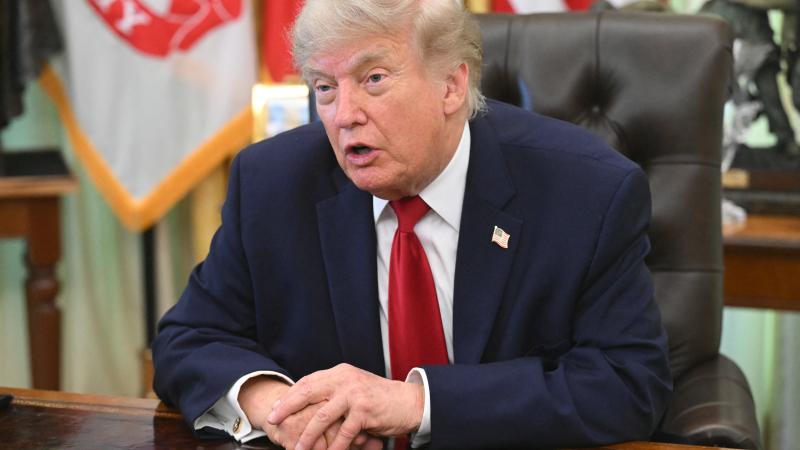
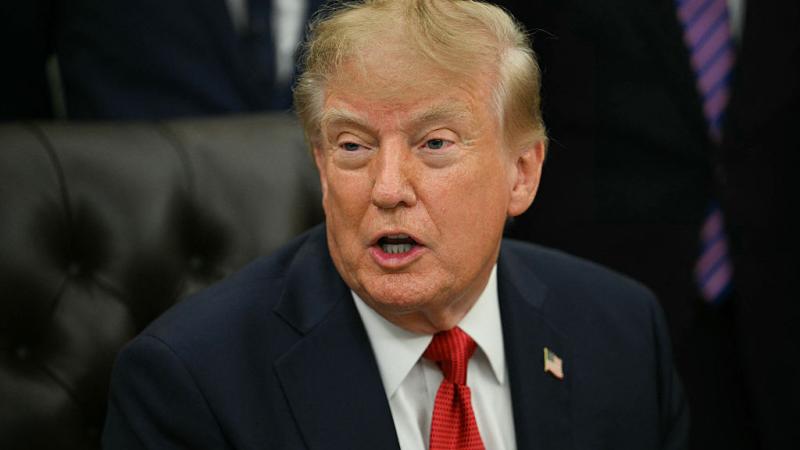
This shift mirrors President Donald Trump’s successful strategy in the 2024 presidential campaign, where he made significant inroads with independent voters by focusing on pocketbook issues, border security, law and order, and government efficiency.
Nationally, Trump narrowed or closed the gap with independents compared to 2020 — winning them outright in key battleground states like Pennsylvania, Arizona, and Georgia — helping deliver his historic popular vote victory and Electoral College sweep.
Just as California independents are drawn to Hilton and Bianco’s outsider critiques of Sacramento dysfunction, Trump’s appeal cuts through partisan lines by positioning Republicans as the agents of change against perceived elite failures, proving that unaffiliated voters can respond powerfully when offered what they say is a clear alternative to the status quo.
Los Angeles needs a villain
It's not just the gubernatorial race where independents are looking longingly at Republicanesque policies. Los Angeles could deliver a major blow to Democrat rule in the City of Angels as it appears poised for its villain era, or at the very least, its anti-hero era.
In a three-way race between current Los Angeles mayor Karen Bass, LA Councilwoman Nithya Raman, and former reality show villain Spencer Pratt, Pratt is surging in prediction markets like Kalshi, where on Tuesday, he surged to an all-time high with a 35% chance of winning the race.
Similar to Trump's campaign in 2024, Pratt has emphasized several straightforward, results-oriented issues that appeal to independents and frustrated voters tired of entrenched political failures in Los Angeles.
In a city still dealing with the effects of the "defund the police" movement, many residents are calling for a reinvigorated police force after the LA City Council approved a $150 million cut to LAPD's budget.
Pratt's ideas for aggressive public safety measures — such as hiring more police officers, enforcing the rule of law, cracking down on open drug dealing and crime, and welcoming federal support to restore order — position him against what he calls a breakdown in basic law enforcement.
On homelessness, Pratt pushes a “treatment-first” approach that treats the crisis primarily as a drug addiction problem (driven by fentanyl and “super meth”) rather than a simple housing shortage.
He has proposed clearing encampments (with grace periods before enforcement), mandatory treatment where needed, zero tolerance for public drug use and street fentanyl, and auditing NGOs (nongovernmental organizations) for fraud and waste in billions spent with little visible progress.
Fiscal accountability and government reform form another core pillar: ending mismanagement of tax dollars, investigating corruption in city programs and recovery efforts (especially post-Palisades Fire), protecting ratepayers from utility failures, and ensuring funds go to actual services like fixing streets and infrastructure instead of bureaucracy.
Pratt frames these not as partisan ideology but as practical fixes: “no more politicians, no more lying” and has repeatedly resisted aligning with a political party.
Furthermore, in order to achieve what he's promised in his campaign, he will have to be satisfied with accusations of villainy, which to some will be more an anti-hero than villain.
In comic books, an anti-hero is a central protagonist in a story who lacks traditional heroic traits like moral purity, bravery, or selflessness, instead possessing flaws, questionable motives, or even villainous qualities while still driving the narrative forward.
The Deadpool franchise is built around its eponymous anti-hero. Batman is an anti-hero, as was Tony Soprano on "The Sopranos" and Walter White on "Breaking Bad."
Spencer Pratt mastered the villain role on the reality show "The Hills," deliberately leaning into the chaos, backlash, and public hatred because it made for compelling television — and paid the bills.
He owned the “guy you loved to hate” persona without apology, as he discusses in his book. That same thick skin and strategic embrace of controversy could serve him well as Mayor of Los Angeles.
If he makes tough, unpopular calls — clearing encampments, boosting police funding, enforcing accountability, or shaking up a broken bureaucracy — critics will paint him as the villain again. Pratt likely won’t flinch in the face of harsh criticism, especially if he succeeds at ultimately, making the city better for everyone.
LA Mayoral debate
Last week, the three met on stage during the first televised debate, hosted by NBC. Pratt delivered a powerful performance, outshining Bass and Raman in fiery exchanges at the Skirball Cultural Center that focused on public safety, homelessness and the city’s response to the Palisades Fire.
Moderated by the network's LA affiliate NBC4 and Telemundo 52 on May 6, the nonpartisan forum saw Pratt repeatedly confront Bass over what he called mismanagement of key crises, drawing strong audience reactions as he positioned himself as a blunt outsider voice for frustrated Angelenos.
Post-debate polls underscored his strong showing, with an NBC Los Angeles online survey finding that about 89% of respondents viewed Pratt as the clear winner. If Pratt receives over 50% of the vote in the June 2 primary, he wins outright and won't have to campaign for the general election.
Amanda Head is White House correspondent for Just The News. You can follow her here.
The Facts Inside Our Reporter's Notebook

Top Stories


Trending
Just the News Spotlight
Just News, No Noise