Memos reveal FBI faced roadblocks to prosecute possible 2020 Michigan voter registration fraud
The FBI collected witness interviews alleging voter registration fraud in Michigan in 2020. Newly-disclosed documents show the case was delayed, and ultimately “killed” by the Biden administration.
Contained in the trove of election-related documents President Donald Trump released to the public on Thursday are the FBI’s investigative files and communications about a possible voter registration fraud scheme in Muskegon, Mich., that ended without prosecution.
In 2020, the Muskegon Police Department and Michigan State Police identified a possible voter registration fraud scheme centered on a firm called GBI Strategies.
It prompted an investigation after which the materials were turned over to the FBI, according to the dozens of pages of police reports from the Michigan agencies reviewed by Just the News in 2023.
"Pay, play, and cheat"
The declassified files show, for the first time, how the FBI conducted its investigation into the allegations and provide new details about what became of the probe.
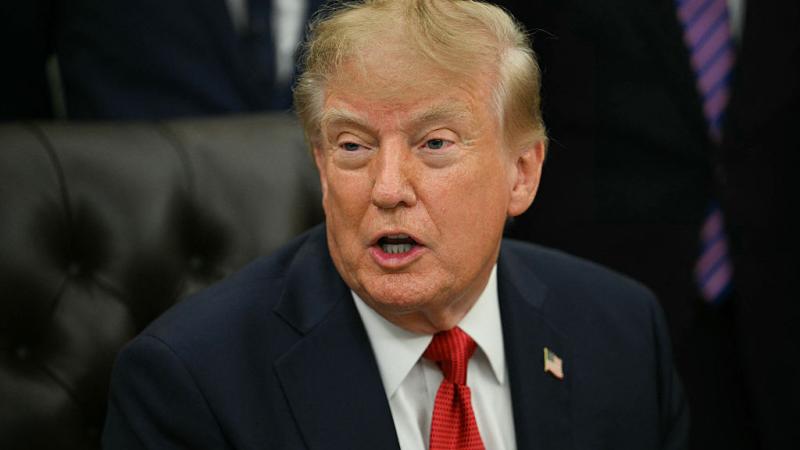
“The documents state that some canvassers admitted to FBI agents that they signed voter registration forms in other people's names, submitted fraudulent registration for people who did not exist, and received gift cards tied to their number of applications that they produced,” President Trump said on Thursday. “In other words, it was pay, play, and cheat.” The president said he is asking the FBI Director to reopen the probe to ensure that the matter is fully investigated and accused the Biden Justice Department of slow walking the probe.
The Muskegon Police Department began investigating GBI Strategies after the Muskegon City Clerk’s Office reported suspected voter registration fraud, according to a police report dated Oct. 16, 2020, which Just the News obtained from a FOIA request in 2023. The Muskegon Police Department, alongside the Michigan State Police, found that some of the registration forms included biographical information that did not match to real people or addresses that did not exist.
Michigan’s Attorney General eventually referred the probe to the FBI because of its national jurisdiction, Just the News reported.
But, what the FBI did with the information remained a mystery. In September 2023, the FBI denied a Freedom of Information Act request from Just the News seeking its investigative files into the suspected fraud, citing an exemption in that law regarding ongoing investigations.
The now-public documents show that the FBI team in Detroit conducted several interviews with canvassers who registered people to vote as part of the campaign organized by GBI Strategies. Many told investigators directly that they were told to fill out false information or that they believed it was likely that others were doing so, according to the FBI-302 memos made public by the White House.
FBI-302s are forms used by the bureau to summarize interviews taken during an investigation.
One canvasser alleged that the local company leadership directed employees to fill in fake information in order to complete more applications.
“[Name redacted] told all of the employees that if they couldn't get enough applications, they should just fill them in,” according to one FBI-302 of a canvasser. “One of the employees asked what this person meant […] whichever [person] it was picked up a blank application and filled it out with made-up information and said, ‘this is what I mean.”
Canvasers told to make up names or use anyone else’s name
Further, the employee alleged the leadership said “to put any number she could think of for the social security number, but not to use her own social security number or date of birth” and that “she could make up names or use anyone else’s name.”
“[Redacted] would return to the office at the end of her shift and fill in enough blank sheets with made-up people so that she reached her daily quota,” the FBI-302 said. The individual told investigators that she estimated she submitted “100 fake voter registrations” to the group.
You can read the documents below:
Another canvasser who worked for the company for about a week in 2020 said he “never collected any names,” but would “just sit in his car the whole shift and would put down a name of a friend or relative in order to have something to turn in with his clipboard.”
Another employee disputed the allegation that canvassers were directed to fill in false information, but noted, “Most of the employees submitted voter registrations with false information because it was "easy money.” “She never submitted any applications with fake signatures. She only heard about people submitting falsified forms,” the FBI agents added.
Several other employees told investigators they were either directed to put false information on registration forms or at least believed that other employees were doing so, according to the memos.
Initially, when the FBI was made aware of the allegations, the Justice Department’s Public Integrity Section (PIN) only approved a more narrow probe into the special debit cards the registration company was using to pay employees, rather than the allegations of voter registration fraud uncovered by Michigan authorities.
“PIN does not concur at this time, barring further predication, with a specific investigation focused purely on the voter registration fraud that has been investigated by State law enforcement officials,” an official from the DOJ’s Criminal Division (CRM) wrote to the FBI agents in March 2021.
Biden's DOJ decided to not push investigation
By November 2021, a CRM official noted that the U.S. Attorney’s Office in the Western District of Michigan and the FBI office decided not to seek “further investigative or prosecutive action at this time,” according to one email.
However, as the FBI office began to wrap up the probe pursuant to that decision, one agent sent a detailed email in June 2022 to the Justice Department raising concerns that the voter registration fraud allegations had not received a “full field investigation.”
“I am one of the agents assigned to the [redacted] investigation out of FBI Detroit. We are preparing to close the investigation. Before we do so, I was hoping to discuss with you the limited scope that PIN approved into the investigation of the fraudulent voter registration applications,” an FBI agent wrote. “After reviewing ‘Federal Prosecution of Election Offenses’ (December 2017), put out by the DOJ's Public Integrity Section, it appears as though this type of fraud would result in a full field investigation.”
The agent argued that the alleged actions by several canvassers matched the regulations for a full investigation into possible voter fraud, including suspicion of submitting false information and false information in, and payments for, registered voting.
“I understand that proving this was done ‘willfully’ would still be difficult, but I wanted to raise my concerns before closing the case and was hoping to better understand the reasoning behind not approving a full investigation,” the agent concluded.
According to a timeline of the investigation, the Public Integrity Section agreed that agents at the Detroit office could review the voter registration applications and “run database checks.”
91 of 107 registrations examined proved to be fake
In one analysis of 107 voter registration forms, investigators conducted a database search to identify applications with “potentially fraudulent” information. The search revealed that 91 of the 107 individuals were not found in the database. Among the 16 remaining individuals confirmed to be existing people, only four had signatures that matched the voter registration applications.
A few months earlier, agents had conducted a check on 20 “randomly selected” applications from the batch of those identified as potentially fraudulent by Michigan authorities. Investigators found that seven “contain completely fabricated information,” four contained real names but mismatched biographical information, one “is for someone who does not appear to have ever lived in Muskegon,” and another had a middle name that did not match. The other seven applications all appeared legitimate.
After the initial checks, the Public Integrity Section authorized a full investigation into the allegations, after which the Detroit FBI office began the canvasser interviews that stretched into 2023.
The investigation timeline provided in the batch of declassified documents shows that the FBI investigators struggled to get “Lab results” and “handwriting analysis” results in a timely fashion. The U.S. Attorney’s Office told investigators that it “could not make a final determination until testing was complete.”
The final tests were ultimately sent to the Assistant U.S. Attorney by May 2024. Later that summer, the Justice Department determined that no charges would be filed in the case, the timeline shows.
In October 2024, the timeline shows the U.S. attorney was “reconsidering prosecution.” His office called the FBI Detroit office and asked for copies of the FD-302s from the probe, but no further decisions were made.
President Trump believes the slow progress of the case is evidence that the Biden-era Justice Department delayed the prosecution. “The Biden Department of Justice slow-walked the investigation and killed it,” he said in his speech.
The Facts Inside Our Reporter's Notebook

Top Stories


Trending
Just the News Spotlight
Just News, No Noise